
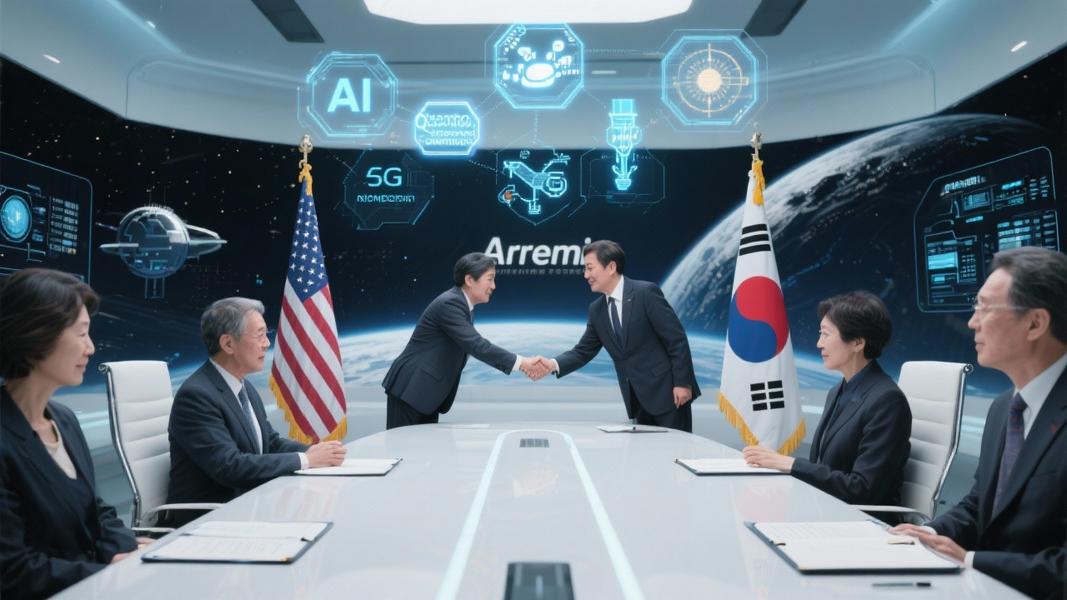
In a significant move to counter China’s tech dominance, the United States and Japan have signed a sweeping Technology Prosperity Deal aimed at deepening collaboration across advanced industries including artificial intelligence, quantum computing, and biotechnology.
The agreement, formalized during President Trump’s late October visit to Tokyo as part of his broader Asia tour, establishes a comprehensive framework for technological cooperation between the two economic powerhouses. The Memorandum of Cooperation explicitly recognizes these emerging fields as strategically vital for future economic prosperity and security, according to White House documents released following the summit.
Beyond Tech: Minerals and Military
But technology wasn’t the only focus. At the Japan-U.S. Summit, leaders also inked agreements on securing critical minerals and rare earths — materials essential for everything from smartphones to electric vehicles to military equipment. Both nations concurred on strengthening economic security in additional sectors including shipbuilding, an industry with both commercial and defense implications.
“President Trump confirmed that Japan is going to boost its imports of U.S. military supplies. The second is that the countries entered into an agreement on critical minerals,” a senior administration official stated during a press briefing, making clear the deal’s twin focus on defense cooperation and resource security.
The timing couldn’t be more strategic. With China controlling roughly 60% of global rare earth production and processing — elements crucial for high-tech manufacturing — the agreement represents a clear attempt to diversify supply chains and reduce dependencies on Beijing.
Reading Between the Lines
What’s driving this sudden burst of technological cooperation? While neither country explicitly named China in their official statements, the subtext is unmistakable.
Foreign policy experts view the deal as part of a broader strategy to create resilient supply chains independent of Chinese influence. The Brookings Institution analyzed Trump’s Asia trip as centrally focused on technology and security cooperation, with countering China’s regional influence as an underlying theme.
The agreement’s emphasis on quantum computing and AI is particularly noteworthy, as these fields represent the next frontier in both economic competitiveness and national security. Japan’s advanced manufacturing capabilities paired with American innovation could create a formidable technological alliance.
Military Implications
The provision for Japan to increase imports of U.S. military supplies signals a deepening of defense ties beyond technological cooperation. This aspect of the deal comes amid growing regional tensions and concerns about North Korea’s missile program.
For Japan, which has constitutional limitations on military development, importing advanced U.S. defense technology represents a pragmatic approach to strengthening its security posture without running afoul of its pacifist constitution.
The deal marks a continuation of Trump’s second-term focus on bilateral trade arrangements rather than multilateral frameworks. Still, questions remain about implementation timelines and specific benchmarks for success.
As both nations move forward with this ambitious technology partnership, one thing is clear: in the high-stakes game of global technological leadership, the U.S. and Japan have decided they’re stronger together than apart.
