
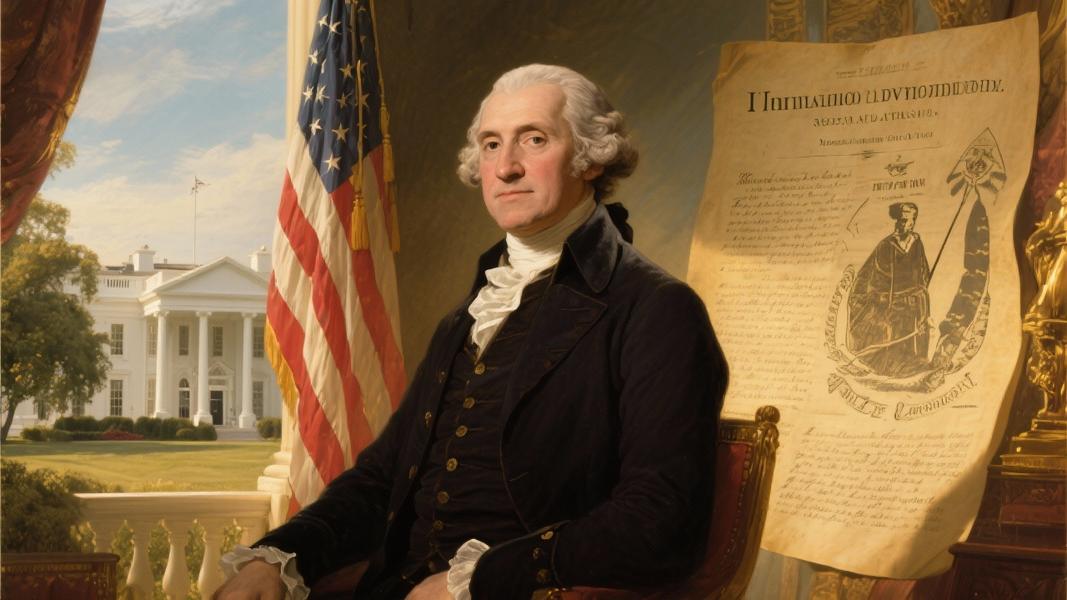
John Adams: The Founding Father Who Navigated America’s Earliest Political Storms
Before there was Washington D.C. infighting or modern partisan divides, there was John Adams — a sharp-tongued patriot with an independent streak who helped birth a nation before becoming its second president. The Massachusetts-born lawyer emerged as one of the American Revolution’s intellectual architects before serving as the young republic’s chief executive from 1797 to 1801.
Born on October 30, 1735, in what is now Quincy, Massachusetts, Adams came from sturdy New England stock. He was the fifth generation descended from Henry Adams, who arrived in America in 1633. The son of Deacon John Adams and Susanna Boylston, young John would grow up to become one of the most consequential figures in American history.
Revolutionary Thinker
What set Adams apart from many of his contemporaries? His blunt, often uncompromising intellectual approach to politics. He was described by historians as a “fervent patriot and brilliant intellectual” known for his independent mind — qualities that sometimes alienated allies but earned him respect across political divides.
“People and nations are forged in the fires of adversity,” Adams once remarked, perhaps reflecting on his own journey from colonial lawyer to revolutionary leader to president. This philosophical bent informed his approach to governance during America’s fragile early years.
Before becoming president, Adams had already compiled an impressive résumé. He advocated forcefully for American independence from Britain and served as the nation’s first vice president under George Washington. He also represented American interests in Europe as a senior diplomat during crucial years of the revolutionary period.
A Narrow Path to the Presidency
The election of 1796 — America’s first truly contested presidential race — revealed how quickly partisan divisions had emerged in the young republic. Adams secured a razor-thin victory with 71 Electoral College votes against Thomas Jefferson’s 68, setting the stage for a presidency defined by political tensions both domestic and international.
Unlike many of his Virginia-born contemporaries, Adams stood apart on one significant moral issue of his era. He chose not to own enslaved people, instead hiring white and free African-American workers — a practice that reflected his New England upbringing and personal convictions, though historians note his opposition to slavery never became his primary political cause.
Could Adams have anticipated how profoundly the presidency would evolve beyond his single term? Probably not. His administration navigated treacherous waters, including an undeclared naval war with France and domestic unrest that tested the young nation’s constitutional framework.
Legacy of Independence
The historical record shows a man of contradictions — brilliant yet sometimes abrasive, principled yet politically vulnerable. Adams’s Massachusetts roots informed his skeptical view of unfettered democracy, yet he remained committed to the republican experiment he helped launch.
Though often overshadowed by Washington before him and Jefferson after, Adams’s contributions to American independence and governance remain profound. His willingness to make unpopular decisions based on principle rather than political expediency offers a striking contrast to modern political calculations.
Adams’s story reminds us that American democracy was never a foregone conclusion but rather a fragile experiment requiring constant maintenance. In today’s polarized climate, his independent mind and commitment to national stability over partisan advantage might offer lessons worth revisiting.
