
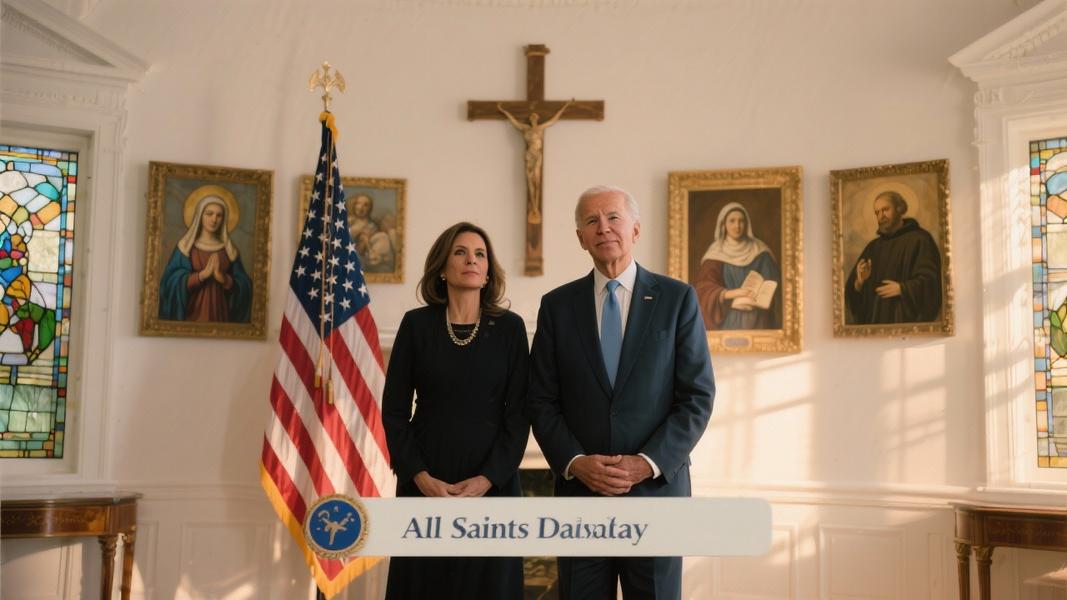
In a move that signals a strong embrace of religious messaging, the White House has released a Presidential Message commemorating All Saints’ Day, reaffirming the administration’s commitment to religious liberty while highlighting America’s historical saints as inspirational figures for the nation’s moral foundation.
“On All-Saints’ Day, the First Lady and I join Christians across our Nation in celebrating the saints who have gone before us and now share in the glory of God,” the President stated in the November 1, 2025 message that explicitly mentions Catholic figures including the Blessed Virgin Mary, Saint Frances Xavier Cabrini, and Saint Elizabeth Ann Seton.
Religious Liberty Front and Center
The message comes amid what some observers see as increasing tension around religious expression in public life. “My Administration is committed to defending this sacred right, upholding the freedom of every believer to worship, speak, and live according to their beliefs,” the President declared, doubling down on a theme that has become central to the administration’s messaging on faith issues.
This isn’t the first time the White House has struck such a tone. During Holy Week earlier this year, the administration promised, “We will never waver in safeguarding the right to religious liberty, upholding the dignity of life, and protecting God in our public square.”
The messaging connects All Saints’ Day with the following All Souls’ Day observance, creating a narrative arc about faith and remembrance. “Tomorrow, on All Souls’ Day, Christians will remember all those who have entered the eternal sleep of peace. Today, the faithful honor the saints who light the path toward Christ and call our Nation to holiness,” the President noted.
Year of Hope Context
The administration’s religious messaging aligns with what the Catholic Church has designated as the 2025 Jubilee Year of Hope. Pope Francis has characterized hope as “the certainty of being on a journey with Christ toward the Father who awaits us,” as quoted in religious publications.
Building on this theme, religious commentators have referenced Pope Benedict XVI’s invocation of Saint Josephine Bakhita’s words to illustrate Christian hope: “I am definitively loved and whatever happens to me — I am awaited by this Love. And so, my life is good,” a sentiment highlighted in discussions about finding certainty amid uncertainty.
But is the administration’s strong religious messaging resonating with all believers?
Tensions Below the Surface
Despite official declarations supporting religious liberty, some faith communities express ongoing concerns. Critics have voiced fears about potential enforcement actions affecting religious gatherings, including concerns about ICE activity within parishes.
“My faith tells me to believe that one day, the people will be heard and mass will return to being the joyous celebration of faith that I know it to be. Today, however, I can no longer say this in full confidence,” one commentator wrote, reflecting tensions that complicate the administration’s religious liberty narrative.
Such critiques highlight the complex landscape the White House navigates as it positions itself as a defender of religious freedom while some communities remain skeptical about the practical implementation of those values.
The administration’s emphasis on saints as guideposts for national character represents a notable embrace of explicitly Christian imagery in official communications. By invoking figures like Saint John Neumann alongside founding principles of “liberty and truth,” the White House connects American identity with Christian heritage in ways that will likely resonate with religious voters while potentially raising questions about inclusivity from other quarters.
As All Saints’ Day passes and All Souls’ Day arrives, the administration’s religious messaging offers a window into how faith, politics and national identity continue to intertwine in American public life – sometimes harmoniously, sometimes with unavoidable tension.
