
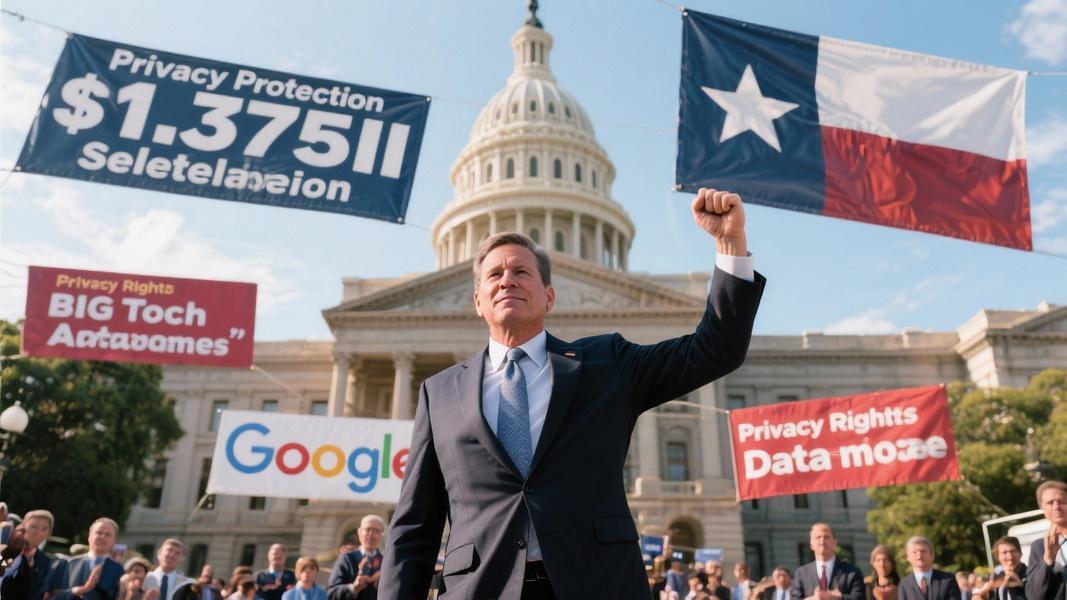
Texas Attorney General Ken Paxton just landed a knockout punch against one of tech’s biggest players. The Lone Star State has secured a staggering $1.375 billion settlement with Google over privacy violations that left millions of Texans’ personal data exposed.
The historic agreement, finalized after three years of legal wrangling, resolves allegations that Google secretly tracked users’ locations even when they’d disabled tracking features, misled consumers about privacy in Incognito mode, and collected sensitive biometric data including facial geometry and voiceprints without proper consent.
David vs. Goliath: A Record-Breaking Settlement
“This historic $1.375 billion price tag for Google’s misconduct sends a clear warning to all of Big Tech that I will take aggressive action against any company that misuses Texans’ data and violates their privacy,” Paxton said in a statement following the announcement.
Just how significant is this settlement? It dwarfs previous privacy enforcement actions against the tech giant. A coalition of forty states previously secured just $391 million for similar violations — nearly a billion dollars less than what Texas alone managed to extract. The largest previous single-state settlement with Google topped out at a comparatively modest $93 million.
“For years, Google secretly tracked people’s movements, private searches and even their voiceprints and facial geometry. I fought back and won,” Paxton declared following the settlement.
The Privacy Violations: What Did Google Actually Do?
The case against Google centered on three major privacy breaches that affected virtually anyone using the company’s services in Texas.
First, the tech giant allegedly continued collecting location data even after users explicitly turned off location services — a practice that left Texans’ movements tracked without their knowledge or consent.
Think your Incognito browsing was private? That’s the second violation. The Attorney General’s office claimed Google misrepresented the privacy protections offered by Chrome’s Incognito mode, giving users a false sense of security while still collecting their data.
Perhaps most concerning was the collection of biometric identifiers — unique physical characteristics like facial geometry and voiceprints — which the state alleged violated Texas law requiring explicit consent before harvesting such sensitive personal information.
“The settlement delivers a historic win for Texans’ data privacy and security rights,” noted legal experts following the case.
A Three-Year Legal Battle
The settlement caps off litigation that began in 2022, with law firm Norton Rose Fulbright representing the state throughout the proceedings. “We are proud to have supported Texas Attorney General Ken Paxton in representing the State of Texas in this important fight for Texans’ data privacy rights,” the firm stated following the announcement.
This isn’t the first time Texas has taken on Big Tech over privacy concerns. The settlement follows other major enforcement actions against tech giants including Meta, cementing Texas as an aggressive enforcer of consumer privacy protections.
What does this mean for the future of data privacy? The unprecedented size of the settlement could signal a new era of accountability for technology companies that have historically treated user privacy as an afterthought rather than a fundamental right.
“If Big Tech thinks they can get away with abusing user data and illegally spying on Texans without consequences, I will make sure they are proven wrong,” Paxton said. “This monumental settlement is a testament to my office’s commitment to taking on the biggest companies in the world and securing victory on behalf of Texans.”
For everyday users in Texas and beyond, the message is clear: the era of tech companies playing fast and loose with personal data may finally be coming to an end — with a $1.375 billion exclamation point.
