
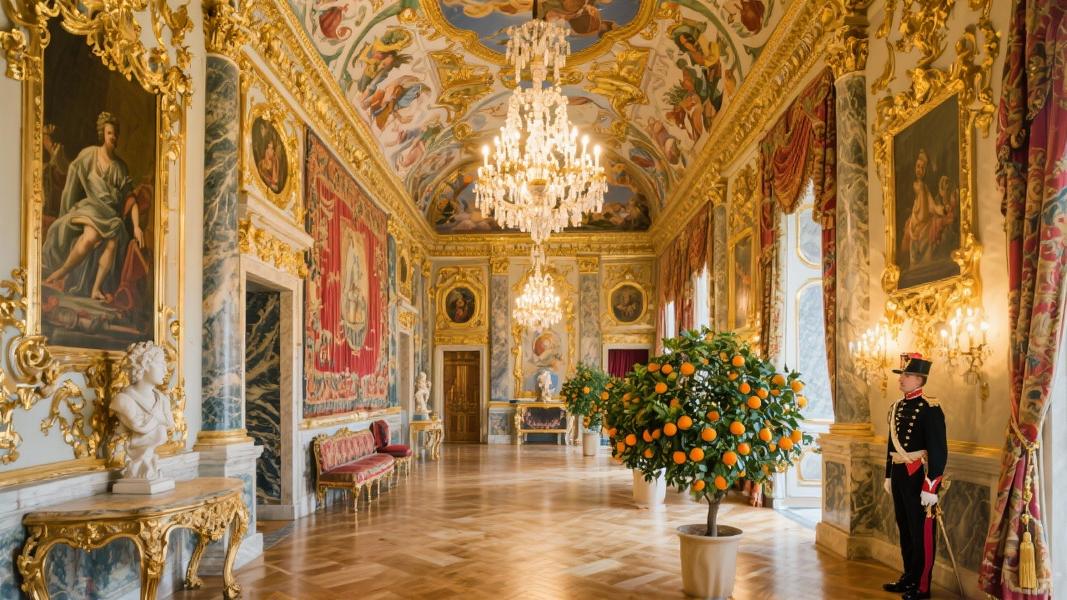
In the heart of Rome stands a palace so grand and historically complex that it might be better described as a small city unto itself. Palazzo Colonna, spanning three hectares in the center of the Eternal City, has been home to one of Italy’s oldest noble families for over twenty generations, witnessing the rise and fall of empires while continuously evolving from medieval fortress to baroque masterpiece.
The palace’s story begins in the 13th century, built atop the ruins of an ancient Roman Serapeum. What started as a modest residence gradually expanded through five centuries of continuous construction, incorporating multiple architectural styles along the way. Few private residences anywhere in the world can claim such a lengthy, unbroken connection to a single family.
“We cannot have mass tourism. It is not the wish,” explained Elisabetta Cecchini, a restorer at the palace, highlighting the delicate balance between preservation and public access. The palace remains a private residence, with the sitting prince, Don Prospero Colonna, continuing a lineage that stretches back to medieval Rome.
From Fortress to Papal Seat
The building’s identity has shifted dramatically over the centuries. Between the 1300s and 1500s, Palazzo Colonna served primarily as a fortress — a necessity in the turbulent politics of Renaissance Rome. Its strategic importance grew when family member Oddone Colonna became Pope Martin V in 1417, temporarily transforming the palace into the papal residence during his pontificate.
Perhaps most remarkably, the palace survived the catastrophic 1527 sack of Rome largely intact. Why? The Colonna family had cultivated favorable relations with Emperor Charles V, whose troops spared the residence while devastating much of the surrounding city. These political connections would continue to serve the family well in the centuries to come.
The 17th century marked a turning point in the palace’s evolution. Three generations of the Colonna family commissioned some of Italy’s most renowned architects — including Gian Lorenzo Bernini, Antonio del Grande, Carlo Fontana, and Paolo Schor — to transform their medieval fortress into a baroque showcase befitting their status among Rome’s elite families.
A Gallery of Wonders
What sets Palazzo Colonna apart from other noble residences in Rome? Size alone makes it exceptional — at approximately three hectares, it’s considered the largest noble palace in the city. But it’s the interior spaces that truly astonish visitors.
The crown jewel is undoubtedly the Colonna Gallery, a baroque extravaganza stretching 70 meters in length. Walking through this space is like entering a dream of aristocratic splendor: the hall gleams with marble surfaces, elaborate chandeliers, golden-framed mirrors, and an extraordinary collection of paintings and frescoes. The effect is deliberately overwhelming, a physical manifestation of the family’s power and artistic patronage.
Below the polished surfaces lies a deeper history. Archaeological evidence confirms the palace was built directly over the ruins of a Roman Serapeum, a temple dedicated to the Egyptian deity Serapis. In typical Roman fashion, the new was built directly atop the old, creating a physical timeline that stretches from antiquity through the Middle Ages to the present day.
Can a single building truly encapsulate Rome’s complex history? Palazzo Colonna makes a compelling case. From its foundations in ancient ruins to its medieval fortifications and baroque embellishments, the palace mirrors the city’s own evolution through conquest, religious power, aristocratic competition, and artistic flowering.
Unlike many historic palaces that have been fully converted into museums or government buildings, Palazzo Colonna maintains its original purpose as a family residence — albeit one that allows limited public access. This continuity of function across nearly eight centuries represents a living connection to history that few other structures can match, a reminder that in Rome, the past is never truly past.
