
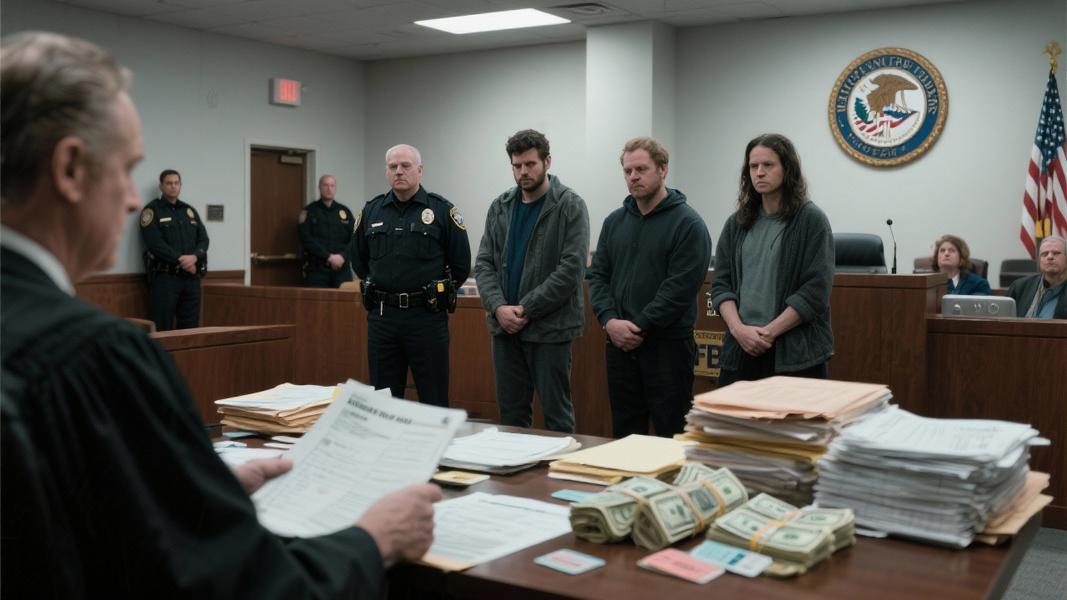
Karpis Srapyan will spend nearly five years behind bars for orchestrating an elaborate $16 million hospice fraud scheme that involved deceased doctors, stolen identities, and a complex web of money laundering operations.
U.S. District Court Judge sentenced Srapyan to 57 months in federal prison for his central role in the multi-million dollar Medicare fraud operation that ran from July 2019 to January 2023. The court also ordered him to pay over $3.2 million in restitution, according to Justice Department documents.
Elaborate Scheme Involved Deceased Doctors, Foreign Nationals
The sophisticated fraud network operated through four sham hospice companies in California, where Srapyan and his co-defendants billed Medicare for hospice services that were either medically unnecessary or never provided at all. Perhaps most disturbing? They misappropriated the names of several doctors — including two who were already deceased — to lend an air of legitimacy to their fraudulent Medicare claims, investigators discovered.
“Srapyan and his co-defendants concealed the scheme by using foreign nationals’ personal identifying information to open bank accounts, submit information to Medicare, and sign property leases,” the Justice Department indicated in a previous statement.
How did they maintain the charade for so long? Prosecutors say the group controlled cell phones registered to foreign nationals and maintained fraudulent identification documents, bank documents, checkbooks, and credit cards in these names to create a complex paper trail that obscured their true activities.
Multiple Defendants Sentenced
Srapyan wasn’t alone. Four other defendants have been sentenced for their participation in the scheme, with penalties ranging from 15 months to a staggering 12 years behind bars.
Juan Carlos Esparza, 33, who owned one of the sham hospices called House of Angels Hospice, received an identical 57-month sentence and was ordered to pay $1.8 million in restitution. Court records show Esparza spent $90,000 of the fraudulent proceeds to purchase a vehicle, prosecutors revealed.
Susanna Harutyunyan received 15 months and a restitution order of $2.8 million, while Mihran Panosyan was sentenced to 57 months with a $4.6 million restitution obligation. The heaviest sentence fell on Petros Fichidzhyan — 12 years in prison with an order to pay back more than $17 million, according to court filings.
Each defendant played a distinct role in the operation. “They used stolen identities, including those of deceased doctors, to create an appearance of legitimacy and bill Medicare for medically unnecessary hospice services that were never even provided,” legal experts explained.
Following the Money
The government has taken steps to recover some of the stolen funds. At sentencing, the court preliminarily ordered the forfeiture of two homes purchased with fraud proceeds. Additionally, authorities have already seized nearly $3 million from bank accounts connected to the scheme.
The money trail revealed sophisticated laundering techniques. After receiving Medicare payments, the defendants moved funds between various assets and accounts, including shell companies specifically created to hide the source and nature of the proceeds, investigators determined.
All five defendants entered guilty pleas to various charges. Srapyan specifically pleaded guilty to conspiracy to commit health care fraud and transactional money laundering, while others faced charges ranging from concealment money laundering to aggravated identity theft.
This case represents one of the larger hospice fraud schemes uncovered in recent years, striking at a particularly vulnerable sector of healthcare meant to provide comfort to those in their final stages of life. Instead, it became a vehicle for millions in fraudulent billing—leaving federal programs, taxpayers, and ultimately patients to suffer the consequences.
