
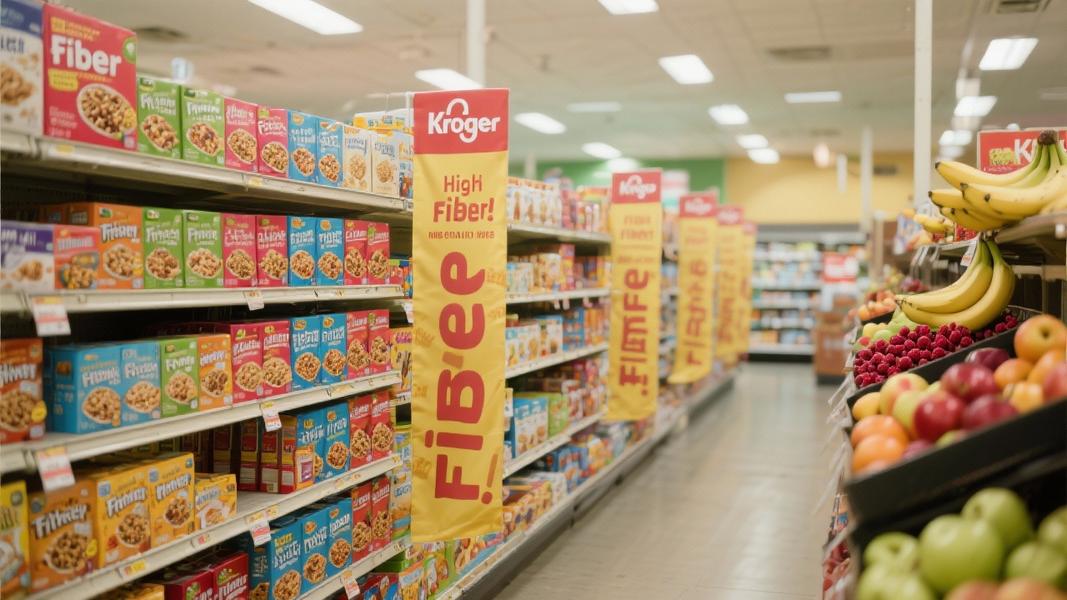
Move over protein — there’s a new nutrient in town claiming the spotlight on American grocery shelves. After years of protein-packed everything from yogurt to candy bars, fiber is emerging as the next big food trend, with manufacturers rushing to capitalize on what industry insiders are calling “fibermaxxing.”
PepsiCo CEO Ramon Laguarta recently made the bold prediction to investors: “I think fiber will be the next protein. Consumers are starting to understand that fiber is the benefit that they need.” This declaration, coming from one of the world’s largest food and beverage companies, signals a potential seismic shift in how products are formulated and marketed.
From Social Media Trend to Supermarket Staple
The rise of fiber-focused products isn’t happening in a vacuum. Market research from Mintel shows a significant increase in new products touting high or added fiber in 2025, while TikTok and Instagram have been flooded with videos celebrating the benefits of dietary fiber — a phenomenon that’s helped fuel the “fibermaxxing” movement.
According to Innova Market Insights, fiber claims have grown at a compound annual growth rate of 5.4% between May 2020 and May 2025, with an even steeper increase in the past year. The market research firm notes that product launches featuring fiber claims have accelerated dramatically in the last 12 months.
What’s driving this fiber frenzy? For one thing, consumers are increasingly aware of its health benefits. Studies have shown that fiber lowers cholesterol levels, regulates blood sugar, and promotes weight loss, since high-fiber foods tend to make eaters feel more full. The American Heart Association suggests it may also protect against heart disease, diabetes, diverticulitis, and colon cancer.
A Real Nutritional Gap
Unlike some food trends that chase solutions to non-existent problems, the fiber push addresses a genuine nutritional shortfall. Under the U.S. Department of Agriculture’s guidelines, adults should aim for 14 grams of fiber for every 1,000 calories they consume — approximately 25 grams daily for women and 38 for men. Yet Americans typically consume only about two-thirds of these recommended amounts.
“Fiber addresses broader health concerns that protein cannot,” explains Mintel in a recent industry report. “It supports digestive health, helps manage blood sugar, feeds beneficial gut bacteria, and contributes to cardiovascular health. Perhaps most importantly, it fills a genuine nutritional gap that exists in most modern diets.”
Consumer interest in fiber is already outpacing other gut health trends. In 2023, 39% of European consumers reported being “very or extremely interested” in fiber, compared to just 24% for probiotics. Additionally, NIQ research revealed that roughly 78% of consumers in Western Europe and 77% in Eastern Europe have positive perceptions of high-fiber foods.
From Maximizing to Balancing
The initial “fibermaxxing” trend, which encouraged consuming large amounts of fiber, appears to be evolving into a more nuanced approach. “In 2025, consumers woke up to the importance of prebiotic fibers, as evidenced by the social media wellness trend coined ‘fibermaxxing’… The focus is moving from maximization to balance,” reports NutraIngredients.
Nutritionists are emphasizing the importance of gradually increasing fiber intake and diversifying sources rather than simply maximizing the amount. “To increase fiber intakes, consumers are adding more fiber-rich foods like fruits, vegetables, legumes, whole grains, seeds, and nuts to meals while also focusing on plant diversity, color, and texture,” advises Mintel.
But how much fiber is actually in common foods? One cup of raspberries contains 8 grams, while a banana provides 3.2 grams. Half a cup of avocado delivers 5 grams, and a cup of lima beans packs an impressive 13.2 grams. On the processed side, a 2/3-cup serving of Fiber One bran cereal contains a whopping 18 grams of fiber, according to USDA data.
A Growing Market
The financial implications of this trend are substantial. The global high-fiber food market was valued at USD 46.35 billion in 2025 and is projected to more than double to USD 105.07 billion by 2034, according to Towards FnB research.
Too much too fast? That’s the caution from nutrition experts. Rapidly increasing fiber intake can cause uncomfortable side effects like gas and bloating. “You’re feeding gut bacteria a food, and you can’t break it down. You rely on them, and if you give them second, third and fourth servings, there’s not enough of them to handle the extra load,” warns nutritionist Debbie Petitpain, who recommends increasing fiber gradually and drinking plenty of water.
Health authorities are also cautioning consumers about processed foods with added fiber versus natural sources. “The way it is consumed as an additive and part of a diet that doesn’t contain a lot of fiber may be different than a naturally fiber-rich diet,” cautions nutrition scientist Jill Kersten. “You can eat a very processed, Western diet and consume foods that are enriched, but we don’t know if it confers the same benefit.”
As grocery aisles become increasingly crowded with fiber-enhanced options, the real winner might be the humble bean — nature’s original high-fiber superfood, no marketing required.
