
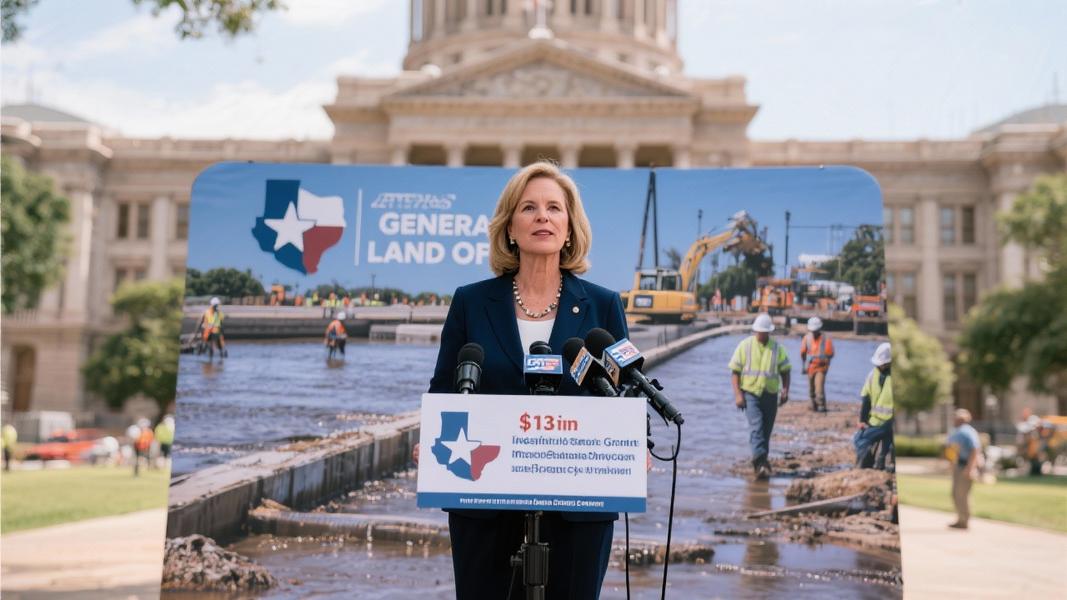
Texas communities are set to receive a major boost in their fight against future natural disasters, as state officials greenlight over $13 million for critical infrastructure improvements across multiple jurisdictions.
Texas Land Commissioner Dawn Buckingham announced Tuesday that the Texas General Land Office has approved $13,446,650 in regional mitigation funds targeted at strengthening infrastructure in Galveston County, the City of Cuero, and the Coastal Bend Council of Governments region. The funding will support improvements to roads, drainage systems, sewers, and water detention facilities — all critical components in the state’s ongoing battle against devastating weather events that have plagued coastal communities in recent years.
“The GLO remains firmly committed to providing funding for resiliency projects that will protect Texas homes, schools, businesses and local infrastructure long into the future,” Buckingham said in a statement released by her office. “These funds reflect our responsibility to safeguard our communities and ensure they have the tools to meet the challenges of tomorrow.”
Building Resilience Through Local Partnerships
The newly approved funds represent just a fraction of the GLO’s broader Regional Mitigation Program, which has allocated a staggering $1.16 billion in Community Development Block Grant Mitigation funds from the U.S. Department of Housing and Urban Development. This massive investment aims to reduce the risks and impacts of future disasters across Texas communities that have faced repeated weather-related devastation.
Why the emphasis on local control? That’s been a cornerstone of the program’s approach. Each Council of Government with HUD-designated eligible counties developed their own method of distribution for allocating funds to local governments, a process that required extensive public participation.
“By partnering with local leaders, we are reinforcing the foundations of safety, opportunity and strength that define our great state,” Buckingham noted in her remarks.
The federal funds come with specific requirements. HUD defines mitigation as activities that increase resilience to disasters and reduce the long-term risk of loss of life, injury, property damage, and hardship. At least 50% of the total funds must benefit low-to-moderate income individuals, according to guidelines outlined by federal officials.
Looking Toward a More Resilient Future
For communities still bearing the scars of previous natural disasters, these infrastructure improvements couldn’t come at a more critical time. Climate scientists continue to warn of increasingly severe weather patterns affecting Texas coastal regions, making resilient infrastructure not just desirable but essential.
The approved projects focus on fundamental systems that often fail during extreme weather events — drainage systems become overwhelmed, roads wash away, and water systems fail precisely when communities need them most.
While the $13.4 million represents significant investment, it’s part of a much larger puzzle in Texas’s ongoing efforts to fortify itself against natural disasters. The state continues to balance immediate recovery needs with long-term resilience planning, often with competing interests for limited resources.
For residents of Galveston County, Cuero, and communities within the Coastal Bend Council of Governments’ jurisdiction, these improvements offer something beyond mere infrastructure upgrades — they provide a measure of security that their communities are being prepared for whatever challenges tomorrow’s weather might bring.
