
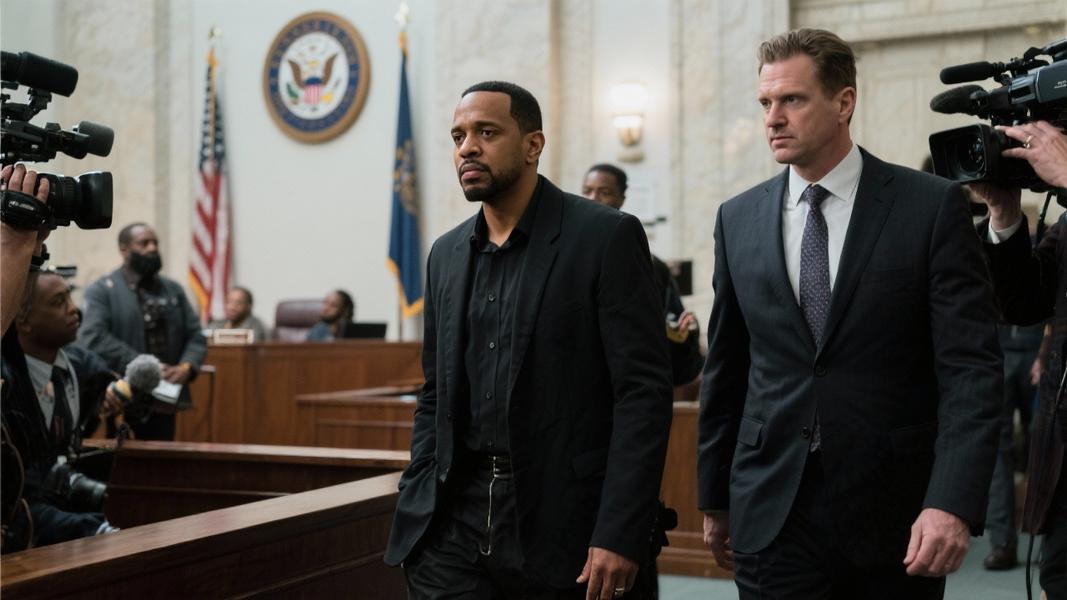
A founding member of the Grammy-winning hip-hop group Fugees has been sentenced to 14 years in prison for an elaborate scheme that saw millions in foreign money funneled into Barack Obama’s 2012 presidential campaign through a network of straw donors.
Prakazrel “Pras” Michel, 51, was convicted on all 10 counts he faced, including conspiracy and acting as an unregistered agent of a foreign government, following a trial that featured testimony from unlikely witnesses Leonardo DiCaprio and former Attorney General Jeff Sessions.
From Platinum Records to Prison
The case against Michel revealed a stunning fall from grace for the musician who rose to fame in the 1990s with hits like “Killing Me Softly” and “Ready or Not.” Federal prosecutors painted a picture of a once-celebrated artist who faced up to 20 years behind bars on the most serious charges.
At the heart of the case: Michel’s relationship with Malaysian financier Low Taek Jho, commonly known as Jho Low. Evidence presented at trial showed Michel obtained more than $120 million from Low and directed some of that money through straw donors to Obama’s campaign — a clear violation of federal law prohibiting foreign nationals from contributing to U.S. political campaigns.
“His sentence should reflect the breadth and depth of his crimes, his indifference to the risks to his country, and the magnitude of his greed,” prosecutors wrote in sentencing documents, where they indicated federal guidelines actually recommended a life sentence for Michel.
A Photograph Worth Millions?
What would drive someone to risk everything for such a scheme? Michel’s defense team offered a surprisingly mundane explanation.
“Low’s motivation for giving Mr. Michel money to donate was not so that he could achieve some policy objective. Instead, Low simply wanted to obtain a photograph with himself and then-President Obama,” Michel’s attorneys argued in court filings.
But the prosecution painted a far more sinister picture. They alleged Michel was part of a broader conspiracy that involved attempting to shut down a Justice Department investigation into Low, tampering with witnesses, and committing perjury during the trial itself.
Specifically, Michel was accused of accepting $865,000 from Low and distributing it to straw donors who then made contributions to Obama’s campaign, making the donations appear to come from U.S. citizens rather than a foreign source.
A “Disproportionate” Sentence?
Defense attorney Peter Zeidenberg didn’t mince words in his criticism of the 14-year sentence, comparing the prosecution’s position to that of Inspector Javert, the relentless antagonist from Victor Hugo’s “Les Misérables.”
“The Government’s position is one that would cause Inspector Javert to recoil and, if anything, simply illustrates just how easily the Guidelines can be manipulated to produce absurd results, and how poorly equipped they are, at least on this occasion, to determine a fair and just sentence,” the defense team stated.
Zeidenberg recommended a three-year sentence instead and indicated plans to appeal the verdict. But the judge wasn’t swayed by arguments for leniency or claims of trial errors.
Just last month, in August 2024, the court denied Michel’s request for a new trial, rejecting defense arguments that the prosecution’s use of generative AI during closing arguments and other alleged trial errors warranted starting over.
How did a celebrated musician end up at the center of an international influence peddling scheme? The case highlights the sometimes murky intersection of celebrity, wealth, and politics — and serves as a stark reminder of the legal boundaries surrounding campaign finance in American elections.
For Michel, whose music once topped charts worldwide, the next decade and more will be spent far from recording studios and concert venues. Instead, his new reality will unfold behind prison walls, a cautionary tale about the steep price of mixing foreign money with American political campaigns.
