
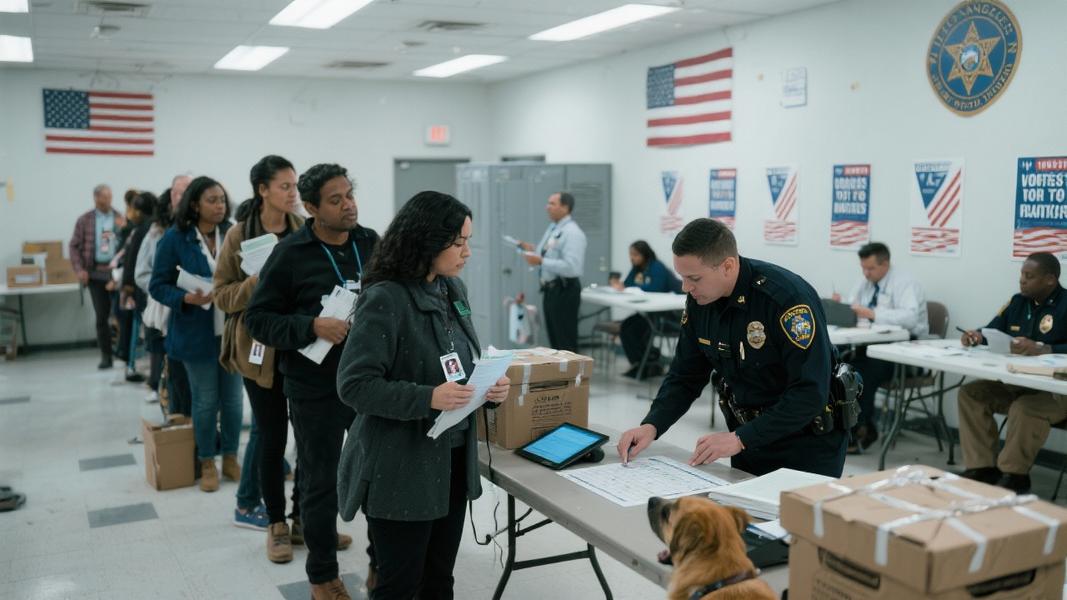
Voter ID laws in America remain a complex patchwork, with thirty-six states currently requesting or requiring identification at polling places, while other states like New York and California maintain more lenient approaches that have sparked confusion among voters.
The landscape of voter identification requirements varies dramatically across the country. Some states enforce strict photo ID laws, others accept non-photo identification, and a minority — including New York and California — generally don’t require ID from most voters. This inconsistency has led to recurring questions about what’s actually legal when casting a ballot.
In New York, poll workers are explicitly instructed not to request identification unless specifically indicated in voter records. “Do not ask the voter for ID unless ‘ID required’ is next to their name in their voter records,” notes official guidance cited by fact-checkers. The requirement typically applies only to first-time federal election voters or those who registered by mail without providing identification.
Similarly, California maintains a hands-off approach to ID requirements. “Poll workers must not ask a voter to provide their identification unless the voter list clearly states identification is required,” according to state guidelines. It’s worth noting that over 80% of California voters cast their ballots by mail in the 2024 general election, and some counties don’t even offer in-person voting options.
Voluntary ID: Legal but Not Required
But here’s where things get interesting: while poll workers shouldn’t request identification in these states, voters aren’t prohibited from voluntarily showing it. “There is nothing unlawful about that voter presenting a form of photo identification at a poll site in addition to fulfilling the signature verification requirement outlined in the state’s constitution,” explains an AP Fact Check article by Melissa Goldin.
In fact, some New York counties allow voters to scan their driver’s licenses to speed up the process of finding voter records in electronic poll books — though this remains entirely optional. “California law does not prohibit a voter from voluntarily presenting their identification,” the fact check confirms.
The American approach stands in contrast to many other democracies. While most nations do require some form of identification to vote, there are notable exceptions. New Zealand allows voter registration without ID, and Australian voters don’t need identification to cast their ballots.
What’s behind this state-by-state approach? Voter ID laws remain among America’s most contentious election policies, with advocates citing election security concerns and critics pointing to potential disenfranchisement of vulnerable populations. States have settled on different balancing points between accessibility and verification.
For voters navigating this complex system, the key takeaway is simple: know your state’s rules. In places like New York and California, you generally won’t need to show ID — but if you prefer to present one anyway, that’s perfectly legal too.
