
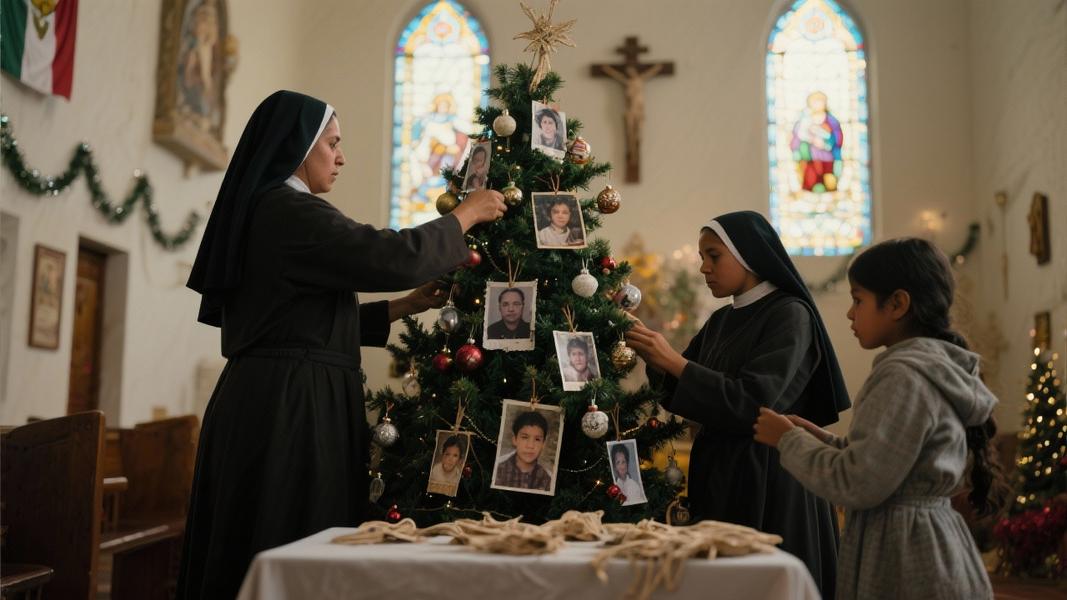
In the shadow of Mexico’s disappearance crisis, a Christmas tree adorned not with traditional ornaments but with the faces of missing loved ones stands tall in a cathedral near Mexico City — a poignant reminder of thousands of families caught in an unending limbo of loss.
The “Tree of Hope,” displayed in Ecatepec in the State of Mexico, features handcrafted decorations created by families of the disappeared, each bearing the image of someone who never returned home. The tree will remain on display until February 2, offering a space for remembrance during a season typically marked by family gatherings.
“It’s been too hard and I have not been able to set up a tree,” one family member told ABC News, revealing the profound way disappearances disrupt even the most basic holiday traditions for those left behind.
What began as a somber gathering has evolved into an annual tradition, with the Tree of Hope becoming an established symbol of both celebration and remembrance for families united by tragedy.
A Nation’s Open Wound
The ornament-making ceremony takes place against the backdrop of Mexico’s ongoing disappearance crisis. The country’s official missing persons registry has swelled to over 100,000 cases, though activists believe the true number could be significantly higher.
The scale of the crisis was highlighted earlier this year when, in March 2025, a grim discovery shook the nation. Searchers looking for missing relatives found 200 pairs of shoes and a crematorium at the Izaguirre Ranch in Jalisco, adding another chapter to Mexico’s painful history of mass disappearances.
These discoveries are rarely random. They often come from citizen-led search collectives — typically formed by mothers, wives, and sisters of the disappeared — who have taken on the painstaking work that many feel authorities have neglected.
The disappearances span every corner of Mexico. The Doe Network, which maintains a geographical index of missing persons cases throughout the country, documents individuals who have vanished across various states and time periods, creating a national map of absence and loss.
Finding Hope in Ritual
For families caught in this limbo, the Tree of Hope represents more than remembrance — it creates community among those who understand a unique form of grief.
The ritual of crafting ornaments bearing the faces of missing loved ones serves a dual purpose: keeping their memory alive in the public consciousness while creating a space for families to share their stories and support one another.
That these families gather during the holiday season — traditionally a time of togetherness — makes the ceremony particularly poignant. In homes across Mexico, empty chairs at Christmas dinner tables stand as silent testaments to those who remain unaccounted for.
As the Tree of Hope continues to draw attention to Mexico’s disappeared, it serves as both memorial and protest — a visible reminder of countless unresolved cases and the families who refuse to stop searching.
