
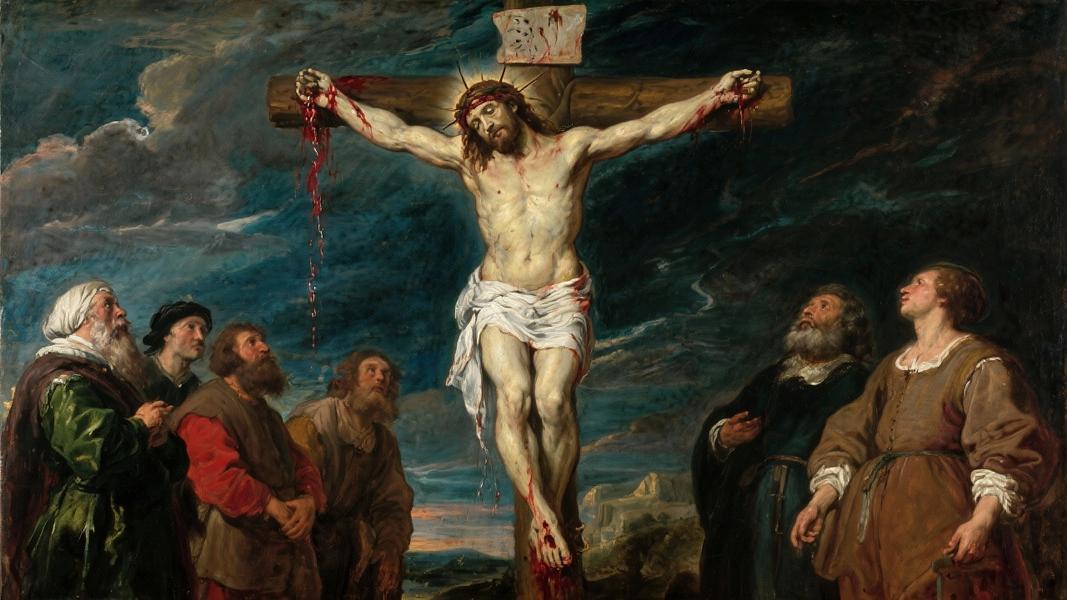
A long-lost Peter Paul Rubens masterpiece depicting the crucifixion of Jesus Christ has fetched a staggering 2.3 million euros ($2.7 million) at auction, after spending more than four centuries hidden from the art world’s gaze.
The extraordinary Baroque painting, sold Sunday at an auction house in Versailles, represents a remarkable journey from obscurity to acclaim. Just over a year ago, the artwork was languishing in a private Parisian townhouse, misattributed to Rubens’ workshop and valued at a mere 10,000 euros — less than half a percent of its final hammer price, according to auction records.
How did such a significant work remain undetected for centuries? The painting’s journey back to recognition began in September 2024, when auctioneer Jean-Pierre Osenat was preparing to liquidate assets from a mansion in Paris’s elegant 6th arrondissement. “I immediately had a hunch about this painting, and I did everything I could to try to have it authenticated,” Osenat told reporters. “And finally, we managed to have it authenticated by the Rubenianum, which is the Rubens committee in Antwerp.”
The authentication process involved German art historian Nils Büttner, whose expertise helped confirm what Osenat had suspected: they were looking at an original Rubens, not a workshop copy as previously believed. Scientific analysis further supported this conclusion, with microscopic examination of paint layers and X-ray imaging revealing characteristic Rubens pigments typically used in his skin tone depictions, experts confirmed.
A Unique Depiction
What makes this particular crucifixion scene exceptional even among Rubens’ celebrated religious works is its distinctive portrayal of Christ. “So this is the one and only painting showing blood and water coming out of the side wound of Christ, and this is something that Rubens only painted once,” according to documentation published by the auction house.
The canvas, measuring 105.5 by 72.5 centimeters and dated to 1613, captures the Flemish master at the peak of his creative powers. “It was painted by Rubens at the height of his talent,” art historians noted in their assessment of the work. Unlike many religious commissions of the era, scholars believe this particular piece was created for a private collector rather than the Church, potentially explaining its limited public exposure over the centuries.
The auction itself attracted intense interest from museums, private collectors, and art institutions worldwide. A hushed tension filled the room as bidding opened at 500,000 euros before quickly escalating into a multi-million euro battle, news outlets reported.
For art historians, the discovery represents more than just a financial windfall for the former owners. It offers a rare opportunity to study a previously unknown work from one of art history’s most influential figures, potentially reshaping our understanding of Rubens’ approach to religious imagery during this crucial period of his career.
The painting’s new owner has not been publicly identified, leaving questions about whether this rediscovered masterpiece will soon be displayed for public viewing or disappear once again into the private collection of a wealthy enthusiast — a fate that would continue its centuries-long pattern of remaining just beyond public reach.
