
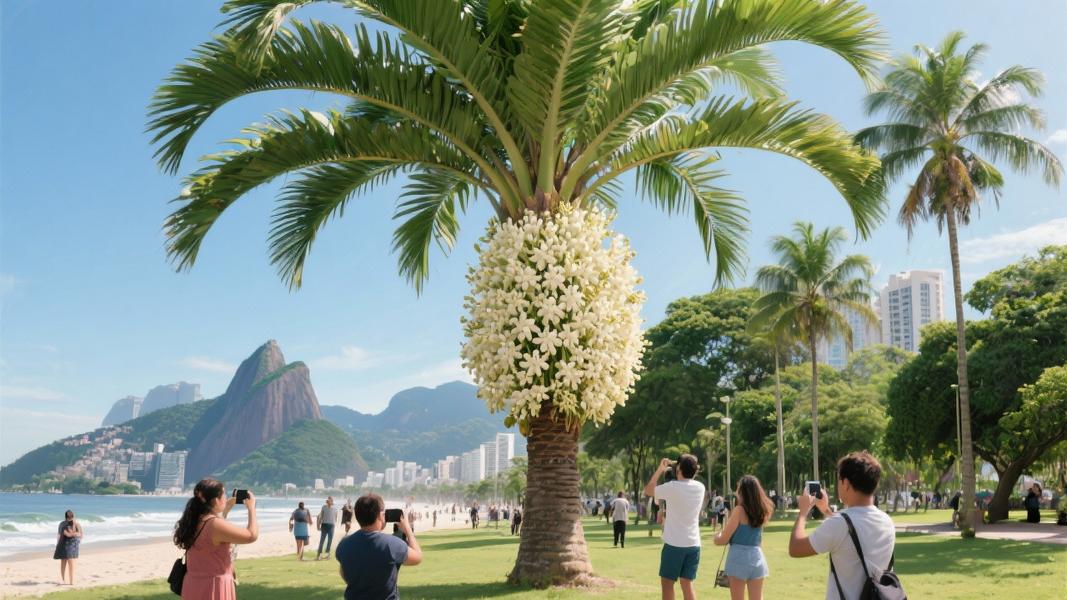
In a breathtaking botanical spectacle, towering talipot palms that have silently stood in Rio de Janeiro for decades are now making their grand finale — flowering for the first and only time before they die.
The majestic palms, introduced to the Brazilian landscape in the 1960s by renowned landscape architect Roberto Burle Marx, have reached the culmination of their lifecycle, simultaneously erupting in millions of creamy-white blossoms throughout Flamengo Park and the Rio de Janeiro Botanical Garden. This rare event marks the beginning of the end for these gentle giants, which flower only once after 40 to 80 years of growth.
A Once-in-a-Lifetime Bloom
Native to southern India and Sri Lanka, the talipot palm can soar to heights of 30 meters (98 feet) and produces an astonishing 25 million flowers when it blossoms. The spectacular flowering event represents the tree’s grand finale, using energy accumulated over decades.
“This palm species gives us a reflection on temporality, because it has roughly the same lifespan as a human being,” explains biologist Aline Saavedra from Rio de Janeiro State University. “Marx also wanted to convey a poetic perspective” through their introduction to Brazil’s landscape, she noted.
Why are so many flowering at once? The synchronicity is no coincidence. The palms were brought from southern Asia together and have been exposed to the same Brazilian daylight patterns for decades, triggering their simultaneous blooming.
The Beginning of the End
For these botanical centenarians, the spectacular flowering represents both a beginning and an end. After the blossoms give rise to fruits, the senescence process begins — a slow, year-long farewell as the palm gradually loses its leaves and dies while its fruits ripen and fall.
The phenomenon has captivated locals and visitors alike. Civil engineer Vinicius Vanni expressed hope while observing the spectacle: “I probably won’t see them flower, but they’ll be there for future generations,” he said, planning to collect seedlings to continue the legacy.
Beyond the visual spectacle, the flowering event carries deeper meaning for Rio’s environmental awareness. Saavedra believes the public fascination could foster a greater sense of environmental stewardship among city residents. “The interest the phenomenon has generated is positive and could encourage a sense of belonging for human beings to preserve rather than destroy the environment,” she explained.
As these botanical giants make their final stand in Rio’s skyline, they offer a poignant reminder of nature’s cycles — and perhaps, as Marx intended decades ago when he planted them, a reflection of our own mortality and the beauty of life’s fleeting moments.
