
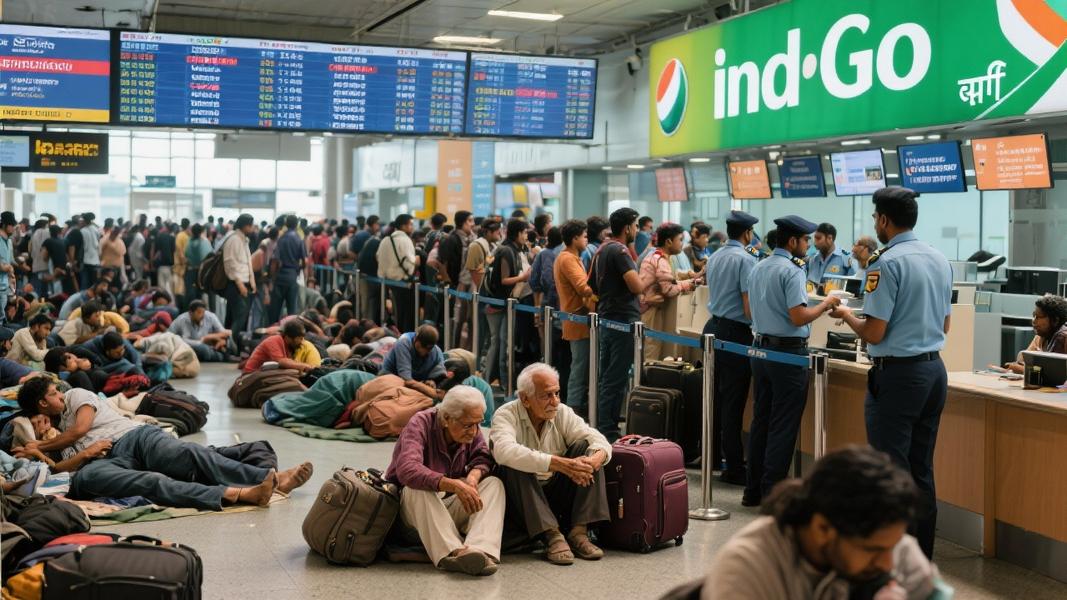
India’s largest airline is in a tailspin this week as thousands of passengers found themselves stranded amid a massive wave of flight cancellations that has thrown the country’s aviation system into chaos.
IndiGo, which controls nearly 65% of India’s domestic aviation market and operates around 2,300 flights daily, has canceled more than 1,200 flights since December 1 in what has become a perfect storm of scheduling nightmares, angry customers, and regulatory headaches, according to reports.
Four Days of Travel Chaos
Friday marked the fourth consecutive day of widespread disruptions as the airline struggled to adapt to new government regulations mandating longer rest periods and limiting night flying hours for crew members. The situation deteriorated so severely that Delhi airport announced all domestic IndiGo flights would remain canceled until midnight, leaving passengers with few alternatives during one of India’s busiest travel periods, AP has confirmed.
“It’s very irresponsible and complete negligence. Very difficult for older people like us,” said senior citizen Sajal Bose, whose flight was among those canceled. Throughout major airports, scenes of passengers sleeping on floors and waiting for hours without clear communication have become commonplace, footage from terminals shows.
What exactly went wrong? The Civil Aviation Ministry pointed to “misjudgment and planning gaps” as IndiGo implemented phase two of new crew scheduling rules, sources indicate. The ministry noted the airline had underestimated the impact these changes would have on crew availability and overall operational strength.
A Perfect Storm of Problems
In an internal email to employees viewed by The Associated Press, IndiGo CEO Pieter Elbers apologized and attributed the disruptions to a combination of factors: technology glitches, schedule changes, adverse weather conditions, airport congestion, and the implementation of the new rest and flying hour regulations that took effect in two phases — one in July and a more stringent phase in November.
The scale of the disruption has been staggering. On Thursday alone, more than 300 IndiGo flights were grounded while several hundred others faced significant delays, creating a ripple effect throughout India’s transportation network that’s affected tens of thousands of travelers, investigators found.
Desperate to contain the fallout, the airline issued a strongly worded public apology titled “We are truly sorry, and we will take care,” acknowledging the “immense inconvenience and distress” caused to passengers. The statement promised automatic full refunds to affected customers’ original payment methods and announced a complete waiver on all cancellation and rescheduling requests for travel between December 5 and 15, 2025.
Road to Recovery
Can IndiGo right the ship anytime soon? The carrier has requested temporary exemptions from the government regarding the new crew scheduling rules while working on corrective measures. It has indicated operations will be fully restored by February 10, 2026 — a timeline that suggests the airline faces months of potential adjustments ahead.
In the meantime, IndiGo plans to reduce flight operations starting December 8 to better manage the continued disruptions, essentially acknowledging that its full schedule isn’t sustainable under current conditions.
For India’s aviation sector, the crisis highlights the delicate balance between safety regulations and operational demands. While the new rules aim to ensure crew members are adequately rested — a critical safety measure — the implementation has exposed significant vulnerabilities in the nation’s dominant carrier’s operational planning.
As thousands of passengers continue to face uncertainty about their travel plans, the incident serves as a stark reminder of just how quickly even the largest and most established airlines can be brought to their knees when regulatory changes, weather issues, and planning failures converge at precisely the wrong moment.
