
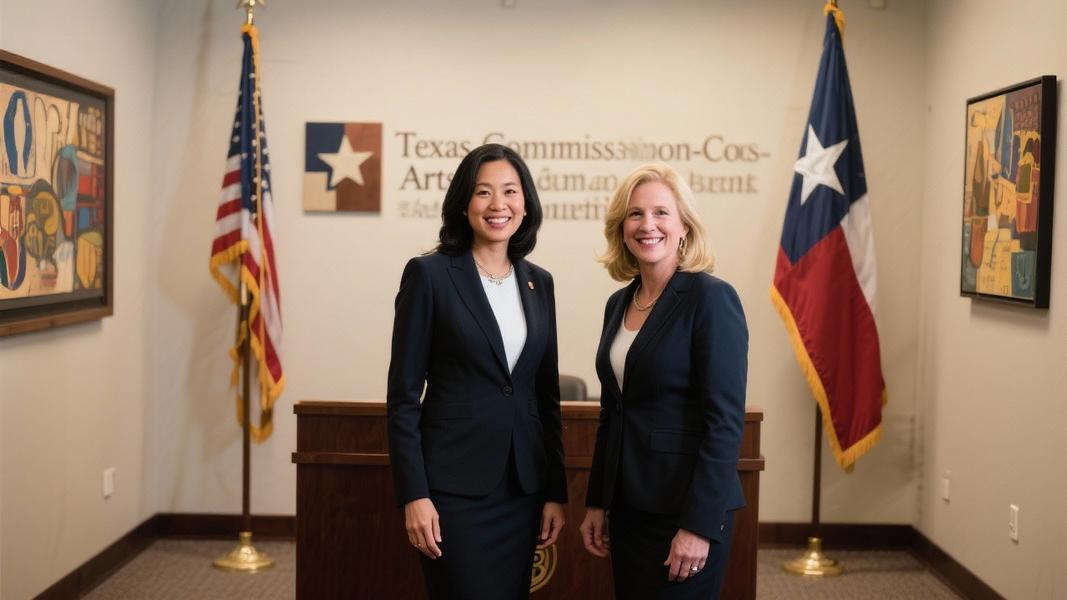
Gov. Greg Abbott has reappointed Theresa Chang and Karen Partee to the Texas Commission on the Arts for terms that will stretch until August 31, 2031, continuing the state’s commitment to developing its cultural landscape.
The appointments, announced by the Governor’s office, maintain continuity at the nine-member commission that’s tasked with fostering “a receptive climate for the arts” across the Lone Star State. Both appointees bring substantial experience from previous service and professional backgrounds that intersect with Texas’ cultural institutions.
Commission Leadership and Structure
Karen Partee, who currently serves as Chair of the Commission since January 2024, is also the executive vice president and chief marketing officer of Texas Bank and Trust Company. Her leadership at the Commission comes with declared conflicts of interest with several organizations, including LeTourneau University/Belcher Performing Arts Center and the Longview Museum of Fine Arts, as documented in Commission records.
The Texas Commission on the Arts operates with nine commissioners total, with Marci L. Roberts serving as Vice Chair alongside Partee. What makes the Commission particularly important? Its mandate extends beyond just supporting artists — it aims to “culturally enrich and benefit state citizens” while also making Texas an attractive destination for outstanding creative talent, according to the state’s directory of agencies.
Theresa Chang brings her experience as an attorney in Harris County, Houston, and former Judge of Harris County Civil Court #2 to her reappointed position. Her background includes advanced degrees in both chemical engineering and law, alongside multiple board memberships that connect her to Texas’ cultural institutions. Commission filings show Chang has declared conflicts of interest with organizations including the Asia Society Texas Center.
Cultural and Economic Impact
The reappointments come at a time when arts and culture continue to face funding challenges nationwide. Yet Texas has maintained its commitment to supporting cultural development through the Commission, which works to balance artistic merit with practical economic benefits for communities across the state.
“The commission fosters the development of a receptive climate for the arts that will culturally enrich and benefit state citizens,” notes the official description published in state documents — a broad mandate that covers everything from major urban exhibitions to small-town cultural programming.
Both Chang and Partee have extensive backgrounds that intersect with Texas’ cultural and business communities. Partee holds several professional certifications and board memberships in banking and arts organizations, while Chang’s legal expertise and community involvement provide complementary perspectives to the Commission’s work.
How will these reappointments shape Texas’ cultural landscape over the next six years? That remains to be seen, but the continuity in leadership suggests the state is looking for stability in its approach to arts funding and development as it navigates post-pandemic recovery and changing cultural priorities.
With their terms now secured until 2031, Chang and Partee face the challenge of helping Texas maintain its cultural competitiveness while ensuring arts programming reaches citizens across the state’s diverse urban and rural communities.
