
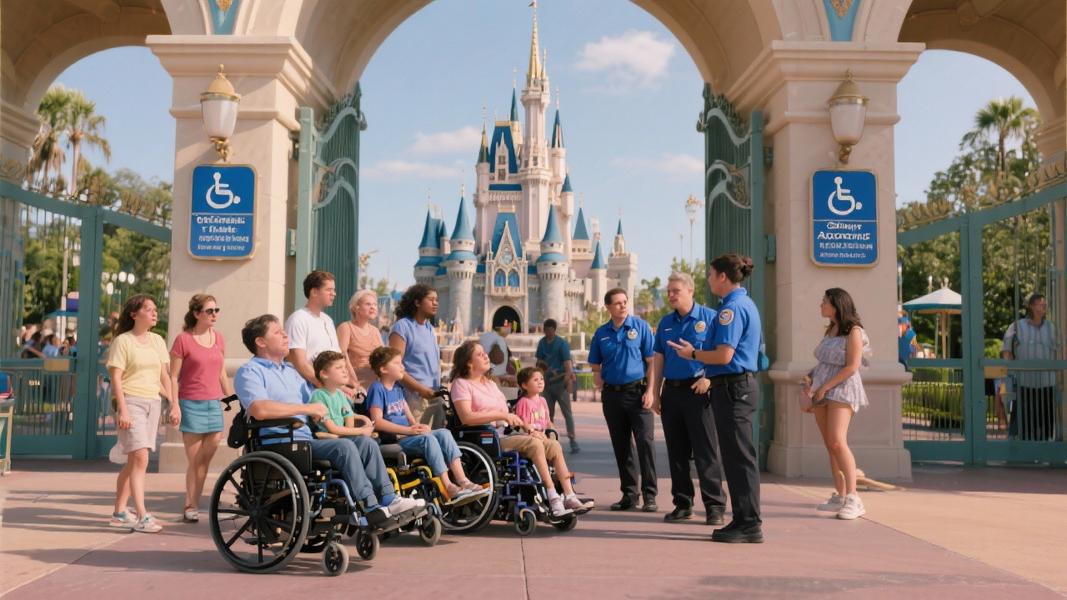
Disney’s once-welcoming approach to disabled visitors has morphed into a high-tech gauntlet that now requires video interviews and medical assessments just to skip long lines. The company’s increasingly restrictive Disability Access Service (DAS) has ignited controversy among guests who feel they’re being forced to prove they’re “disabled enough” for accommodations.
The DAS program, which allows qualifying guests and their immediate family members to bypass regular lines through online reservations, has undergone significant changes since its 2013 inception. Originally created to prevent abuse from paid “disabled tour guides” who would charge hundreds of dollars to help able-bodied guests cut lines, the program has since expanded dramatically – perhaps too much, according to Disney.
From Accommodation to Restriction
The heart of the controversy? Disney has narrowed DAS eligibility to focus primarily on guests with developmental disabilities such as autism who struggle with long wait times. This tightening comes after what Disney describes as unsustainable growth in the program, with the percentage of guests using DAS passes ballooning from around 5% to a staggering 20% over the past twelve years.
“They are making a determination about whether you’re disabled enough,” said Bonadurer, a professional travel adviser from Michigan. “I would love to wait in line with everyone else, and so would my son, since that would mean he has a normal life. But we don’t, and unfortunately for us, we need adaptations to how we wait,” she told reporters.
The new process requires applicants to complete a video interview via Zoom with both a Disney employee and a contracted medical professional who determine eligibility. Those found to be lying can be permanently banned from the parks – a severe consequence that has many guests with legitimate needs feeling intimidated.
Digital Barriers to Access?
Gone are the days of in-person registration at Guest Services. Now, everything happens virtually, which presents its own set of challenges. While the system is designed to accommodate guests with visual or hearing disabilities through screen readers and text chat options, the service is currently only available in English – creating a potential language barrier for international visitors or non-English speaking Americans with disabilities.
There have been some improvements, however. In May 2025, Disney extended the validity period of DAS registration from its initial 30 days to up to one full year – a welcome change for Annual Passholders and frequent visitors who previously faced the burden of repeated registration processes.
Legal Challenges Mount
Is Disney’s approach legally sound? That question is now at the center of a federal lawsuit challenging the company’s narrowed eligibility criteria. Meanwhile, a shareholder proposal submitted by DAS Defenders, an advocacy group opposed to the changes, is calling for an independent review of Disney’s disability policies.
Disney’s response has been swift and defensive. The company has informed the Securities and Exchange Commission of its intention to block the shareholder proposal ahead of its 2026 meeting, claiming it contains false and misleading information about reasons for attendance decline.
The legal pressure may already be having some effect. In early 2025, Disney quietly removed the word “only” from its DAS eligibility description, potentially broadening the category of qualifying guests. Before January, the website had explicitly stated: “DAS is intended to accommodate only those Guests who, due to a developmental disability like autism or similar…” The subtle linguistic shift suggests Disney may be softening its stance.
Alternative Accommodations
For visitors who don’t meet the DAS criteria, Disney points to other accommodations available throughout its parks. These include priority seating for wheelchair users, captioning for deaf guests, Braille maps, wheelchair transfer devices, quiet zones, ASL interpreters for some live shows, and allowances for service animals.
The company maintains that the Americans with Disabilities Act doesn’t require identical treatment for all disabilities – a legal position that may be tested as challenges to the new DAS system work their way through the courts.
What began as an anti-abuse initiative has evolved into something far more complex and controversial. As Disney attempts to balance legitimate accessibility needs against perceived program exploitation, the question remains: has the Most Magical Place on Earth lost some of its magic for those who need accommodations most?
