
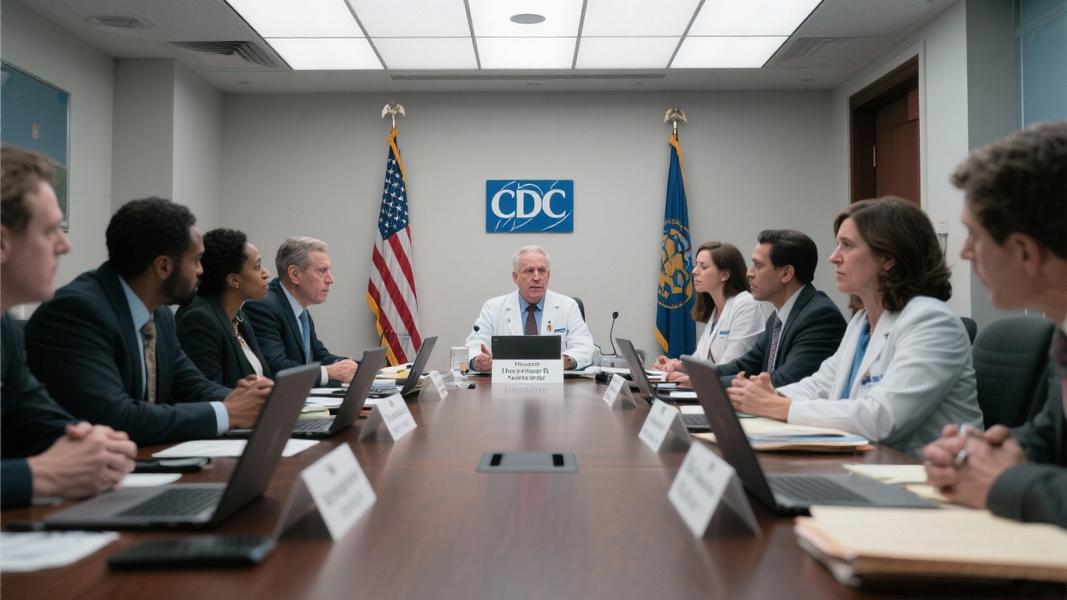
The Trump administration is dramatically reshaping America’s vaccine landscape, with a new CDC immunization schedule that prioritizes individual choice over blanket recommendations — a shift critics say could unravel decades of public health progress.
In a statement released this week, CDC Acting Director Jim O’Neill announced the agency’s 2025 adult and child immunization schedules will move away from universal COVID-19 vaccination recommendations toward an “individual-based decision-making” approach. “Informed consent is back,” O’Neill declared. “CDC’s 2022 blanket recommendation for perpetual COVID-19 boosters deterred health care providers from talking about the risks and benefits of vaccination for the individual patient or parent. That changes today.”
Liberty vs. Public Health
The policy shift reflects broader changes in vaccine governance under President Trump’s second term, where constitutional liberty principles have taken center stage. Administration officials have emphasized autonomous choice “without heavy-handed government intervention” — language that resonates with Trump’s base but alarms public health experts.
It’s a striking evolution for a president who once oversaw Operation Warp Speed’s rapid COVID-19 vaccine development. During his 2024 campaign, Trump increasingly questioned vaccine efficacy and revived long-disproven links between vaccines and autism.
The administration’s approach extends beyond rhetoric. Health Secretary Robert F. Kennedy Jr. — a longtime vaccine skeptic — is pushing reforms that could fundamentally alter how vaccines are manufactured and administered. Among the proposals: banning ingredients like aluminum and breaking multi-disease vaccines into single shots.
Vaccine manufacturers have warned such changes would cause significant disruptions. “If policymakers follow through on these ideas, vaccine makers could have to develop new alternatives to several key vaccines, a process that can take a decade or more and cost upwards of $1 billion,” industry representatives said.
States Push Back
How are states responding? With increasing alarm.
Illinois recently passed legislation specifically designed to counter federal vaccine policy changes. The bill, known as HB 767, codifies access to immunizations and empowers the Illinois Department of Public Health to provide science-based vaccine guidelines independent of federal recommendations.
The Illinois measure directly addresses what it calls the Trump administration’s “dismantling” of the Advisory Committee on Immunization Practices (ACIP), noting the president has been “firing members and appointing vaccine skeptics whose beliefs are not backed by science.” The law requires state-regulated insurance companies to cover vaccines recommended by Illinois health authorities and expands youth vaccine access by lowering the minimum age for pharmacist-administered vaccines from 7 to 3 years.
Other states are exploring similar protections. Policy experts at the Center for American Progress have outlined six ways states can safeguard vaccine access amid federal policy changes, citing concerns about “reduced access to and availability of vaccines” under current leadership.
The Science Question
The administration’s defenders argue their approach simply empowers individuals to make their own health choices. Critics counter that public health, by definition, requires collective action — and that science-based vaccine recommendations have helped eliminate or drastically reduce deadly diseases like polio, measles, and diphtheria.
That said, the CDC’s new individualized approach does align with declining public enthusiasm for COVID-19 boosters. Uptake rates have fallen steadily since 2022, with many Americans questioning the need for repeated vaccination against evolving variants.
Still, the broader implications worry medical organizations. Legislative efforts that might remove vaccine coverage from the Affordable Care Act’s essential health benefits could significantly limit access by shifting costs to individuals — potentially leading to lower vaccination rates across all age groups.
For parents navigating childhood immunizations, the coming years promise increasing complexity as federal guidance, state requirements, and medical recommendations potentially diverge in unprecedented ways. The established childhood vaccination schedule — long considered a cornerstone of preventive health — faces its most significant challenge in decades.
As one Illinois health official put it: “When it comes to vaccines, confusion is contagious too.”
