
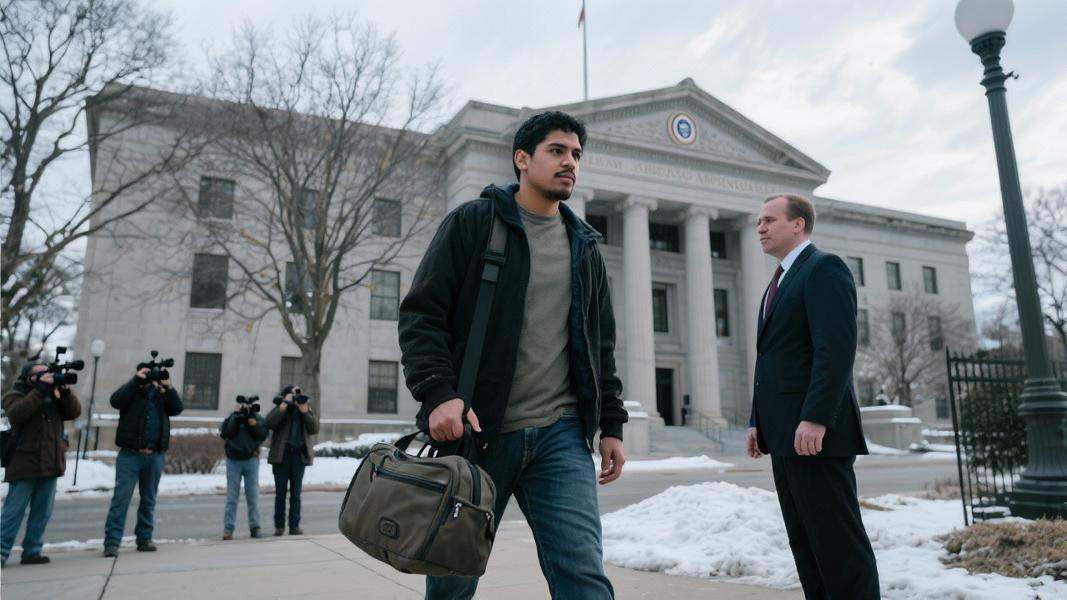
A Tarrant County jury began deliberations Thursday to determine the fate of Leland Williams, who admitted to shooting a sheriff’s deputy multiple times last year in a case that has drawn intense scrutiny from local law enforcement.
Williams pleaded guilty to aggravated assault against a peace officer for the November 2023 shooting that left Deputy Brent Brown, a 14-year veteran of the department, seriously wounded. The jury now faces a stark choice: prosecutors are pushing for a life sentence, while defense attorneys argue for leniency, citing their client’s remorse for the attack.
A Sudden Attack Caught on Camera
The shooting unfolded at Fort Worth Community Credit Union on Brentwood Stair Road. Surveillance footage presented during the trial shows Williams pacing anxiously inside the building before temporarily leaving. He then returns and approaches Deputy Brown before suddenly opening fire in a moment that stunned even veteran courthouse observers.
What motivated such violence? That question has loomed over the proceedings as the jury weighs the appropriate punishment for an attack that nearly claimed an officer’s life.
Deputy Brown sustained four gunshot wounds, requiring two major surgeries. In what prosecutors have characterized as a testament to his resilience, the deputy has since recovered and returned to full duty with the sheriff’s department.
Life in Prison or Something Less?
Defense attorney J. Eric Nichols acknowledged the severity of his client’s actions while arguing against the prosecution’s call for a life sentence. “He did a terrible thing, and he needs to be punished for it, and not a slap on the wrist. But it’s also not life in prison,” Nichols told the court.
The case appears on Tarrant County’s trial schedule under the 371st court docket, with Williams facing the specific charge of aggravated assault on a public servant – a first-degree felony that carries a potential sentence of 5 to 99 years or life in prison.
As deliberations continue, the case highlights the ongoing tensions surrounding violence against law enforcement and the complex considerations that go into sentencing defendants who express remorse after committing serious crimes.
The jury’s decision, expected in coming days, will ultimately determine whether Williams spends potentially the rest of his life behind bars or receives the second chance his defense team insists he deserves.
