
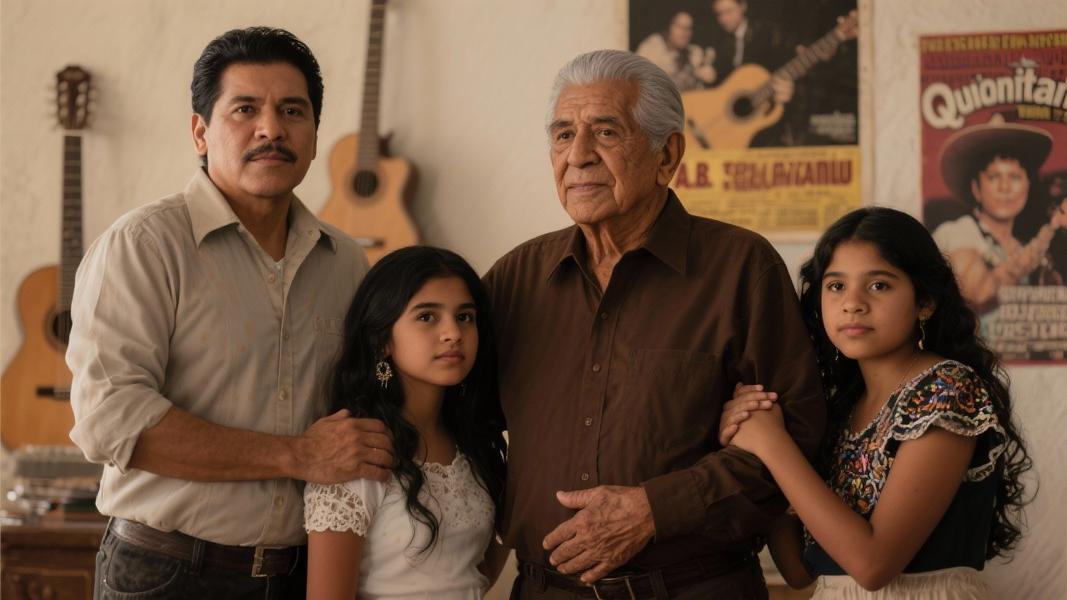
Abraham Quintanilla Jr., the fierce patriarch who sculpted his daughter Selena into a groundbreaking Tejano superstar, died Friday at age 86, leaving behind a musical dynasty and complicated legacy that extended far beyond his daughter’s tragic 1995 death.
“It’s with a heavy heart to let you guys know my Dad passed away today,” announced a family member in a statement that quickly spread across social media platforms where Selena’s fans — now spanning generations — still gather to celebrate her enduring influence on Latin music and culture, as confirmed by multiple sources.
From Band Manager to Legacy Keeper
Long before Selena became known simply by her first name, Abraham was already plotting the family’s musical trajectory. A musician himself, he founded the family band Selena y Los Dinos, positioning his youngest daughter as the centerpiece while siblings A.B. and Suzette played crucial supporting roles both musically and professionally, according to family interviews over the years.
What made Abraham different from countless other stage parents with starry-eyed ambitions? His daughter Suzette once reflected, “There are a lot of families who think, ‘My kids are talented, they sing, they’re awesome,’ but my dad, as a musician, saw something that we didn’t.”
That “something” transformed a local Texas act performing at weddings and quinceañeras into an international phenomenon that would eventually sell over 60 million records worldwide and break barriers for women in the male-dominated Tejano music scene.
Abraham’s management style was notoriously hands-on, some might say controlling. He negotiated contracts, selected songs, and meticulously guided every aspect of Selena’s career from her wardrobe to her public appearances. This approach generated both admiration and criticism throughout the industry.
After Tragedy, A New Mission
When Selena was murdered in 1995 by her fan club president at just 23 years old — on the cusp of crossing over into the English-language market — Abraham channeled his grief into preserving and expanding his daughter’s legacy.
The family opened a museum in Corpus Christi, Texas. They released posthumous albums. They approved a blockbuster biopic starring Jennifer Lopez that introduced Selena to new audiences. And through it all, Abraham remained the protective gatekeeper, sometimes clashing with others who sought to tell Selena’s story without his blessing.
Complicated? Absolutely. Abraham’s tight control over his daughter’s career and subsequent legacy has been both praised as devotion and criticized as exploitation. Yet even critics acknowledge the undeniable results: without his vision and determination, the world might never have discovered Selena’s transformative talent.
He is survived by his wife Marcella and their two remaining children, A.B. and Suzette, all of whom have continued to honor Selena’s memory through various projects and enterprises in the decades since her death.
For millions of fans across multiple generations, Abraham Quintanilla Jr. will forever remain the stern father figure glimpsed in interviews and immortalized in cultural depictions — the man who recognized his daughter’s star power before anyone else and built the foundation for what would become not just a music career, but a cultural phenomenon whose influence shows no signs of dimming nearly three decades after her death.
