
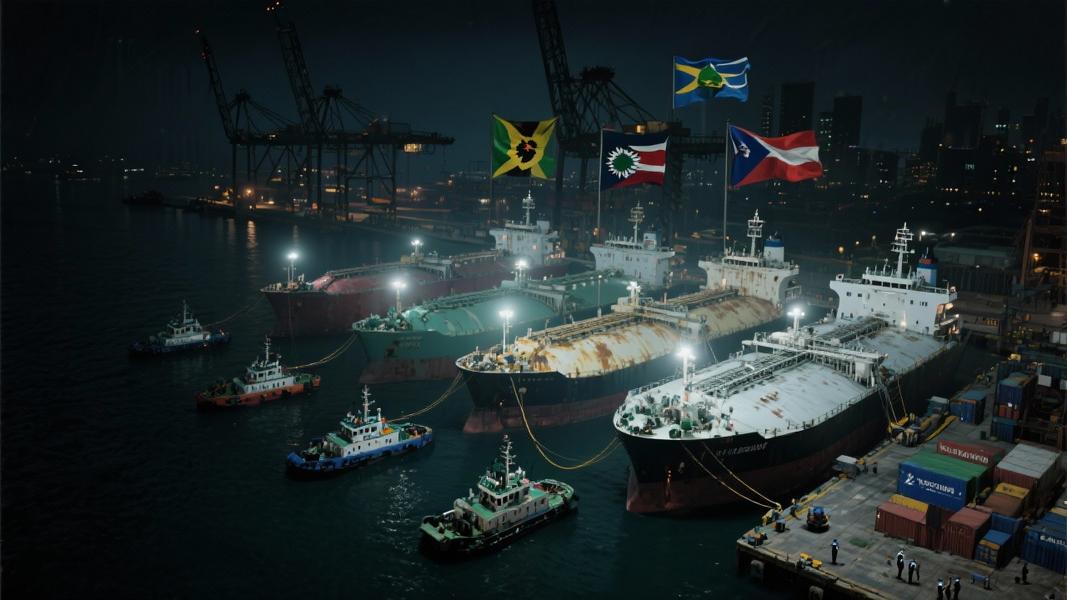
The U.S. Treasury is tightening its grip on Iran’s shadow fleet, targeting 29 vessels and their management companies in a sweeping sanctions action aimed at choking off Tehran’s petroleum revenue stream.
The Office of Foreign Assets Control (OFAC) announced the measures Wednesday as part of the Trump administration’s escalating pressure campaign against Iran’s petroleum sector, which officials say funds the country’s military and weapons programs.
“As President Trump has said repeatedly, the United States will not allow Iran to have a nuclear weapon,” said Treasury Under Secretary for Terrorism and Financial Intelligence John K. Hurley. “Treasury will continue to deprive the regime of the petroleum revenue it uses to fund its military and weapons programs.”
Shadow Fleet Crackdown Intensifies
Since returning to office, the Trump administration has sanctioned more than 180 vessels involved in transporting Iranian oil products. The strategy aims to drive up costs for Iranian exporters while reducing revenue per barrel sold.
This latest action specifically targets vessels like the Palau-flagged NEBULA DRIFT and AETHER SAIL, along with the Panama-flagged TIDAL RHYTHM and VOYAGER HAVEN. All four ships, managed by UAE-based Phoenix Ship Management FZE, have transported hundreds of thousands of barrels of Iranian petroleum products in 2025, including condensate, bitumen, and naphtha.
Why target these specific vessels? They represent just a fraction of what officials describe as a sophisticated network of ships using deceptive practices to evade international sanctions.
Other vessels named in the action include the ARIHANT, which has transported hundreds of thousands of barrels of Iranian fuel oil and bitumen within the Persian Gulf since July 2025, and multiple KURDOS-branded vessels linked to moving Iranian petroleum products.
Companies in the Crosshairs
The Treasury’s action doesn’t stop with vessels. A total of 17 companies have been designated for operating in Iran’s petroleum sector, including Phoenix Ship Management FZE, Arihant Shipping Inc., Kurdos Shipping Inc., and over a dozen others.
Perhaps most notably, UAE-based Egyptian businessman Hatem Elsaid Farid Ibrahim Sakr has been designated along with his companies Red Sea Ship Management LLC and High Seas Petroleum LLC. Treasury officials allege these entities have transported “large quantities of Iranian petroleum products” in coordination with front companies associated with Iran’s Ministry of Defense and Armed Forces Logistics.
Sakr’s network includes vessels like SKYLIGHT, KHADIGA, and INTAN PREMIER, which have moved Iranian naphtha, bitumen, and fuel oil. In what appears to be an attempt to evade detection, Sakr reportedly transferred management of several vessels to Qatrat Alnada Almasi Ship Management L.L.C.
That company now finds itself in Treasury’s sights too. Qatrat Alnada Almasi has been identified for sanctions, with four of its vessels — SEA WISE, SEAMULL, SEA ROCK, and SEA CITRINE VI — listed as blocked property. Officials note these vessels have made multiple port calls to Houthi-controlled ports in Yemen, suggesting a potential link between Iranian oil exports and support for regional proxies.
Consequences and Compliance Risks
The practical effect of these sanctions? All property and interests belonging to the designated persons that are in the United States or controlled by U.S. persons are now blocked and must be reported to OFAC.
For financial institutions and businesses, the stakes couldn’t be higher. OFAC operates on a strict liability basis, meaning civil penalties can be imposed regardless of whether a violation was intentional. Even non-U.S. entities face significant risk if they engage with these designated persons or vessels.
“Violations of U.S. sanctions may result in the imposition of civil or criminal penalties on U.S. and foreign persons,” the Treasury warned in its statement.
The move comes amid broader tensions with Iran and represents the latest chapter in what has become an increasingly sophisticated cat-and-mouse game between Iranian oil exporters and U.S. sanctions enforcers. As tankers change flags, switch off tracking systems, and operate through layers of shell companies, Treasury officials appear determined to keep pace with these evasion tactics.
For now, the shadow fleet finds itself navigating increasingly treacherous waters — both literally and figuratively — as the economic vise around Iran’s petroleum exports continues to tighten.
