
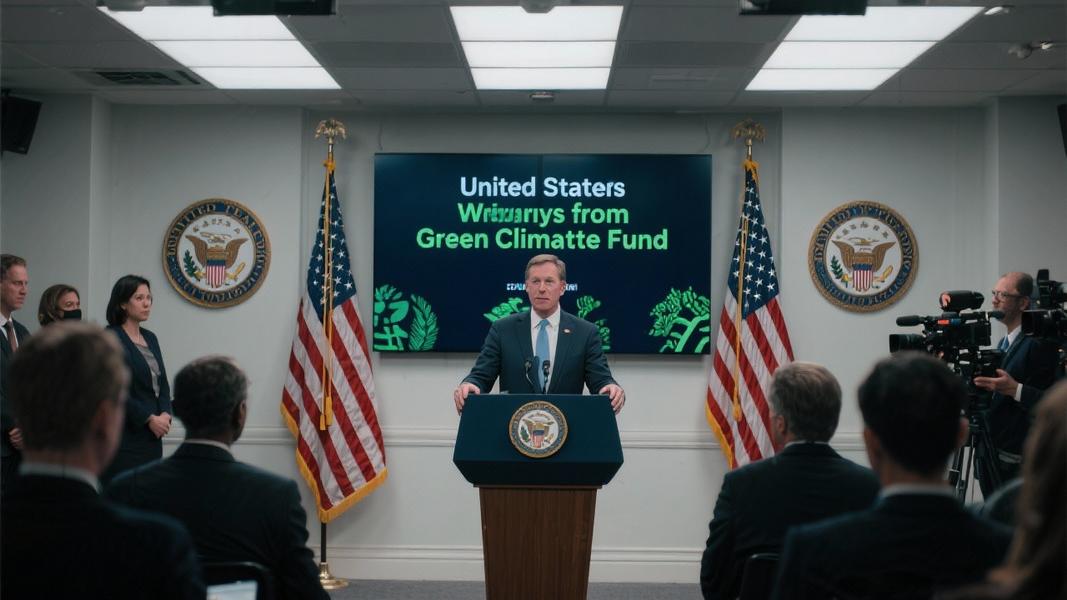
President Trump Orders U.S. Withdrawal from Climate Agreements, 66 International Organizations
In a sweeping move that reverses years of American climate policy, the Trump administration announced the immediate withdrawal of the United States from the Green Climate Fund (GCF) and its intention to exit dozens of international organizations, including key climate bodies.
The Treasury Department confirmed that the U.S. is vacating its seat on the GCF Board, with Treasury Secretary Scott Bessent declaring: “Our nation will no longer fund radical organizations like the GCF whose goals run contrary to the fact that affordable, reliable energy is fundamental to economic growth and poverty reduction.”
This dramatic policy shift stems from a Presidential Memorandum signed by President Trump directing U.S. withdrawal from 66 international organizations deemed “contrary to the interests of the United States.” A White House factsheet justified the move by claiming many of these bodies “promote radical climate policies, global governance, and ideological programs that conflict with U.S. sovereignty and economic strength.”
Climate Commitments Unraveled
Among the organizations targeted is the United Nations Framework Convention on Climate Change (UNFCCC), the foundation of international climate cooperation that the U.S. has participated in since 1992. The Environmental Defense Fund confirmed that the withdrawals also include the Intergovernmental Panel on Climate Change (IPCC), which provides scientific assessments on climate change used by policymakers worldwide.
In his memorandum, President Trump stated: “I have considered the Secretary of State’s report and, after deliberating with my Cabinet, have determined that it is contrary to the interests of the United States to remain a member of, participate in, or otherwise provide support to the organizations listed in section 2 of this memorandum.”
What does this mean for global climate efforts? The Union of Concerned Scientists reports that the withdrawal encompasses a total of 66 international organizations, representing one of the most significant retreats from global cooperation in recent U.S. history.
Warnings of Economic Consequences
UNFCCC Executive Secretary Simon Stiell warned that this withdrawal could backfire economically. “Step back from climate cooperation will hurt U.S. economy,” Stiell cautioned, arguing that American households and businesses will face higher costs for energy, food, transportation and insurance as climate impacts intensify without coordinated global action.
The decision marks Trump’s second major withdrawal from climate agreements during his presidency. During his first term, Trump pulled the United States out of the Paris Climate Agreement, though the Biden administration later rejoined the accord.
Critics from environmental organizations have characterized the move as undermining America’s global leadership position. “This isn’t just about climate policy,” said one environmental advocate who requested anonymity. “It’s about whether America wants a seat at the table where global rules are made.”
The Treasury Department has directed all federal agencies to take immediate steps to implement these withdrawals, though legal experts suggest some withdrawals may face procedural hurdles or require congressional approval.
For now, as the U.S. climate policy pendulum swings dramatically once again, the world watches to see how global climate negotiations will adapt to the absence of one of its most influential — and historically, one of its highest-emitting — participants.
