
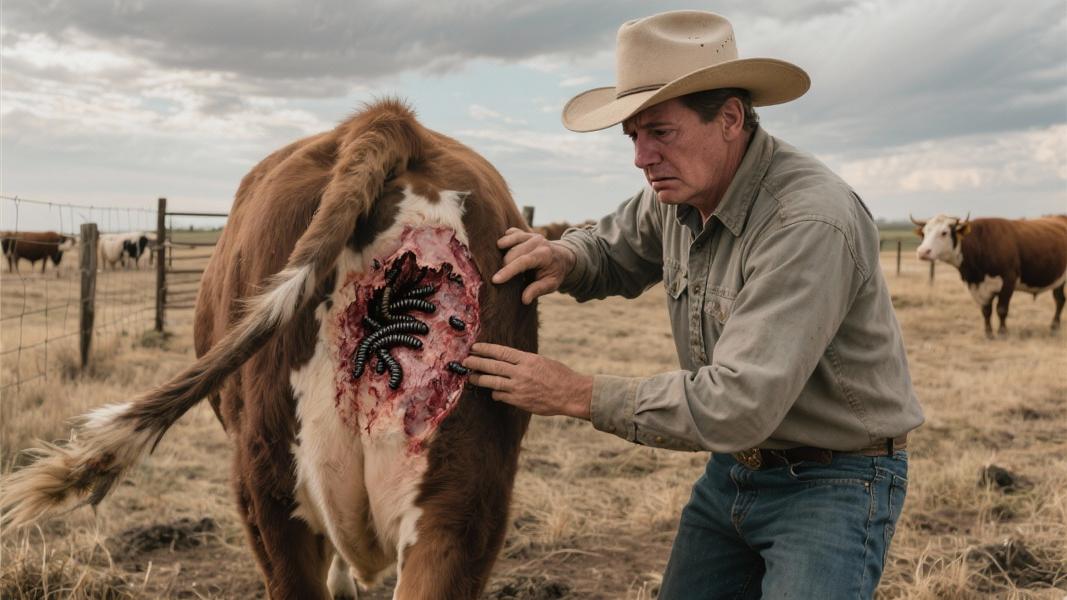
Flesh-Eating Parasite Inches Closer to Texas as New Cases Confirmed in Northern Mexico
Agricultural officials in Texas are sounding the alarm after the deadly New World screwworm — a parasite that literally eats living flesh — has been detected just 200 miles from the U.S. border in Mexico’s Tamaulipas state. The confirmation marks the northernmost detection of the destructive pest, raising fears that it’s steadily advancing toward Texas livestock operations without help from commercial transport.
The Texas Department of Agriculture confirmed a case approximately 215 miles from the Texas border in González, Tamaulipas, urging producers to increase surveillance of their herds and quickly report suspicious wounds. This detection follows a separate case discovered less than 200 miles from the border, establishing a troubling pattern of northward movement.
A Nightmare for Livestock Producers
New World screwworm isn’t just another pest. The parasite lays eggs in open wounds of living animals, where hatched larvae then feed on the animal’s living tissue — a gruesome fate that can kill livestock and wildlife if left untreated. Its reemergence near Texas has agricultural officials deeply concerned about potential economic impacts.
“The continued detections of New World screwworm near the Texas border are grim reminders of the serious threat this pest poses to our state,” agricultural leaders warned in a recent statement. The parasite had been eradicated from the United States decades ago, but its potential return threatens to upend that hard-won victory.
What’s particularly alarming about these recent findings? The latest case involved a newborn calf roughly 197 miles from the U.S.-Mexico border, indicating the parasite is establishing itself in northern Mexican livestock populations — a concerning development for Texas ranchers who fear it’s only a matter of time before the pest crosses the border.
Federal Response Takes Shape
The U.S. Department of Agriculture isn’t waiting for an outbreak on American soil. The agency has launched an $8.5 million sterile fly dispersal facility in Edinburg, South Texas, as part of a comprehensive strategy to detect and eliminate the pest along the southern border.
“Curbing the spread of the destructive New World screwworm is critical to protecting the Texas agriculture and livestock industry, and this new sterile fly distribution facility in Edinburg is a significant step in the right direction,” the USDA stated in a recent announcement.
The strategy relies on a proven technique: releasing sterile male flies that mate with wild females, resulting in no offspring and eventually collapsing the population. It’s the same approach that successfully eradicated the pest from the U.S. decades ago.
But the clock is ticking. Agricultural officials report that the parasite appears to be moving northward independently of commercial animal transport — a troubling development suggesting natural spread that could be harder to contain.
Vigilance Required
For now, Texas livestock producers are being told to remain on high alert. Symptoms of screwworm infestation include unusual wounds that don’t heal, visible larvae in wounds, and animals showing signs of pain or distress. Early detection and treatment are crucial to preventing spread.
The stakes couldn’t be higher for Texas’s multi-billion dollar livestock industry. If established in the state, New World screwworm could cause devastating animal losses and trigger costly quarantines that would ripple through the agricultural economy.
As federal and state officials ramp up prevention efforts, the question remains whether they can stay ahead of this flesh-eating threat that’s steadily marching toward the Texas border — a race against time with no room for error.
