
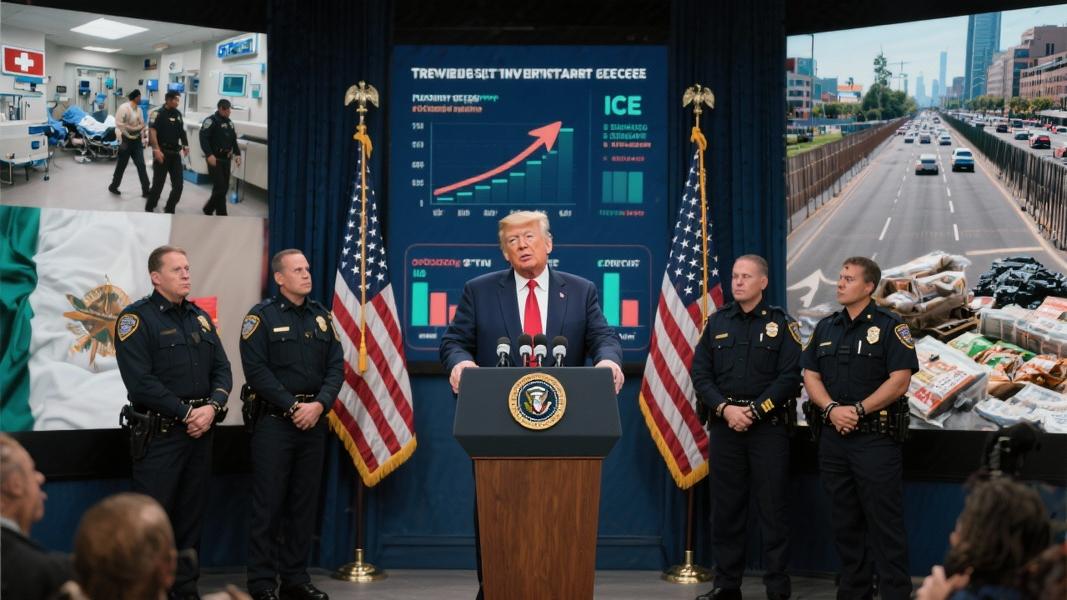
Crime rates have plummeted across America in 2025, with homicides down 17% and gun assaults dropping 21% — coinciding with the Trump administration’s aggressive immigration enforcement that has seen ICE arrests soar to over 300,000 nationwide.
The dramatic decline in violent crime has sparked fierce debate over whether the administration’s hardline immigration policies deserve credit for the safer streets or if the improvement simply continues trends that began years earlier. According to Fox News, the first half of 2025 has seen robberies fall by 20% and carjackings plummet by 24% compared to the same period last year.
Immigration Enforcement Reaches Historic Levels
By December, the Trump administration claimed 2.5 million undocumented immigrants had left the United States — with over 622,000 formal deportations and the remainder departing through voluntary returns or “self-deportation” programs. Immigration arrests have surged more than 500% in California alone.
The scale of the enforcement operation is unprecedented in modern American history. Detention funding has expanded more than 400% from approximately $3 billion in fiscal year 2019 to over $14 billion in FY2025, with projections exceeding $15 billion next year, according to Forum Together, which documented the dramatic shift in federal spending priorities.
One striking change: non-criminal immigrants now outnumber those with criminal convictions in ICE custody, representing a significant shift in enforcement priorities.
Cause or Correlation?
Is the crime drop really connected to immigration enforcement? The Vera Institute argues that today’s safer streets have little to do with the administration’s policies. “Looking at crime rates across the country and across categories of crime, it is clear that the decline in 2025 is a continuation of a downward trend that began in 2023,” the criminal justice reform organization stated in a recent analysis.
The institute attributes the improvements to earlier federal investments in community violence intervention programs and social services rather than immigration crackdowns.
Yet many Americans see a connection. A recent Pew Research survey found that while the public views Trump’s immigration approach more negatively than positively overall (42% approving versus 47% disapproving), a plurality expects his policies will lead to less crime. “By about two-to-one, Americans expect the policies to result in less crime (41%) rather than more crime (20%),” Pew reported in June.
Policy Evolution
The administration has moved aggressively to reinstate and expand restrictions on immigration. Among the most controversial: the revival of the “Zero Tolerance” policy, which now seeks regulatory authority to detain migrant children and their parents together until their immigration cases are fully adjudicated.
“The primary provision in these proposed regulations would be the authority to hold migrant children and their parents until their cases have been adjudicated,” according to a Congressional Research Service report examining the policy’s implementation.
What’s different this time? The administration has implemented broader biometrics collection, new visa rules, and significantly higher costs for immigration applications and processes — changes that the American Immigration Council warns have raised substantial civil liberties concerns.
The Human Cost
Despite the falling crime statistics, critics point to the enormous human and financial costs of the enforcement surge. With detention facilities filling to capacity and the price tag approaching $15 billion annually, questions persist about sustainability.
The administration’s approach has produced mixed reactions across the political spectrum. Immigration hardliners celebrate the tougher stance while humanitarian organizations express alarm at the scale of deportations and detentions of people without criminal records.
As both crime rates and immigration enforcement numbers continue to evolve, one thing remains certain: the intersection of public safety, immigration policy, and resource allocation will remain at the center of American political debate well beyond 2025.
