
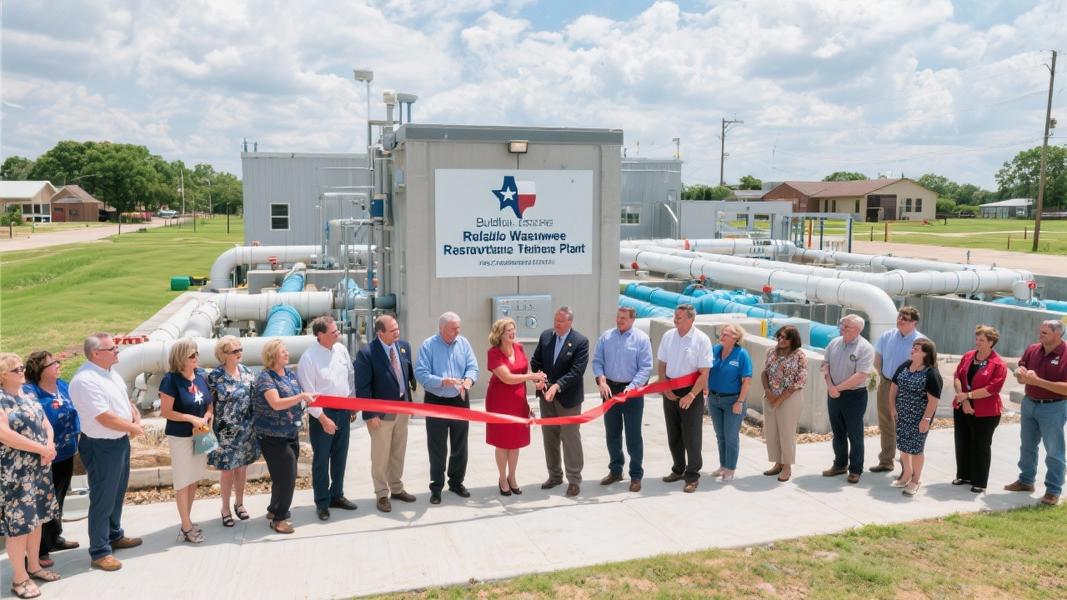
BUFFALO, Texas — A small Texas city just got a major upgrade to protect its essential infrastructure from the next big storm. On Tuesday, state and local officials gathered to celebrate the completion of Buffalo’s improved wastewater treatment plant, a $9.6 million project aimed at strengthening the community against future natural disasters.
Texas Land Commissioner Dawn Buckingham joined Buffalo city leaders for the ribbon-cutting ceremony, marking the completion of critical improvements funded by the Texas General Land Office’s disaster mitigation program.
“Investments like this wastewater treatment plant ensure that Texas communities have the infrastructure they need to withstand future disasters,” Buckingham said at the event. “The Texas General Land Office is proud to partner with local leaders in Buffalo to strengthen essential services and protect families during severe storm events. These projects are about planning ahead and building a stronger Texas.”
Building Resilience After Disaster
The Buffalo project represents just one piece of a much larger statewide effort. The funds come from the Community Development Block Grant – Mitigation program, with the GLO allocating more than $1.1 billion for competitive mitigation projects across Texas counties affected by disasters in 2015, 2016, and 2017.
Buffalo’s $9.6 million award specifically stems from the 2016 Mitigation Competition, targeting communities that suffered damage during that year’s severe storms and flooding. The city’s wastewater system had previously been vulnerable to service outages during extreme weather events — a common but critical weakness in aging infrastructure throughout rural Texas.
What exactly does “mitigation” mean for a small city like Buffalo? In practical terms, the upgraded facility now features reinforced structures, improved drainage systems, and backup power capabilities designed to keep essential services running even when the next major storm hits.
Local officials expressed relief at the completion of the project, which had been in development for several years. The improvements are expected to benefit nearly all of Buffalo’s approximately 1,900 residents by ensuring continuous wastewater treatment during emergencies.
Part of a Broader Recovery Effort
The Buffalo project highlights the massive scale of disaster recovery work happening across Texas. The GLO currently oversees more than $14 billion in federal funds dedicated to helping communities recover from past disasters and prepare for future risks.
That’s no small task in a state regularly battered by hurricanes, floods, winter storms, and other natural disasters. The mitigation program represents a shift in disaster management philosophy — from simply rebuilding what was lost to constructing more resilient systems that can withstand future events.
“These kinds of infrastructure improvements aren’t always visible to residents in their daily lives,” said a local official attending the ceremony. “But when the next storm hits and the lights stay on, when the wastewater system keeps functioning — that’s when people will really appreciate this investment.”
The GLO indicates that similar projects are underway throughout the state, with communities using federal disaster funds to upgrade drainage systems, improve emergency response facilities, and strengthen other critical infrastructure.
For Buffalo, a city located between Dallas and Houston along Interstate 45, the improved wastewater treatment plant represents more than just upgraded pipes and pumps — it’s insurance against the next disaster that might otherwise have crippled essential services.
As climate experts predict increasingly severe weather patterns across Texas in coming decades, investments like Buffalo’s wastewater treatment plant may prove to be the difference between quick recovery and prolonged crisis when the next major storm inevitably arrives.
