
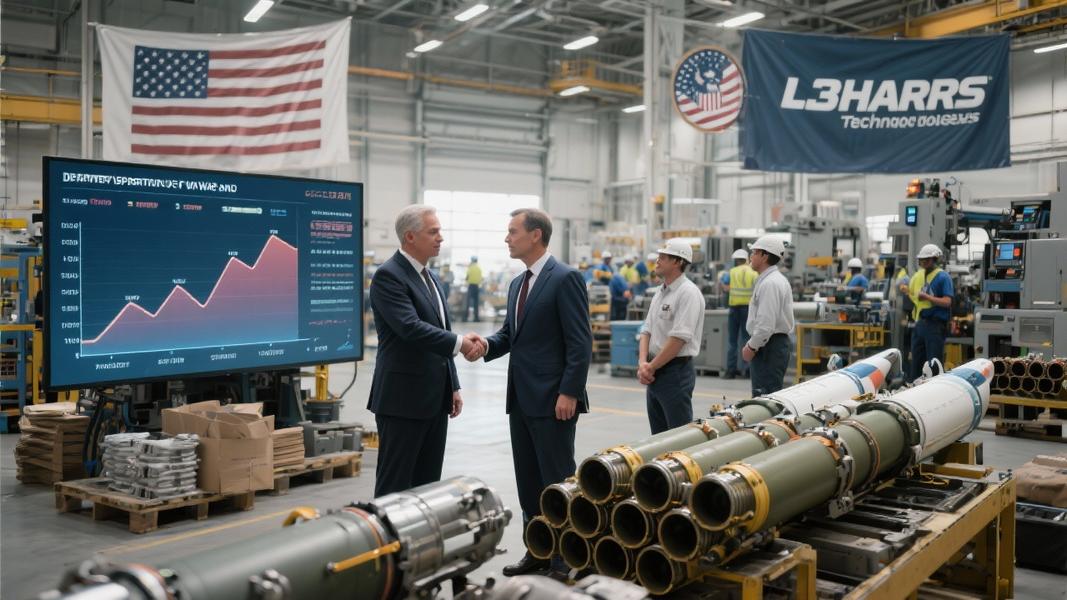
The Pentagon is diving directly into the missile supply chain with a $1 billion investment in L3Harris Technologies’ rocket motor business, marking an unprecedented shift in how the Defense Department secures critical munitions capabilities.
In a move that sent L3Harris shares soaring more than 11% in pre-market trading, the Department of War announced it will take a convertible preferred equity stake in the company’s Missile Solutions business. The investment will automatically convert to common equity when the unit completes its planned IPO in the second half of 2026.
“We are fundamentally shifting our approach to securing our munitions supply chain,” said Michael Duffey, Under Secretary of War for Acquisition and Sustainment, in a statement that underscores the Pentagon’s growing concern about industrial capacity for critical defense systems.
From Acquisition to Spinoff
The billion-dollar bet comes as L3Harris restructures its portfolio following its acquisition of Aerojet Rocketdyne. The defense contractor is creating a separate publicly traded company focused exclusively on missile propulsion systems, while maintaining a controlling interest after the IPO.
Why the Pentagon’s direct investment? The funding specifically targets expansion of production capacity for solid rocket motors used in critical missile programs including PAC-3, THAAD, Tomahawk, and Standard Missile – all systems that have faced supply constraints amid rising global tensions and increasing demand from allies.
L3Harris CEO Christopher Kubasik framed the move as aligned with broader defense industrial base priorities: “L3Harris is strongly committed to the Department of War’s vision for a faster, more agile defense industrial base while remaining laser-focused on driving value for our shareholders and customers,” he noted as part of the company’s broader reorganization.
Portfolio Reshuffling
The Pentagon investment isn’t happening in isolation. In a parallel move, L3Harris has agreed to sell a controlling stake in its space propulsion and power systems business to AE Industrial Partners for $845 million, though it’s keeping about 40% ownership and excluding the RS-25 rocket engine program from the deal.
This complex corporate reshuffling follows L3Harris’ earlier acquisition of Aerojet Rocketdyne, which significantly expanded its missile propulsion capabilities – the very assets now being spun off with Pentagon backing.
The investment will take the form of convertible preferred securities that automatically convert to equity upon the planned IPO, according to reports from those familiar with the structure.
Strategic Implications
Defense analysts see this as more than just financial engineering. It’s a concrete signal that the Pentagon is willing to put serious capital behind ensuring domestic production of critical defense components – especially as global supply chains remain vulnerable and demand for precision munitions continues to climb.
The timing couldn’t be more significant. With ongoing conflicts straining munitions inventories worldwide and concerns about industrial capacity constraints, the Department of War appears to be taking a more interventionist approach to securing critical defense production capabilities.
L3Harris’ Missile Solutions business, born from the Aerojet Rocketdyne acquisition, will now benefit from a substantial cash injection to expand production capacity at a time when such expansion is deemed vital to national security.
What remains to be seen is whether this direct investment model becomes a template for other critical defense industrial base sectors. The Pentagon has traditionally relied on contracts and incentives rather than equity investments to shape industrial outcomes.
For investors, the news represents a win-win: government backing for a major business segment while L3Harris maintains strategic flexibility through its parallel divestiture of space propulsion assets to AE Industrial Partners.
As defense priorities continue to evolve in an increasingly unstable global environment, this billion-dollar bet suggests the Pentagon isn’t just talking about industrial base resilience anymore – it’s putting real money on the table.
