
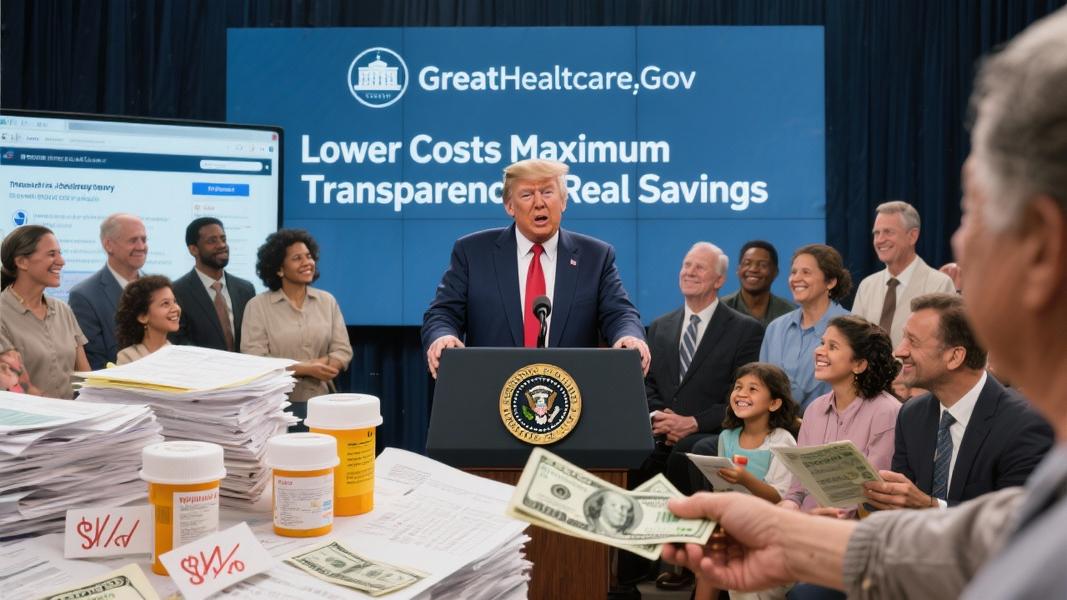
President Trump has unveiled what he’s calling “The Great Healthcare Plan,” a sweeping proposal aimed at lowering drug prices, reducing insurance premiums, and putting money “directly in people’s pockets” instead of insurers’ coffers.
The plan, announced by the White House this month, represents Trump’s latest effort to reshape the American healthcare landscape with a focus on cost transparency and consumer-directed funding. At its core, the proposal seeks to slash prescription costs by reforming how pharmacy benefit managers operate while implementing stricter price transparency requirements for health insurance companies.
Targeting the Middlemen
One of the plan’s key components involves significant reforms to pharmacy benefit managers — the often-criticized middlemen in the prescription drug supply chain. The proposal includes codifying Trump’s previously proposed “Most Favored Nation” drug policies, which would tie American pharmaceutical prices to lower international rates.
“The days of Americans subsidizing the rest of the world’s medications are over,” a senior administration official told reporters during a background briefing. The approach marks a continuation of Trump’s first-term efforts to rein in drug costs, though previous attempts faced significant pharmaceutical industry pushback.
Perhaps most notably, the plan would redirect healthcare subsidies. Rather than sending money to insurance companies, as is currently done under the Affordable Care Act, funds would go directly to consumers. The administration argues this shift would empower patients while increasing competition among insurers.
Cost Savings and Transparency
How much could Americans save? According to White House estimates, the plan’s cost-sharing reduction program would save taxpayers at least $36 billion while reducing premiums for common Obamacare plans by more than 10%. These projections, however, have yet to be independently verified by the Congressional Budget Office.
The proposal builds on transparency initiatives begun during Trump’s first term. A new regulation jointly proposed by the IRS, Department of Labor, and Health and Human Services would strengthen standardization and accessibility requirements for public pricing disclosures in group health plans, expanding rules first implemented in 2020.
Starting in 2026, all Bronze and Catastrophic health plans would work with Health Savings Accounts, giving consumers more options to pay for healthcare expenses, according to information published on Healthcare.gov.
Political Realities
The proposal faces a challenging path through Congress. Democrats have already voiced skepticism about any plan that might weaken the Affordable Care Act’s protections, while some fiscal conservatives have questioned the funding mechanisms.
Still, healthcare costs remain a top concern for American voters across party lines. A recent Gallup poll found that 73% of Americans worry about healthcare affordability — a political reality both parties acknowledge heading into the next election cycle.
For now, the administration is framing the Great Healthcare Plan as a patient-centered alternative to what Trump has repeatedly called “the failed Obamacare experiment.” Whether it can gain the legislative traction needed to move from proposal to policy remains to be seen.
