
U.S. and Japan forge deeper defense ties amid rising Indo-Pacific tensions, with Tokyo’s military spending reaching historic levels as both nations eye China’s growing assertiveness in the region.
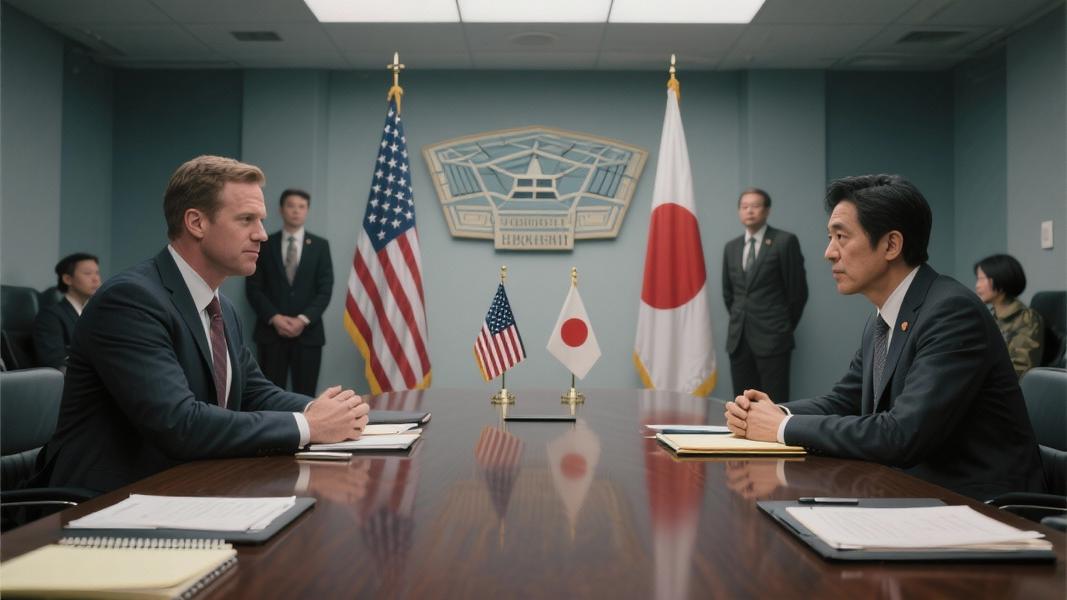
In a high-stakes Pentagon meeting Thursday, U.S. Secretary of War Pete Hegseth and Japanese Defense Minister Shinjirō Koizumi agreed to significant upgrades to their military alliance, including enhanced command structures and increased force posture near Japan’s southwestern frontier — a region increasingly threatened by China’s territorial ambitions.
The January 15 talks, detailed in a readout from Chief Pentagon Spokesman Sean Parnell, come just weeks after Japan approved a record-breaking $58 billion defense budget for fiscal year 2026, representing a 3.8% increase from the previous year and marking the fourth year of Tokyo’s ambitious five-year military buildup plan.
Japan’s Military Renaissance
What’s driving this dramatic shift in Japan’s defense posture? The answer lies partly in China’s increasingly aggressive actions throughout the Indo-Pacific, coupled with North Korea’s missile tests and Russia’s continued military activities near Japanese airspace.
The new Japanese budget includes $640.6 million for the country’s “SHIELD” coastal defense system, designed to protect Japan’s vulnerable island chains. It also funds construction of one New FFM frigate ($667 million), two Sakura-class offshore patrol vessels ($182.3 million), and one Taigei-class submarine at a price tag of $773 million.
Japan’s military procurement from the United States has skyrocketed in recent years. Foreign Military Sales from America to Japan totaled nearly 1.4 trillion yen in FY2023 — more than triple the 407.8 billion yen spent just five years earlier, according to government figures.
“The leaders affirmed the critical role of the U.S.-Japan alliance in deterring aggression in the Indo-Pacific,” the Pentagon statement noted, using diplomatic language that barely conceals the alliance’s primary concern: China.
Strategic Shifts
During their talks, Hegseth and Koizumi agreed on four key initiatives: upgrading alliance command-and-control architectures, enhancing bilateral training and exercises, improving alliance force posture specifically in Japan’s Southwest Islands, and deepening cooperation on defense industrial matters.
The focus on the Southwest Islands — which include Okinawa and extend close to Taiwan — signals growing concern about potential Chinese military action in the Taiwan Strait. Japanese officials have increasingly acknowledged that “Japan’s military could get involved if China were to take action against Taiwan, which Beijing says must come under its rule.”
This represents a remarkable evolution for Japan, whose post-WWII pacifist constitution has long limited its military to strictly defensive operations. But those constraints have been gradually loosening under pressure from regional threats and American encouragement.
Tokyo now aims to double its annual defense spending to 2% of GDP — matching NATO’s target for its European members — with the FY2026 budget representing the fourth year of this five-year program. Japanese officials plan comprehensive revisions to the country’s security policy by December 2026.
The growing U.S.-Japan security relationship reflects a broader realignment taking shape across the Indo-Pacific, as countries from Australia to the Philippines strengthen military ties in response to Beijing’s territorial claims and naval expansion.
For now, both Washington and Tokyo seem determined to present a united front. Whether this deterrence strategy will succeed in maintaining regional stability — or instead accelerate an arms race — remains the unanswered question hanging over the Pacific.
