
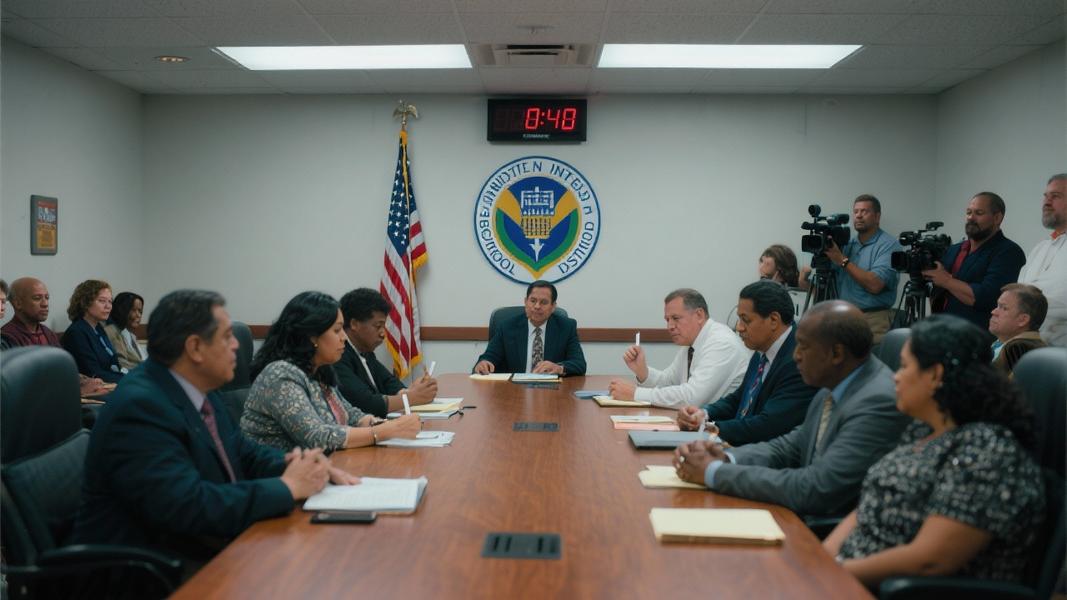
After more than half a century, the last remaining federal desegregation order in Texas appears headed for the history books. Garland Independent School District trustees are set to vote on January 20, 2026, to end federal oversight that began in 1970 when schools across America were still grappling with the aftermath of the civil rights movement.
The U.S. Attorney’s Office has formally backed the district’s bid for freedom from federal supervision, filing a motion to lift the 55-year-old court order that has shaped the district’s policies for generations. It’s a watershed moment for a district that once operated George Washington Carver, a segregated school for Black students.
U.S. Attorney Ryan Raybould didn’t mince words when supporting the district’s release from oversight, stating there’s “no question Garland ISD has complied with the plan.” His office’s motion emphasizes the massive demographic shifts that have transformed both the district and broader Dallas-Fort Worth metroplex since 1970.
Last of Its Kind in Texas
How significant is this move? Garland ISD stands alone as the final Texas school district still operating under such a court order, a vestige from an era when federal courts actively intervened to dismantle segregated school systems following the landmark Brown v. Board of Education decision.
The push to end the order comes amid the broader national context of the Trump administration’s stated commitment to overturn what it considers outdated court-ordered desegregation plans across the country, as noted by education policy observers.
But it’s the demographic reality that makes the strongest case for ending oversight. The district that was once concerned with integrating white and Black students now operates in an entirely different world. No school in the district exceeds 36% white student enrollment, with the district-wide white student population dipping below 13%, according to federal prosecutors.
“Garland ISD eliminated its system of formal segregation many years ago, including by doing away with the former segregated Carver school, and the demographic composition of its schools today… indicates that there are also no remaining vestiges of any former discriminatory policies,” federal attorneys argued in court documents.
The district has transformed dramatically since 1970, when federal courts first stepped in to ensure integration was more than just a promise on paper. That original order came just 16 years after the Supreme Court’s Brown decision declared “separate but equal” schools unconstitutional, at a time when many districts across the South were still resisting meaningful integration.
For today’s students — none of whom were born when the order was issued — the formal end of court oversight might seem like a technicality. Yet it represents the closing of a significant chapter in both local and national civil rights history.
If trustees approve the measure as expected, it will mark a symbolic milestone in America’s long, uneven journey toward educational equality — while raising questions about what tools remain to address modern educational disparities that persist along socioeconomic and demographic lines.
