
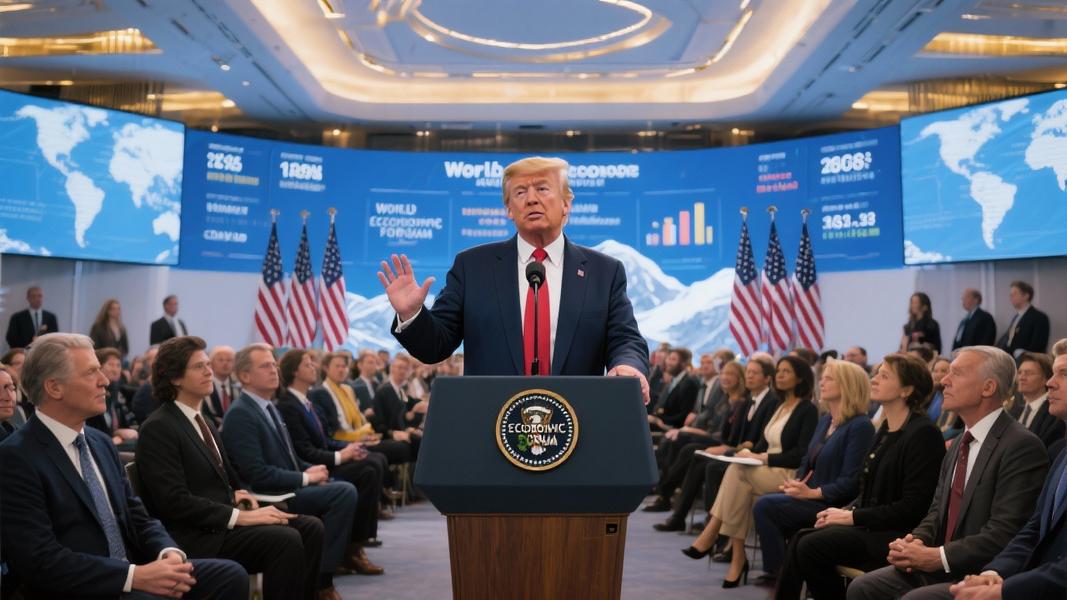
President Trump unveiled sweeping economic initiatives Tuesday, taking aim at institutional investors by signing an executive order that prohibits large corporations from purchasing single-family homes across America.
“Homeownership has always been a symbol of the health and vigor of American society, but that goal fell out of reach for millions and millions of people in the Biden era,” Trump declared from the White House. “Homes are built for PEOPLE, not for corporations — and America will NOT become a nation of renters.”
Housing Market Interventions
The executive action comes amid growing concerns about corporate ownership of residential properties, which critics say has contributed to rising home prices and reduced availability for individual buyers. Trump also called on Congress to make the ban permanent through legislation.
Beyond restricting corporate buyers, the administration has moved aggressively to lower mortgage rates. Trump announced he has “instructed government-backed institutions to purchase up to $200 billion in mortgage bonds to bring down interest rates,” a measure that appears to have already shown results.
“Last week, the average 30-year mortgage rate dropped below 6% for the first time in many years,” the president noted, pointing to what his administration considers an early win for American homebuyers.
Consumer Credit Proposals
In what might be his most controversial economic proposal, Trump called for a temporary cap on credit card interest rates at 10% for one year. The measure would require congressional approval.
“The profit margin for credit card companies now exceeds 50% — one of the biggest — and they charge Americans interest rates of 28%,” Trump stated. “To help our citizens recover from the Biden disaster… I’m asking Congress to cap credit card interest rates at 10% for one year.”
Financial industry representatives have not yet responded to the proposal, though similar measures have faced significant opposition from banking lobbyists in the past.
Cryptocurrency and Economic Achievements
Cryptocurrencies, once a frequent target of regulatory scrutiny, appear to have found an ally in the Trump administration. “I’m also working to ensure America remains the crypto capital of the world,” the president said, adding that Congress is working on market structure legislation he hopes to sign “very soon, unlocking new pathways for Americans to reach financial freedom.”
After one year back in office, how does Trump assess his economic performance? In stark terms.
“Under the Biden Administration, America was plagued by the nightmare of stagflation, meaning low growth and high inflation — a recipe for misery, failure, and decline,” Trump claimed. “But now, after just one year of my policies, we are witnessing the exact opposite — virtually no inflation and extraordinarily high economic growth.”
The president also touted a 77% reduction in the monthly trade deficit and characterized his election as having saved the country from an “energy collapse” that he says befell European nations pursuing green energy policies — which he dismissed as “perhaps the greatest hoax in history.”
Energy Production and Government Reduction
Trump highlighted increases in domestic energy production, noting that “U.S. natural gas production is at an all-time high” and oil production has risen “by 730,000 barrels a day.” He also pointed to gasoline prices “below $2.50 a gallon in many states” as evidence of his policies’ success.
The administration has also focused on reducing the size of government. “In 12 months, we have removed over 270,000 bureaucrats from the federal payrolls — the largest single-year reduction in government employment since the end of World War II,” Trump reported.
Trump further claimed his administration has “cut federal spending by $100 billion and slashed the federal budget deficit by 27% in a single year” while passing “the largest tax cuts in American history, including No Tax on Tips, No Tax on Overtime, and No Tax on Social Security for our great seniors.”
Cultural Commentary
The president’s remarks extended beyond purely economic matters into broader cultural and social commentary. Trump characterized the United States as “the economic engine on the planet,” adding that “when America booms, the entire world booms.”
In a more controversial segment, Trump criticized what he described as the conventional wisdom “that the only way to grow a modern Western economy was through ever-increasing government spending, unchecked mass migration, and endless foreign imports.” He specifically referenced Minnesota as “an example of the dangers of mass-importing foreign cultures that have not built successful societies.”
Trump concluded with a call to defend what he termed Western cultural inheritance. “The explosion of prosperity and progress that built the West did not come from our tax codes; it ultimately came from our very special culture,” he argued. “We have to defend that culture and rediscover the spirit that lifted the West from the depths of the Dark Ages to the pinnacle of human achievement.”
Whether these policies will deliver on their economic promises remains to be seen, but one thing is clear: Trump’s second term economic agenda represents a significant departure from both his predecessor’s approach and from conventional Republican economic orthodoxy of recent decades.
