
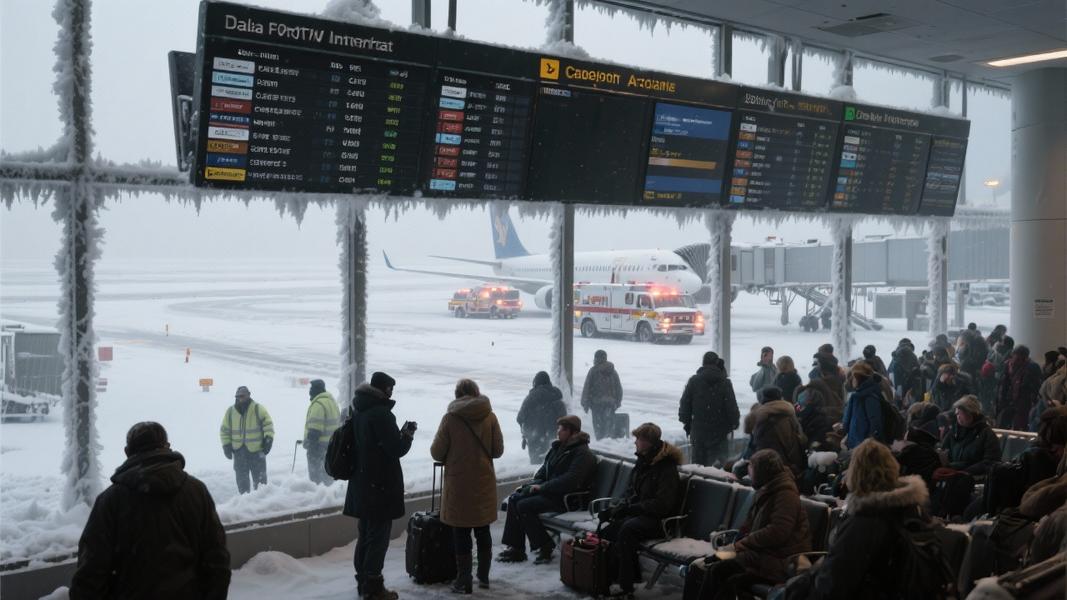
Winter storm paralyzed Dallas air travel this weekend, with more than 1,000 flights canceled on Monday alone as snow and ice gripped the region. The disruption left thousands of travelers stranded and airlines scrambling to accommodate passengers amid one of the worst weather-related travel meltdowns since the pandemic.
The chaos centered on Dallas-Fort Worth International Airport, which saw approximately three-quarters of its scheduled flights canceled through the weekend. By Monday morning, the cancellation count at DFW had reached a staggering 3,200 flights, with American Airlines — which uses DFW as its primary hub — bearing the brunt of the disruptions.
Dallas Love Field didn’t fare much better, with more than 80 cancellations reported on Monday. Southwest Airlines, headquartered at Love Field, had already canceled more than 1,317 flights by Sunday as the winter storm intensified across the region, according to flight tracking data.
Historic Storm Grounds Thousands
The Federal Aviation Administration issued a ground stop at DFW Airport due to hazardous snow and ice conditions, initially grounding planes until 9 a.m. Monday with a “moderate chance” of extension, officials stated.
Four inches of snow fell at DFW Airport within a 48-hour period, the National Weather Service confirmed, creating dangerous conditions for aircraft operations and contributing to the massive disruption.
American Airlines canceled nearly 1,900 flights on Sunday alone — a stunning 58% of its daily schedule. The airline attempted to mitigate the chaos by adding 3,200 extra seats on flights in and out of Dallas-Fort Worth and another 3,000 on flights from Charlotte to Chicago O’Hare, but the measures proved insufficient against the storm’s severity.
How bad was it nationwide? Sunday saw more than 11,400 flights canceled across the country, marking the largest single-day cancellation event since the COVID-19 pandemic began, according to aviation analytics firm Cirium. The ripple effects extended far beyond Texas, as the massive storm system affected operations across dozens of airports in its path.
A 2,000-Mile Storm Path
This wasn’t just a Dallas problem. The historic winter storm carved a 2,000-mile-wide path from New Mexico to Maine, impacting more than 245 million people through Monday morning. The system peaked Sunday, bringing freezing temperatures, sleet, and snow across a vast swath of the country.
The trouble started brewing Friday, when nearly 1,500 flights were preemptively canceled across DFW Airport and Dallas Love Field as forecasters warned of the approaching winter system.
Dallas city officials urged residents to stay home throughout the weekend. “If you can, stay home, because there will be a lot of car accidents,” Dallas Fire-Rescue Chief Justin Ball warned. “The roads will be really icy, and in our experience, there’s a lot of wrecks on the highways — even if they’re driving slow.”
That advice apparently extended to air travel as well. The massive cancellations at Dallas airports left thousands of travelers searching for alternatives or simply stuck waiting for conditions to improve.
For American Airlines and Southwest Airlines, both with significant Texas operations, the storm represents a costly disruption at the start of 2026. While airlines have improved their recovery procedures since pandemic-era meltdowns, the sheer scale of this weather event overwhelmed even the most robust contingency plans.
As crews work to clear runways and de-ice aircraft, the recovery effort will likely extend through midweek, with airlines gradually restoring normal operations as temperatures rise and conditions improve. For stranded travelers, however, the memories of this January winter storm and its impact on Dallas air travel will linger far longer than the snow itself.
