
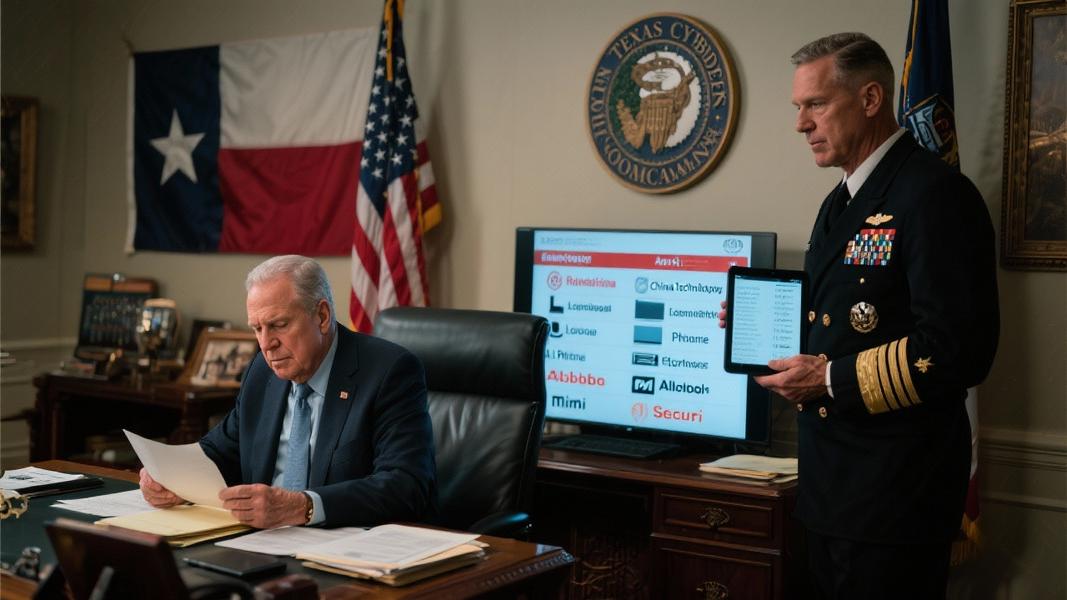
Texas has significantly expanded its list of banned Chinese technologies, adding dozens of major companies and AI systems in what Governor Greg Abbott calls a move to protect Texans from “rogue actors” seeking to infiltrate state networks and devices.
In an announcement on January 26, 2026, Abbott updated the state’s prohibited technologies list to include hardware, artificial intelligence systems, and software affiliated with the People’s Republic of China and the Chinese Communist Party. The expansion comes after consultation with Texas Cyber Command (TXCC) Chief Vice Admiral TJ White.
“Rogue actors across the globe who wish harm on Texans should not be allowed to infiltrate our state’s network and devices,” said Governor Abbott in the order that substantially widens the scope of previous restrictions.
Sweeping new restrictions
The updated list now prohibits state agencies from using technologies from some of China’s most prominent companies, including Alibaba, Baidu, and Xiaomi. It also targets numerous AI developers like Zhipu (Z.ai), Baichuan, and the Beijing Academy of Artificial Intelligence, plus popular consumer platforms including PDD (owner of Temu) and fashion retailer Shein.
What’s behind the dramatic expansion? Texas officials cite national security concerns, particularly fears about surveillance and data collection by entities potentially influenced by the Chinese government.
In a letter to state security leaders, Abbott named TXCC as the lead agency for identifying additional threatening technologies. The cyber command, established just last June, represents the largest state-based cybersecurity department in America.
“The Governor and the Legislature gave a clear mission for the Texas Cyber Command – protect Texans from hostile foreign nations and cyber threat actors,” said Chief White.
Building on previous bans
This isn’t Texas’ first move against Chinese tech. The state has been steadily expanding its restrictions over the past several years. In December 2022, Abbott banned TikTok from state-owned and state-issued devices, citing surveillance concerns related to the Chinese Communist Party.
Then on January 31, 2025, the governor further expanded restrictions to include AI and social media apps affiliated with China on government-issued devices.
But the latest update represents the most comprehensive action yet, encompassing major hardware manufacturers, AI developers, and even popular consumer brands that many Texans use daily.
Practical implications
How far-reaching is this ban? The restrictions apply to state agencies and institutions, including public universities, which must now ensure none of the prohibited technologies are present on government-owned devices or networks.
The Texas Department of Information Resources (DIR) maintains and enforces the lists of prohibited software applications, developers, and hardware manufacturers. These include not just the named companies but also their subsidiaries and affiliates.
For state employees, this means no more using apps like WeChat or Alipay on work devices, and potentially replacing hardware from companies like TCL and Hisense.
The cybersecurity landscape has become increasingly complex for state governments navigating international tensions. With Texas now operating what it describes as America’s largest state-level cyber command, this expansion signals the Lone Star State’s intention to take an aggressive stance on perceived digital threats — regardless of their popularity in the consumer marketplace.
