
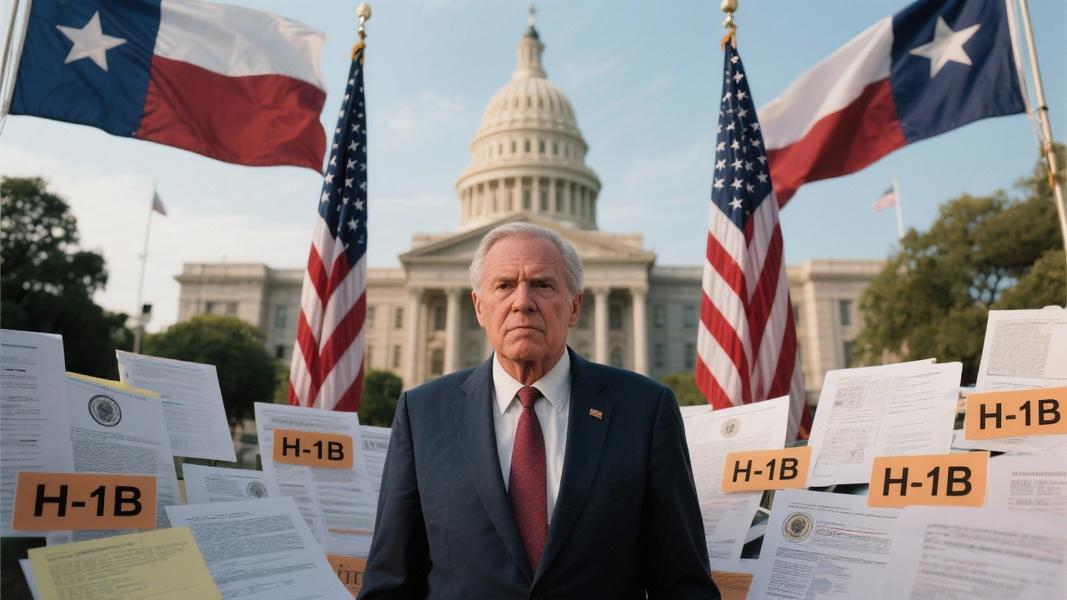
Texas Gov. Greg Abbott has ordered all state agencies and public universities to immediately freeze new H-1B visa petitions, launching what he calls an investigation into potential abuses of the program designed to bring specialized foreign workers to the United States.
In a directive dated January 27, 2026, Abbott instructed state institutions to halt processing new H-1B applications and to begin a comprehensive review of current visa holders within Texas government payrolls. The freeze will remain in effect until at least May 31, 2027, unless institutions receive explicit permission from the Texas Workforce Commission to proceed with specific cases.
“The economy of Texas should work for the benefit of Texas workers and Texas employers,” Abbott stated in his announcement. “State government must lead by example and ensure that employment opportunities — particularly those funded with taxpayer dollars — are filled by Texans first.”
The governor’s office has already begun collecting data, demanding Texas A&M University System provide detailed information about its H-1B employees, including their roles and countries of origin, by close of business Monday. Abbott indicated he expects an action plan later this week.
Schools in the spotlight
Abbott has taken particular aim at educational institutions, questioning why foreign workers are needed in Texas classrooms at all. “I don’t see any reason why we need any H-1B visa employees in our public schools in the state of Texas. But we’re going to find out if there’s some unique skill set or whatever the case may be,” the governor remarked.
What’s behind the sudden scrutiny? Abbott framed the move as aligning with federal priorities, noting these are “the type of people that the Trump administration is trying to remove.”
Under the directive, state agencies must submit comprehensive reports detailing all H-1B petitions from 2025, along with information about current visa holders, including job titles, countries of origin, and visa expiration dates. Crucially, they must also document efforts made to hire qualified Texans for these positions.
Universities feeling the heat
Public universities appear to be major users of the program. Texas A&M spent approximately $3.25 million on H-1B visa sponsorships and related costs over roughly five years, while the University of Texas at Dallas spent about $1.1 million during a similar period, according to figures released as part of the investigation.
Critics of Abbott’s move suggest it could hamper Texas universities’ ability to compete globally for talent, particularly in STEM fields where specialized expertise is often sought internationally. Supporters counter that the review is necessary to ensure Texans aren’t being passed over for qualified positions within their own state’s institutions.
The H-1B program has long been controversial nationally, with advocates saying it brings needed skills to American employers and opponents arguing it displaces U.S. workers and drives down wages. Abbott’s freeze represents one of the most aggressive state-level challenges to the program in recent years.
As state agencies scramble to comply with the governor’s demands for information, the bigger question looms: Will this review be a temporary political statement, or the beginning of a fundamental shift in how Texas public institutions approach international hiring?
