
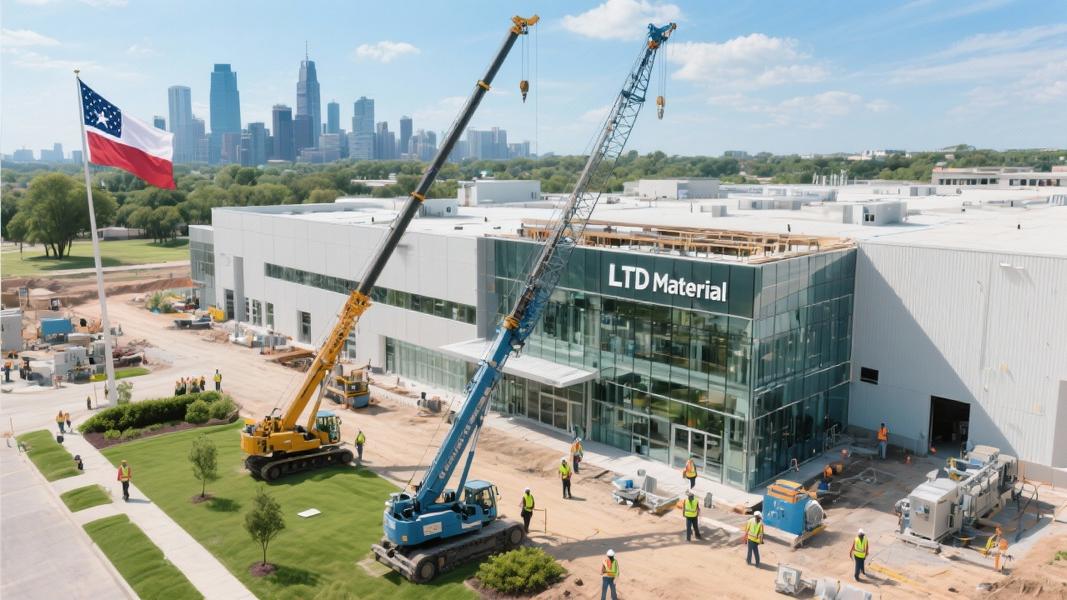
Texas has doubled down on its bid to become the nation’s semiconductor powerhouse, with Governor Greg Abbott announcing a flurry of multi-million dollar grants to bolster the state’s chip manufacturing ecosystem.
The latest beneficiary? LTD Material LLC, which will receive more than $1 million from the Texas Semiconductor Innovation Fund (TSIF) to build an 88,000-square-foot manufacturing and research facility in Austin, the governor’s office announced.
“Texas leads America’s resurgence in semiconductor manufacturing,” Abbott said in a statement about the project, which is expected to create 40 jobs and involve over $25 million in capital investment.
The new facility will focus on producing high-purity quartz parts that are essential components in chip manufacturing — a strategic move aimed at reducing dependency on foreign suppliers. LTD Material CEO Kevin Nguyen emphasized this point, noting that the grant “allows LTD Material to meet the surging demand from U.S. semiconductor foundries while reducing dependence on foreign quartz suppliers, a key strategy to the government’s focus on strengthening overall national security,” according to the governor’s website.
Building a Semiconductor Ecosystem
The LTD Material grant is just one piece of a much larger puzzle. Since establishing the TSIF in 2023 through the Texas CHIPS Act with nearly $700 million in appropriations, the state has been aggressively funding projects across the semiconductor value chain.
How extensive is this investment? To date, the fund has supported 17 projects that are collectively expected to create more than 700 jobs and generate nearly $6 billion in capital investment, according to the Texas Business Leadership.
Among the most significant recipients is Tekscend Photomask Round Rock Inc., which was awarded a $15.2 million grant to expand its photomask production facility in Round Rock. This project alone is expected to create 50 jobs with over $223 million in capital investment, as reported by local economic development officials.
The Tekscend expansion isn’t just about job creation — it’s a technological leap forward. The project will increase the facility’s capacity by more than 40 percent while modernizing equipment to support 12nm technology nodes critical for AI, automotive, wireless communications, and sensors, the Round Rock Chamber confirmed.
Quantum Leap in Research
But Texas isn’t focusing solely on manufacturing. A significant portion of the fund is being directed toward cutting-edge research that could transform the industry’s future.
The University of Texas at Austin received a $4.8 million grant for its Texas Quantum Institute to establish QLab, a quantum-enhanced semiconductor metrology facility. “Texas is the new frontier of innovation and UT Austin is where world-changing discoveries in quantum research and development are being made,” Abbott said, according to The Quantum Insider.
Meanwhile, Texas Tech University secured a $12 million grant to develop a nanotechnology laboratory cleanroom facility as part of Lubbock’s Semiconductor Nanofabrication Center, local radio station KFYO reported.
These investments in research infrastructure could prove crucial as the semiconductor industry continues to push against the physical limits of traditional chip design.
The aggressive funding push comes as states across the country compete for a slice of the federal CHIPS Act’s $52 billion in semiconductor subsidies — and Texas is clearly positioning itself to capture a significant portion of those funds while building out its own semiconductor ecosystem.
For a state that has long prided itself on its business-friendly climate and minimal government intervention, these grants represent a notable shift toward strategic industrial policy — one that appears to be paying dividends as the semiconductor industry increasingly looks to American soil for its future growth.
