
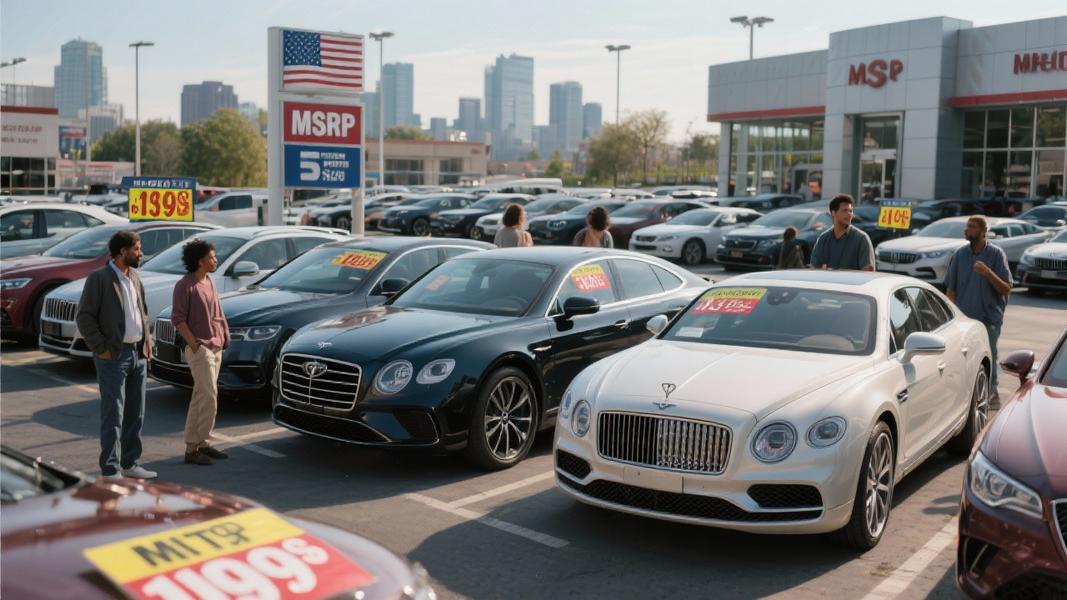
Luxury cars are no longer just for the elite. Nearly one in five new vehicles rolling off American lots now bears a luxury nameplate, signaling a dramatic shift in the nation’s car-buying habits that’s reshaping the automotive landscape.
The percentage of new-car buyers choosing luxury brands has surged to 19.2%, up from just 11-12% before the pandemic, according to industry data analyzed by market researchers. This shift comes as the average transaction price for new vehicles hit $48,422 in April 2025, with manufacturers suggesting retail prices hovering around $50,408.
“The difference between the average transaction price and the suggested retail price proves that there was some discounting going on,” industry analysts noted, though these modest discounts haven’t prevented overall prices from climbing significantly higher than pre-pandemic levels.
The Luxury Boom
Just how dramatic is this shift? New car prices are now 29% higher than they were in April 2020, while the gap between new vehicles and their 3-year-old counterparts has widened to 35%, reports indicate. This pricing dynamic has pushed many consumers toward premium options, figuring they might as well go upscale if they’re already paying significantly more.
The luxury car market in North America was valued at $57.19 billion in 2026 and is projected to reach a staggering $89.18 billion by 2031, growing at a compound annual growth rate of 9.29%, according to market intelligence firm Mordor Intelligence, which also found that SUVs dominate with over 55% market share.
Interestingly, luxury brands’ overall market share has remained relatively stable year-over-year, holding at 12.54% in 2025, fractionally down from 12.55% in 2024, as documented by industry watchers. But this stable percentage masks the growing dollar value these vehicles represent.
Future Growth Trajectory
Looking ahead, the US luxury car market, currently worth approximately $110 billion, could nearly double to between $180-215 billion by 2035, with the used luxury segment growing at 5-8% annually, according to industry projections.
North America now accounts for more than a third — 35.35% to be precise — of the global luxury car market, which was valued at $254.308 billion in 2025, reveals a comprehensive market research report. The worldwide luxury car market continues its upward trajectory, expanding from $710.54 billion in 2025 to $759.11 billion in 2026, shows data from The Business Research Company.
Why such robust growth during economic uncertainty? Luxury vehicles increasingly represent not just status symbols but also technology showcases, with premium brands typically introducing advanced features years before they trickle down to mass-market models.
Revenue projections suggest the luxury cars segment will generate about $26 billion by 2026, estimates from Statista indicate, highlighting the sector’s resilience even amid broader economic headwinds.
Top Contenders
For consumers eyeing the luxury market in 2026, standout options include the Mercedes-Benz E-Class, Genesis G80, and Audi A6 in mid-size sedans, while the Porsche Macan and Genesis GV70 lead the compact SUV category, according to automotive experts’ rankings.
These aren’t your grandparents’ luxury cars. Today’s premium vehicles blend performance, technology, and sustainability in ways that increasingly justify their higher price tags for many consumers who might previously have stuck with mainstream brands.
As the gap between standard and luxury vehicles continues to narrow in terms of relative cost, the luxury segment’s growth appears poised to continue — suggesting that what was once exclusive may increasingly become the new normal on American roads.
