
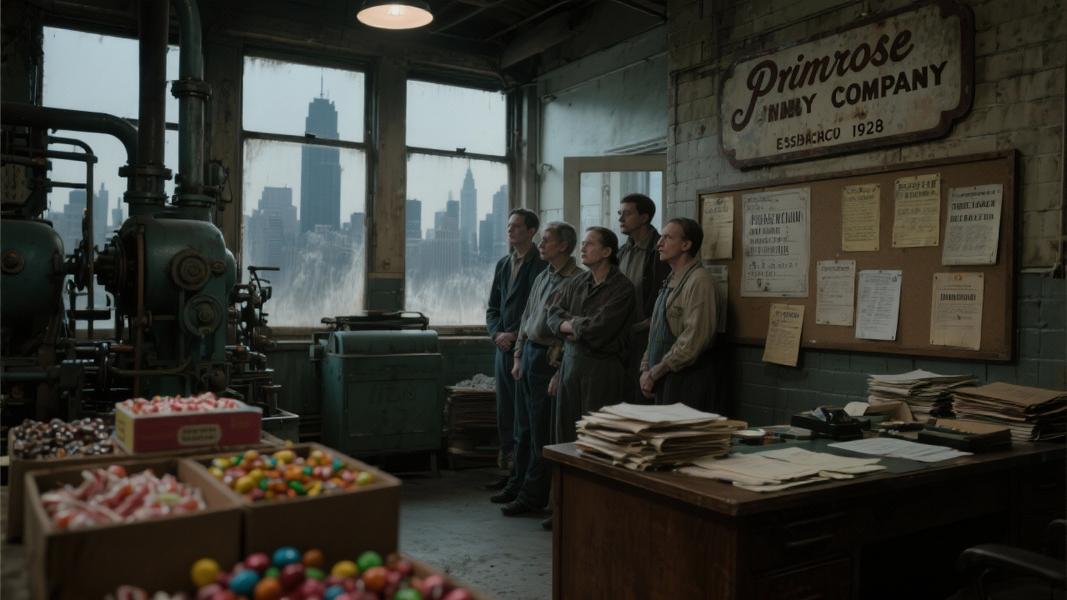
Chicago’s iconic Primrose Candy Company, a fixture in the confectionery world for nearly a century, has filed for Chapter 11 bankruptcy protection as it grapples with mounting debt and rising production costs.
The family-owned manufacturer, known for its hard candies, chewy treats, caramels, and popcorn, submitted its filing on January 27, 2026, in the U.S. Bankruptcy Court for the Northern District of Illinois. Court documents reveal the company has assets between $1 million and $10 million, while facing significantly higher liabilities between $10 million and $50 million.
“What we have is a lot of old, old debt that we just can’t afford to pay in its entirety,” David Welch, an attorney representing Primrose, told the Chicago Tribune.
Sweet Traditions, Bitter Financials
The bankruptcy filing aims to restructure over $12 million in debt while securing new financing to maintain operations and cover payroll for approximately 90 workers. Financial records show a troubling trend: the company’s revenue plummeted from $11.8 million in 2024 to just $7.8 million in 2025.
What’s behind the dramatic decline? Rising production costs have squeezed profit margins, while the company struggles to service longstanding debt. “The cost of making that same piece of candy is so much more than what it used to be, and you can’t keep up with your pricing to absorb all those costs when you have a lot of old debt that you also have to service,” Welch explained.
Primrose operates from a sprawling 130,000-square-foot manufacturing facility in Chicago, but recently lost two major lemon drop production contracts worth $1 million annually to lower-cost foreign competitors. That’s not the only setback the candy maker has faced — it also settled a $125,000 biometric privacy class action lawsuit under Illinois BIPA in 2025, further straining its finances.
The Road Ahead
Could this century-old Chicago institution still find a path to survival? The bankruptcy filing indicates funds will be available for unsecured creditors, potentially offering some hope amid the financial restructuring.
Key parties in the bankruptcy process include counsel David K. Welch of Burke, Warren, MacKay & Serritella, P.C., with company president Jeff Puch signing as President/Director. The ownership structure shows equity holders JFP, LLC and MVP, LLC each maintaining a 50% interest in the company.
For now, the case (number 26-01430) moves through the courts as Primrose attempts to preserve a sweet Chicago legacy that’s been part of the city’s manufacturing heritage since the late 1920s. In an industry increasingly dominated by multinational corporations and overseas production, Primrose’s struggles highlight the broader challenges facing America’s remaining family-owned candy manufacturers in an increasingly globalized and cost-competitive market.
