
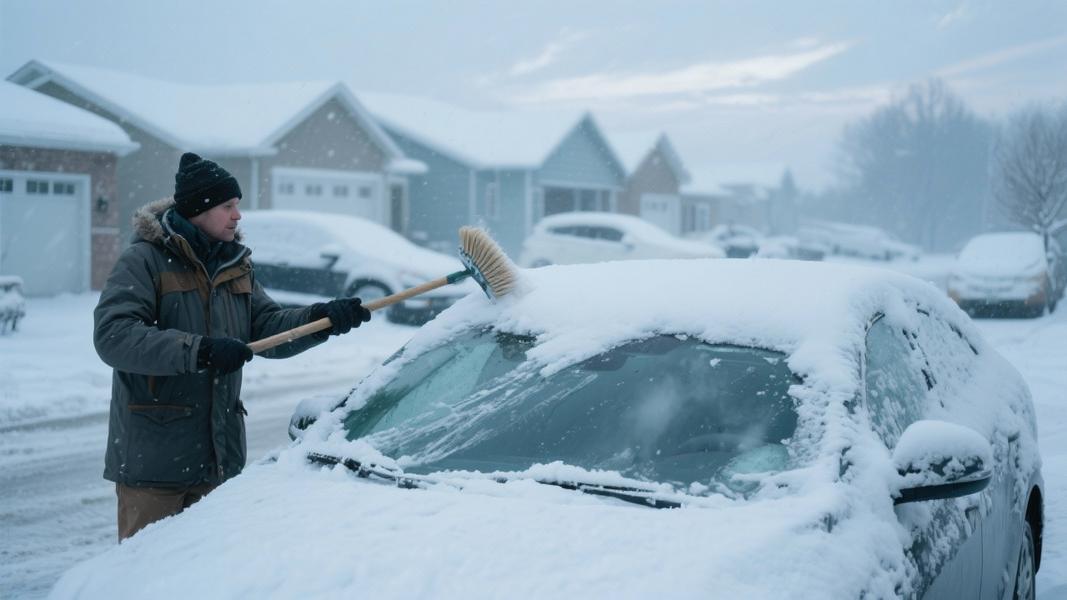
Driving with snow on your car roof? In 11 states, that could land you a hefty fine — or worse. The practice, often dismissed by hurried commuters as harmless, has become increasingly regulated as “ice missile” laws spread across snowy regions of America.
These laws prohibit motorists from driving with accumulated snow or ice on their vehicles in states including Alaska, Connecticut, Georgia, and Tennessee. The regulations aim to prevent potentially deadly accidents caused by frozen chunks that fly off moving vehicles at highway speeds, reports Fox 35 Orlando.
The Deadly Reality of “Ice Missiles”
Why “ice missiles”? The term isn’t hyperbole. These frozen projectiles have caused serious injuries and even fatalities on American roadways. In New Hampshire, “Jessica’s Law” was enacted after a particularly horrific incident where a 9-foot piece of ice detached from a tractor trailer, struck a box truck, and caused a chain reaction that killed Jessica Smith, according to Jalopnik.
In another chilling case, a New Hampshire truck driver faced charges of vehicle assault, reckless conduct, and negligent driving after ice from his truck roof smashed through another motorist’s window, causing injuries. The incident highlighted why transportation officials take these violations so seriously.
“These rules are known as ‘ice missile’ laws, named after the deadly frozen snow piles that could fly off unkept vehicles and cause deadly accidents,” explains Fox 35 Orlando. And they’re not just about flying debris — the buildup can also obstruct drivers’ vision, making it difficult to spot other vehicles, pedestrians, or road hazards.
Penalties That Hit Hard
Think a little snow isn’t worth worrying about? Think again. Violations can result in fines reaching as high as $1,500, particularly for commercial vehicles. Some states have even implemented license suspension or revocation for repeat offenders, notes Fox 35.
New Jersey’s statute is particularly comprehensive, covering all exposed surfaces of vehicles. Fines there can escalate dramatically when flying debris causes property damage or injuries, with commercial vehicles facing penalties up to $1,500, states Jalopnik.
How do different states approach enforcement? It varies significantly. While Northeast states like Connecticut, New Hampshire, New Jersey, and Rhode Island have explicit “affirmative duty” laws requiring snow removal, others take a different approach. States including Ohio, Illinois, Alaska, Georgia, Wisconsin, Massachusetts, and Kansas rely on unsafe vehicle or obstruction statutes to cite drivers whose vision is impeded by sliding snow, indicates Jalopnik’s research.
Beyond The Ticket: Real Safety Concerns
The dangers extend beyond the obvious risk of flying ice. “Heavy snow can strain your windshield and potentially crack it,” cautions Fox 35, adding another safety concern for drivers already navigating hazardous winter conditions.
Car and Driver magazine has also documented the serious risks these buildups pose to other drivers, noting it’s “fairly common for heavy ice and snow to go flying through windshields” of other vehicles, confirms Fox 35.
A dramatic example occurred in Kansas in 2025, when a truck driver’s dash camera captured the moment a large block of ice detached from a passing car and smashed through his windshield while driving on Highway 50.
Safety experts recommend taking a few extra minutes to completely clear vehicles of snow and ice before hitting the road — regardless of whether your state has specific legislation. Those minutes could save lives, prevent injuries, and help you avoid costly fines.
The bottom line? That hurried morning shortcut of brushing off just enough snow to see through the windshield isn’t just lazy — in a growing number of states, it’s against the law. And even where it’s not explicitly illegal, the potential consequences make it a gamble few should be willing to take.
