
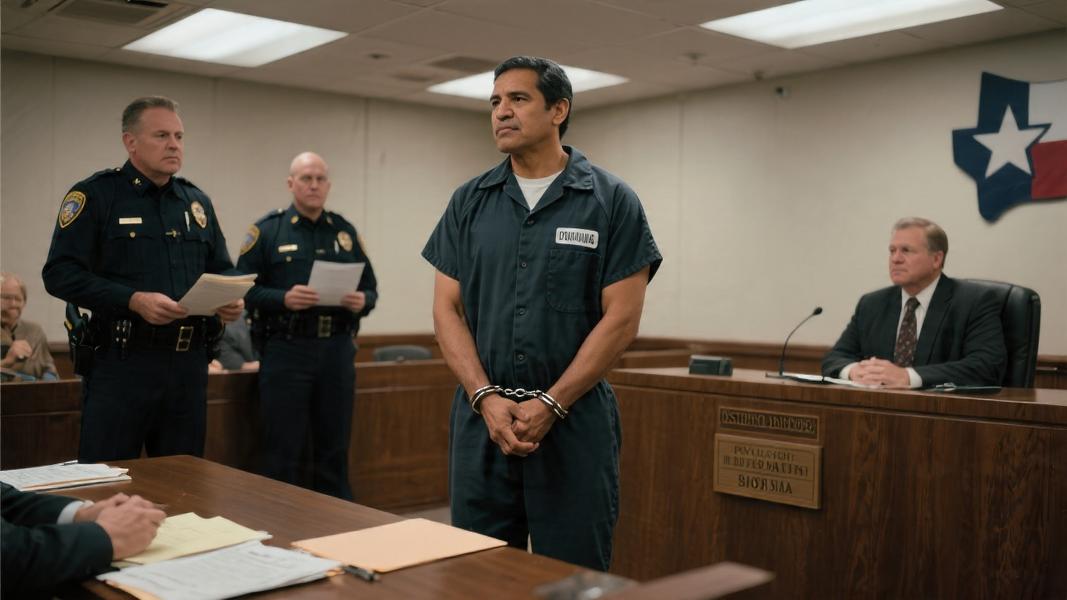
A 41-year-old Allen man is heading to prison for half a century after investigators uncovered a trove of child sexual abuse material on his devices — and he’s not the first from that city to face such a reckoning.
Carlos Wilfredo Cruz Rivera was sentenced to 50 years in prison on each of two first-degree felony charges of possessing child sexual abuse material, with the sentences to run concurrently. The case, one of the most severe in recent Collin County memory, underscores a troubling pattern of child exploitation prosecutions emerging from the Dallas suburb — and raises serious questions about what’s lurking in the cloud storage accounts of everyday residents.
How the Case Unfolded
It started, as so many of these cases do, with a tip. In June 2025, the Allen Police Department received seven CyberTip reports from the National Center for Missing and Exploited Children after Rivera uploaded roughly 30 files of child sex abuse material to a cloud-based storage platform. That’s not a lot of files — until you realize it was just the surface. A forensic examination of Rivera’s seized devices revealed approximately 1,800 photos and videos depicting child sexual abuse.
Rivera initially denied any involvement, according to Collin County District Attorney Greg Willis. That didn’t last long. When confronted with the forensic evidence, he admitted to possessing the material. It’s a familiar arc in these prosecutions — denial, then admission, then sentencing. The difference here is the length of the sentence handed down.
“This 50-year sentence ensures this man can never again prey on innocent children. Every CyberTip matters,” Willis said in a statement. “Thanks to Allen police and NCMEC, another predator is off our streets. We will continue to use every tool available to protect our children from online exploitation.”
Allen’s Troubling Track Record
Here’s where it gets harder to ignore. Rivera’s case isn’t an isolated incident — it’s the latest in a string of child pornography convictions tied specifically to Allen, Texas, a city of roughly 100,000 people northeast of Dallas that routinely lands on “best places to live” lists.
Robert Kessler, 35, also of Allen, was sentenced to 25 years in prison after pleading guilty to 10 counts of Possession of Child Pornography. Before him, Richard Denver Belden, 41 — again, Allen — received a 35-year federal sentence for receipt and possession of child pornography following his arrest in May 2018. In that case, the FBI weighed in directly. “Today’s result is the product of the outstanding collaboration between the FBI and its local partners,” an agency spokesperson said at the time. “The FBI, through the North Texas Child Exploitation and Human Trafficking Task Force, will continue to work tirelessly to keep our kids safe.”
Three men. Three sentences totaling 110 years combined. All from the same mid-sized suburb. That’s not a coincidence — it’s a caseload.
The Digital Paper Trail
What’s notable about Rivera’s prosecution, and others like it, is how central digital forensics and platform reporting have become to building these cases. NCMEC’s CyberTipline — the same system that flagged Rivera’s cloud uploads — receives millions of reports each year from tech companies required by federal law to report suspected child sexual abuse material. Without those reports, investigators would be starting from nothing.
Still, the sheer volume of material found on Rivera’s devices after just 30 flagged files suggests that automated detection catches only a fraction of what’s out there. Forensic examiners found 1,800 items. Seven tips led them there. The math is unsettling.
Prosecutors in Collin County have been increasingly aggressive in pursuing maximum sentences in these cases, and Willis has made child exploitation a centerpiece of his tenure as DA. Whether longer sentences serve as a genuine deterrent is a debate criminologists have waged for decades. What isn’t debatable is that Rivera, at 41, will be 91 years old before he’s eligible for release — effectively a life sentence.
What Comes Next
For law enforcement, the Rivera case is a win, full stop. For the broader community, it’s a reminder that child exploitation doesn’t happen only in shadowy corners of the dark web — it happens on ordinary cloud platforms, in ordinary homes, in cities with good school districts and well-kept parks.
The children depicted in these images and videos are victims of crimes that don’t end when the file is downloaded. Every view, every upload, every share extends their victimization. That’s the part that tends to get lost in the sentencing headlines.
Fifty years is a long time. It still doesn’t undo a single frame.
