
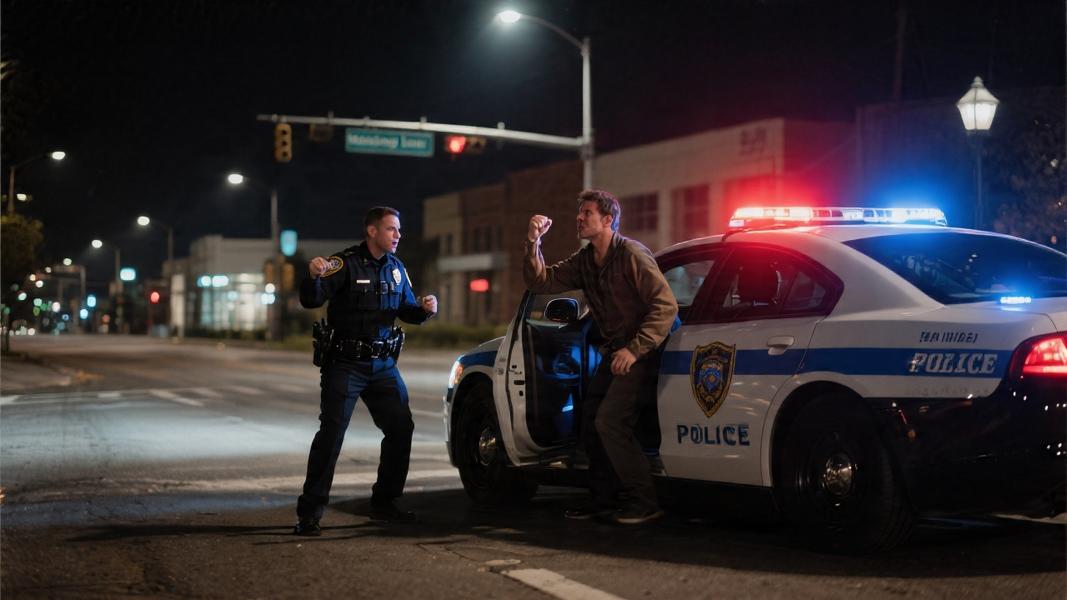
A string of officer-involved shootings in Dallas has thrust the city’s police department into an uncomfortable spotlight — and the body camera footage released in each case is doing little to quiet the debate.
Over recent weeks, the Dallas Police Department has released a wave of bodycam recordings tied to separate shooting incidents, each with its own cast of suspects, circumstances, and consequences. Taken together, they paint a complicated picture of a major urban department navigating split-second decisions, narcotics investigations, and a troubling pattern of suspects either impersonating officers or pointing weapons at them. The transparency is notable. So is the frequency.
A Fatal Encounter on Shaw Street
Perhaps the most striking of the recent cases unfolded during a SWAT narcotics operation on Shaw Street, where officers arrived armed with a search warrant and, according to police, plenty of reason to believe things could go sideways fast. Dallas Police Chief Daniel Comeaux didn’t mince words about what they were walking into. “Intelligence gathered during the investigation indicated a large quantity of narcotics was believed to be inside the residence,” he stated.
What happened next was over in seconds. As officers announced their presence, 26-year-old Matthew Leija opened a door — firearm already in hand, already pointed. “Just as they announced police, the suspect, later identified as 26-year-old Matthew Leija, opened one of the doors with a firearm in his right hand and pointed at officers,” Chief Comeaux explained. “Officer Ellis Wells fired multiple shots from his rifle, striking the suspect.” The encounter, grim as it was, followed a pattern that Dallas officers have now encountered more than once in recent memory.
Collateral Damage at Milhouse Apartments
Not every shooting fits neatly into the category of suspect-versus-officer. At the Milhouse Apartments, a disturbance call turned chaotic when 18-year-old Tony Robinson — described as the gunman — was shot. His grandmother was also injured in the exchange. Dallas police released the bodycam footage from that incident as well, part of what appears to be a deliberate departmental push toward openness in the aftermath of use-of-force events.
That’s the catch, though. Releasing footage is one thing. What the footage shows — and what it doesn’t — is always open to interpretation. And in a city as large and politically charged as Dallas, interpretation rarely stays quiet for long.
The Man Playing Cop
Then there’s the case that reads almost like a screenplay — except it isn’t. Diamond Robinson, 39, was already a convicted felon when the Dallas Police Department’s fugitive task force began watching him. He was also, investigators say, pretending to be a law enforcement officer. The surveillance eventually led to a confrontation in a parking garage, where Robinson pointed a gun at officers and was shot.
A separate incident involved another suspect operating a private security company who had allegedly been passing himself off as a police officer — and had the props to prove it. When officers caught up with him, they found multiple weapons, fake IDs, and counterfeit badges. He also had outstanding auto theft warrants, which, all things considered, was almost the least alarming item on the list. Bodycam footage from that encounter was also disclosed publicly by the department.
A Department Under the Microscope
What does it mean when a police department releases this much footage this quickly? It could mean accountability. It could mean strategy. Probably both. Dallas has been here before — under pressure to show its work — and the release of bodycam video has become something close to standard procedure after officer-involved shootings, a nod to a public that increasingly demands to see for itself.
Still, each video comes with its own context, its own gaps, its own moments that get clipped and recirculated on social media stripped of nuance. The department knows this. The footage goes out anyway.
In each of these cases, officers were confronted with armed individuals under pressure-cooker conditions — narcotics raids, fugitive arrests, domestic disturbance calls. The situations were different. The outcomes were different. But the thread connecting them is hard to ignore: Dallas is dealing with a sustained, serious problem with armed confrontations, and its officers are being asked to make life-or-death calls with almost no margin for error.
Whether the cameras vindicate or complicate that record, they’re rolling. And so, it seems, is everything else.
