
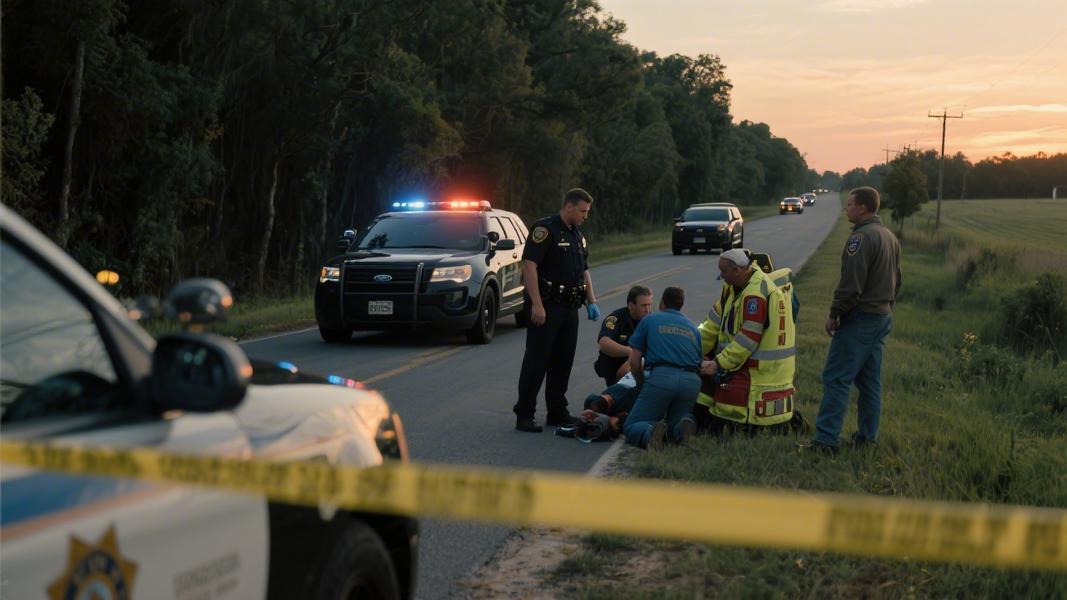
Deputies across the country are showing up to emergencies — and getting shot at for it. A string of violent incidents involving law enforcement officers responding to routine calls has left at least one deputy dead, several others wounded, and communities shaken by how quickly a fire alarm or a disturbance call can turn lethal.
The most striking case unfolded in the early morning hours of Wednesday in Johnson County, Texas, where first responders arrived at a structure fire on County Road 605 near Cleburne — and were immediately met with gunfire. Deputies exchanged shots with William James Rogers, 75 years old, who was armed with a pistol. Rogers was killed. At least one deputy was injured in the exchange, though officials said the wounds were minor and that he was treated and released from the hospital. A fire. A 75-year-old man with a gun. It doesn’t fit neatly into any category.
A Scene That Shouldn’t Have Gone That Way
What makes the Texas incident so jarring isn’t just the violence — it’s the context. Firefighters were actively battling the blaze when the shooting broke out. First responders who came to save a structure, possibly a life, suddenly found themselves in a firefight. CBS News documented the chaotic scene, noting the gunfire exchange happened as emergency crews were still on the ground. Officials confirmed the deputy’s injuries were not life-threatening, but the broader question — why was Rogers firing at responders at all — remains publicly unanswered.
Rogers’ age has drawn particular attention. Seventy-five years old. Armed, apparently hostile, and willing to open fire on people who arrived in emergency vehicles. Whether there was a mental health crisis involved, a misunderstanding that escalated catastrophically, or something else entirely, authorities haven’t said. What they have confirmed, as outlined in official statements, is that deputies were left with no choice.
It’s Not Just Texas
That same volatile pattern — a call comes in, a deputy responds, gunfire follows — has played out in at least two other jurisdictions in recent days. In Ocean Springs, Mississippi, a deputy was killed after responding to a disturbance call at an apartment complex. The suspect also died in the exchange. The deputy was wearing a body camera, which investigators are now reviewing, according to footage and reporting surfaced online. Two people dead. One call. A body camera that may hold the only complete account of what happened.
Then there’s Cass County, where a suspect was killed and a deputy was shot in the upper thigh after reports of gunfire in Turtle Lake Township. That deputy was airlifted to a hospital and later released, with officials saying they expect a full recovery. Still, being airlifted after a gunshot wound is not the kind of “minor incident” any department takes lightly, no matter how measured the press release sounds afterward.
The Danger Nobody Talks About Enough
Here’s the thing about these incidents: none of them started as a police confrontation. A structure fire. A disturbance call. Reports of shots in a township. These are the calls that don’t make national news on a normal day — the routine work that fills the bulk of a deputy’s shift. And yet, in each of these cases, that routine work ended with someone dead or a deputy being loaded into a helicopter.
Law enforcement officials have long argued that the unpredictability of calls — not high-profile standoffs, but ordinary responses — represents one of the greatest threats to officer safety. The Mississippi case, in particular, underscores that reality. A disturbance at an apartment complex is about as common a call as there is. It cost a deputy his life.
There are no easy answers here, and anyone who tells you otherwise is selling something. What’s clear is that across Texas, Mississippi, and Minnesota, the men and women responding to emergencies this week found themselves in situations that escalated faster than any training scenario can fully prepare you for. One of them didn’t come home. Several others came close. The fires get put out, the reports get filed — and somewhere, another call is already coming in.
