
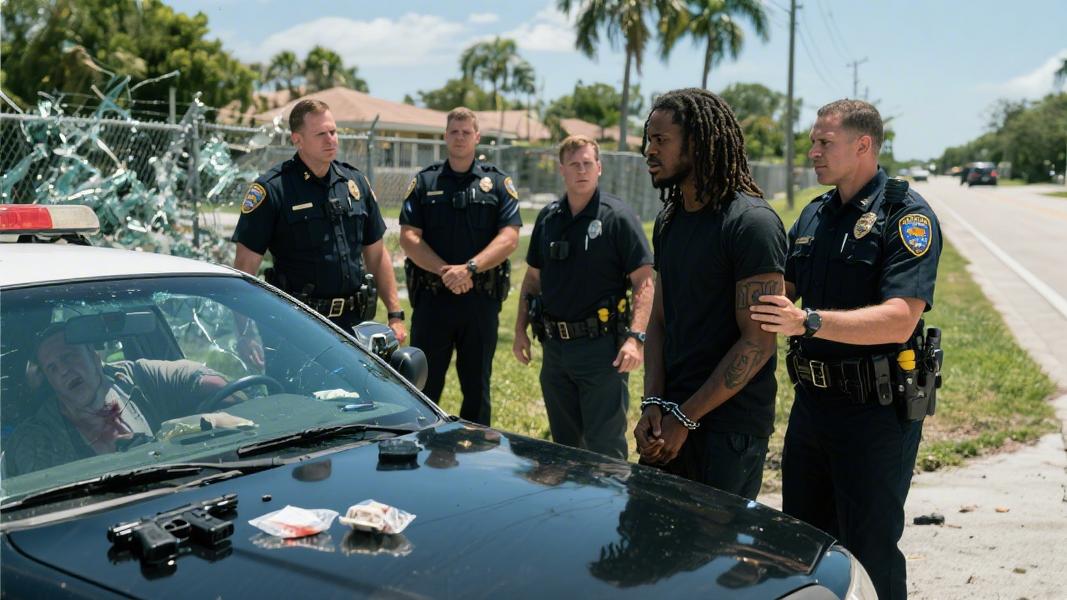
Florida has become the epicenter of the most aggressive immigration enforcement crackdown in recent American history — and the numbers are staggering enough to stop anyone mid-scroll.
Over the span of a single week in late April, a joint federal and state immigration operation swept through Florida and netted 1,120 arrests of criminal undocumented immigrants — the largest single-state, single-week operation in ICE history. That’s not a typo. One state. One week. More than a thousand arrests. And that figure arrived on the heels of several high-profile individual takedowns that, taken together, paint a picture of an enforcement apparatus operating at a scale and speed not seen before.
A Historic Week — and the Numbers Behind It
The April 21–26 operation was, by any measure, a landmark moment. Federal, state, and local agencies coordinated across Florida’s counties in what officials are calling a whole-of-government push. 63% of those arrested had prior criminal records. ICE Deputy Director Madison Sheahan didn’t mince words about what it took to pull it off. Described as a “truly collaborative” effort, Sheahan said: “Last week’s operational success of arresting more than 1,100 criminal illegal aliens was truly a collaborative whole-of-government effort by our federal, state and local law enforcement partners in Florida.”
Still, numbers only tell part of the story. Behind each statistic is a case — some of them violent, some of them haunting, and a few that have already made national headlines for all the wrong reasons.
The Faces in the Arrest Reports
Take Ragar Mandela Allen. A 32-year-old Jamaican national and alleged member of the Craig Town Gang, Allen was wanted for murder back in Jamaica when ICE and the Florida Highway Patrol caught up with him on March 31. The arrest wasn’t clean — Allen dragged an FHP officer with his vehicle before being taken into custody, leaving the officer with non-life-threatening injuries. Acting Assistant Secretary Lauren Bis stated flatly: “This gang member wanted for murder in his origin country is out of our communities because of ICE and our Florida partners.”
Then there’s Franklin Jose Jimenez-Bracho — a case that carries its own distinct legal weight. A Venezuelan national and alleged member of Tren de Aragua, the gang the State Department has designated a foreign terrorist organization, Jimenez-Bracho became the first person detained under the recently invoked Alien Enemies Act after being arrested by FHP and ICE in Orange County. ICE Director Todd Lyons was direct: “Tren de Aragua is a dangerous foreign terrorist organization that has invaded our soil,” he declared. The invocation of the Alien Enemies Act — a wartime-era statute — marks a significant legal escalation, one that’s already drawing scrutiny from civil liberties groups and immigration attorneys.
Homicide Cases That Sharpened the Urgency
How does a case get under a governor’s skin? Ask about Joaquin — a Haitian national who entered the U.S. near Key West in 2022, was processed and released, and then years later found himself arrested for homicide and property damage charges through a coordinated takedown involving ICE’s Enforcement and Removal Operations and Homeland Security Investigations. Florida officials were emphatic about what the arrest demonstrated: “The speed and accuracy in which our law enforcement teams were able to track the killer’s movements and arrest him is a testament to our robust law enforcement partnerships here in the state of Florida.”
That case — and others like it — have given state and federal officials a consistent rhetorical frame: these aren’t abstract enforcement statistics, they’re public safety outcomes. Homeland Security Secretary Kristi Noem leaned into that frame hard during a press appearance tied to the Florida raids, highlighting the arrest of Erick Carlos Artiles Ramos, a Cuban national with a homicide conviction. Noem noted the broader scope: “Since January, the Department of Homeland Security has arrested over 480,000 criminal illegal aliens. 70% of those individuals have criminal charges against them or have been convicted of those criminal charges across the country.”
What Florida Signals for the Rest of the Country
But it’s not that simple. Critics of the administration’s immigration enforcement strategy argue that the framing of these operations — centered almost exclusively on criminal histories and gang affiliations — obscures a wider dragnet that also captures people with no violent records. The legal battles over the Alien Enemies Act invocation are still unfolding in federal courts, and due process questions haven’t gone away just because the arrest numbers are big.
That said, Florida’s operation has clearly become a template. The coordination between ICE, the Florida Highway Patrol, and local agencies represents a model the administration has been pushing since January — and the record-setting arrest figures suggest it’s delivering the outcomes officials wanted. Whether those outcomes hold up legally, and whether they translate into lasting public safety gains, is a question that won’t be answered in a single press release.
For now, Florida is the story. And the story isn’t over.
