
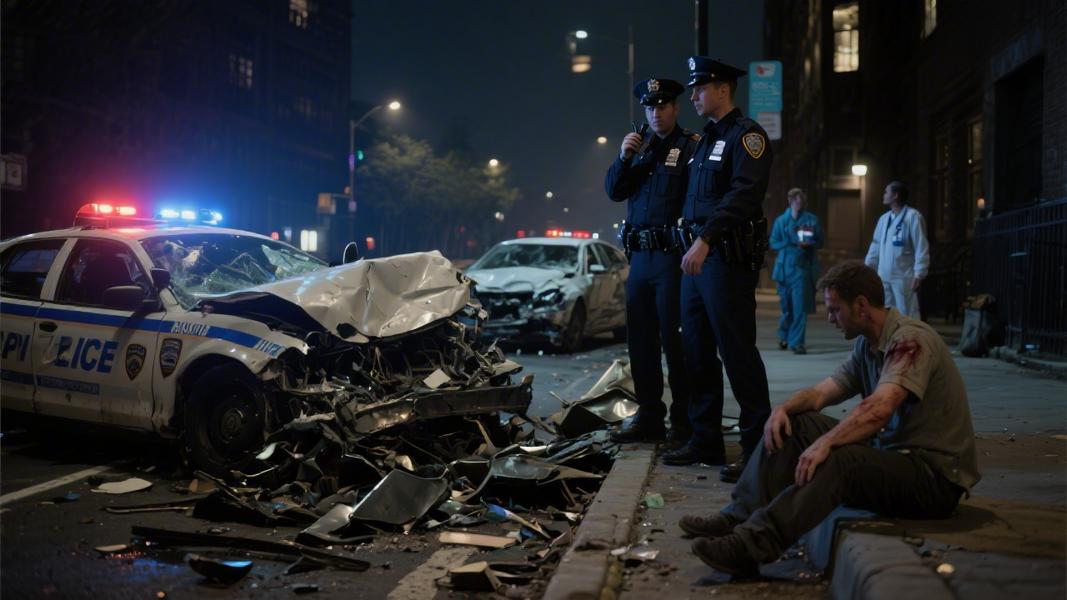
Fort Worth had a violent night on the roads — and then another one, and another one after that. A string of high-speed police pursuits has left at least two people dead, several others injured, and serious questions hanging over one of Texas’s largest cities about what happens when a chase goes wrong.
The incidents, spanning multiple nights and stretching across different corners of the Metroplex, paint a grim picture of reckless driving, split-second decisions by officers, and the brutal arithmetic of a car that’s moving too fast in the wrong direction. Taken together, they represent one of the more concentrated stretches of pursuit-related violence Fort Worth has seen in recent memory.
The Early Morning Hours on I-35
It started — or at least one chapter of it did — just after 2:34 a.m. on April 5, 2026, when Fort Worth officers spotted a driver moving south on I-35 near Rosedale Street without headlights. That alone is enough to get pulled over. But this driver wasn’t stopping. CBS News Texas reported that the vehicle struck two other cars before the pursuit even fully began, then fled officers until finally crashing off Tarver Road. The driver was declared dead at the scene. A passenger survived with minor injuries and was taken to a hospital.
No headlights. Two hit vehicles. A dead driver. It’s the kind of sequence that takes less than ten minutes to unfold and a lot longer to make sense of.
Wrong Way in the Stockyards
Meanwhile — and this is where the night gets harder to follow — a separate pursuit was already underway near the Fort Worth Stockyards. Around 2:40 a.m., a suspect driving on Exchange Avenue was flagged for going the wrong way. Officers attempted to stop the vehicle. The driver fled. Fox4 noted the chase ended when the car slammed into a utility pole near the 1500 block of East 4th Street. This time, it was the passenger who was killed at the scene. The driver survived — barely — and was transported in critical condition.
Two separate chases. Two crashes. Two people dead. And the sun still hadn’t come up.
Hoodline covered the Stockyards crash as well, confirming the fatal outcome for the passenger and the critical status of the driver. The convergence of these incidents in such a tight window underscores a pattern that community advocates and law enforcement critics have flagged for years: pursuits are inherently unpredictable, and the people who suffer most aren’t always the ones making the decisions.
Camp Bowie and the Hit-and-Run
There’s another one. Fort Worth police also briefly pursued a hit-and-run driver on West Freeway near Horn Street — a chase that ended when the driver lost control and struck a tree on Camp Bowie Boulevard near Montgomery. WFAA documented the incident, with officers noting that the driver was pronounced dead at the scene. “Officers say the driver lost control and hit a tree on Camp Bowie Boulevard near Montgomery,” the station reported.
Brief pursuit. One dead. The pattern, by this point, has become almost rhythmic in the worst possible way.
A Chase That Started With Gunfire
Not all of these ended in a fatality — though not for lack of danger. After 3:00 a.m. in Midlothian, a driver ran a stop sign and then, incredibly, opened fire. What followed was an hour-long chase that hit speeds exceeding 100 miles per hour and stretched deep into Fort Worth’s jurisdiction before officers deployed spike strips to end it. WFAA captured the aftermath, including a striking quote from law enforcement: “The last thing we want to hear come over the radio are shots fired or officer down, and when you hear that, obviously we all come together.”
Five people were charged with felonies, including aggravated assault. No officers were hurt. That last detail — given what unfolded — feels almost miraculous.
Downtown, Again
And then there’s the crash near downtown Fort Worth on a Monday night, where a driver was killed in yet another high-speed pursuit. The Star-Telegram detailed the incident, adding another entry to what has become a troubling tally across the city.
How many of these chases were avoidable? That’s the uncomfortable question sitting underneath all of it. Police departments across the country have spent years revising pursuit policies — weighing officer safety, public safety, and the legal exposure that comes when a chase ends in a civilian death. Fort Worth, like most large departments, operates under guidelines that give officers discretion. That discretion is being tested right now, incident by incident, intersection by intersection.
Still, it’s worth remembering what’s also true: in nearly every one of these cases, the decision to run was made by the driver — not the officer. The spike strips, the radio calls, the split-second judgments — they’re all downstream of that first choice. Whether the system around that choice is working the way it should is a conversation Fort Worth may not be able to put off much longer.
Because at some point, the question isn’t just why they ran. It’s who else could have been in the way.
