
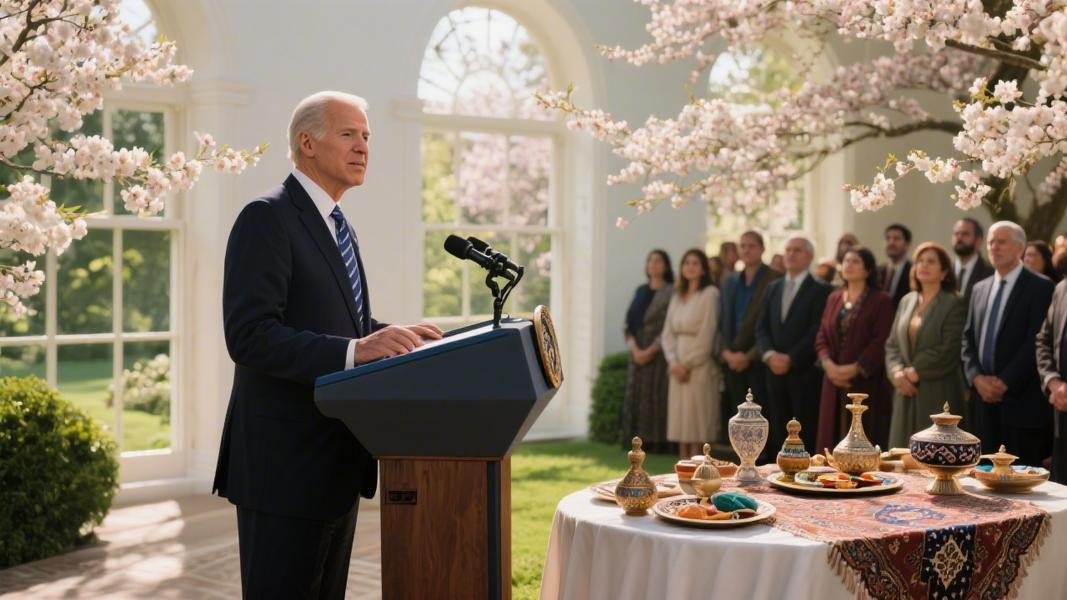
Every spring, without fail, the White House marks Nowruz — and this year is no different. On March 20, 2026, the latest presidential message went out, extending good wishes to millions of Americans and people worldwide celebrating the Persian New Year.
It’s a ritual that’s become quietly bipartisan over the decades. Republican and Democratic presidents alike have issued formal statements for Nowruz, the ancient holiday marking the first day of spring, the triumph of light over darkness, and the promise of new beginnings. The 2026 message was direct: “Today, I send my best wishes to every American celebrating Nowruz.” Short, warm, and consistent with a long tradition that few Americans outside the celebrating communities may even realize exists.
A Holiday That Crosses Borders — and Administrations
Nowruz isn’t a niche observance. It’s celebrated by Iranians, Afghans, Kurds, and communities stretching across the Middle East, Central Asia, South Asia, and well into the diaspora communities of the United States. The word itself means “new day” in Persian, and the holiday has been observed for thousands of years — long before any modern nation-state existed to issue a press release about it.
President George W. Bush was among the earlier American leaders to formally acknowledge it. His message reached out to people tracing heritage to Iran, Iraq, Afghanistan, Turkey, Pakistan, India, and Central Asia, framing it as a shared moment of new beginnings. “I send greetings to those celebrating Nowruz,” he stated in 2008 — a sentence so spare it almost undersells the political significance of saying it at all.
Barack Obama took a different approach. His Nowruz messages were notably more expansive, often addressed directly to the Iranian people and carrying a diplomatic undertone that reflected the foreign policy priorities of his administration. “Today I want to extend my very best wishes to all who are celebrating Nowruz around the world,” he said in a videotaped address — one that also touched on Iran’s cultural contributions and the United States’ commitment to engagement through diplomacy. For Obama, Nowruz wasn’t just a greeting. It was a message.
Trump’s Messages: Warmth With an Edge
Here’s where it gets interesting. Despite the sharp tensions between the Trump administration and the Iranian government, the White House still issued Nowruz statements — and they weren’t cold or perfunctory. “I wish a beautiful and blessed Nowruz to the millions of people around the world who are celebrating the arrival of spring,” President Trump wrote in one statement. That’s not the language of someone going through the motions.
Still, the Trump messages drew a consistent distinction between the Iranian people and their government. The 2019 statement acknowledged Nowruz as an ancient holiday observed across western and central Asia, particularly in Iran, while also noting that oppression had prevented many from celebrating freely. “I send my warmest wishes to those in the United States and around the world observing the ancient holiday of Nowruz,” the message read — before pivoting to language about rights and freedom of information. The 2020 message followed a similar pattern, with the White House extending wishes to “those here in America and around the globe” while underscoring U.S. support for the Iranian people’s struggle against what it called oppressive rulers.
That’s the catch, really. The holiday becomes a vehicle — sometimes for cultural celebration, sometimes for geopolitical messaging, often both at once. A careful reader can track the foreign policy temperature of any given administration just by reading its Nowruz statement closely.
2025 and 2026: Continuity in a Fractured Era
The 2025 message, issued from the current White House, described Nowruz as “a joyous occasion for Persians” and praised the cultural contributions of those who celebrate it. “Warmest wishes to all those in the United States and around the globe celebrating the ancient holiday of Nowruz,” the administration offered — language that echoes, almost word for word, statements from previous administrations of both parties. Whether that’s a sign of institutional continuity or simply a case of White House staffers pulling from old templates is, perhaps, a question best left unanswered.
What the 2026 message makes clear is that the tradition holds. Spring arrives, Nowruz is celebrated by tens of millions around the world, and the American president — whoever that happens to be — takes a moment to acknowledge it. The statement this year emphasized the holiday’s themes of light over darkness and the renewal that comes with new beginnings. Simple themes. Ancient ones.
Does any of this change foreign policy? Probably not on its own. But symbols matter, and the steady drumbeat of these messages — across administrations that disagreed about almost everything else — says something about how the United States sees itself in relation to the world’s oldest continuous cultures.
As one former administration official once observed privately, you can learn a lot about a government by what it chooses to celebrate. Nowruz, it turns out, has been worth celebrating for a very long time — and Washington, at least on this one, keeps showing up.
