
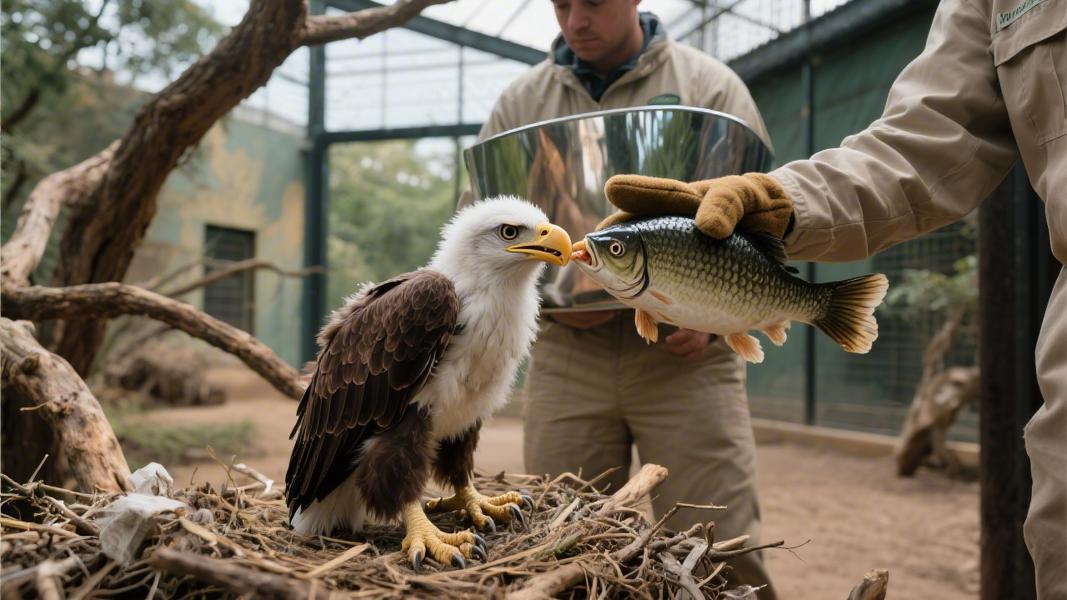
A tiny ball of feathers — weighing less than three ounces at birth — has quietly made history at one of Texas’s most storied institutions. The Fort Worth Zoo is celebrating the first successful hatching of an African fish eagle chick in its 117-year history, a milestone that’s turning heads well beyond the Lone Star State.
It’s the kind of breakthrough that sounds deceptively simple until you understand just how rare it actually is. African fish eagles are notoriously difficult to breed in professional care, and the Fort Worth Zoo is currently the only Association of Zoos and Aquariums-accredited institution in the country to report a successful hatching in recent years. In fact, only five institutions across all of North America even house the species. This wasn’t just a good day at the zoo — it was a genuine conservation landmark.
From Tennis Ball to Treetop Predator
The chick arrived weighing a mere 2.7 ounces — roughly the size of a tennis ball, which is almost comically small for a bird destined to become one of Africa’s most iconic raptors. Six weeks later, the story looks very different. The young eagle has been growing at a pace that can only be described as relentless, pushing toward a projected 25 to 30 inches tall and somewhere between 5 and 8 pounds. Nature, apparently, doesn’t waste time.
That’s the catch, though. Because the chick’s parents are first-time breeders, zoo staff couldn’t simply step back and let instinct take over. Instead, the bird had to be hand-reared — a painstaking, around-the-clock operation that required reported use of reflective shields, specialized protective clothing, and perhaps most strikingly, an adult eagle puppet. The goal was to prevent the chick from imprinting on its human caretakers — a well-documented risk that can permanently compromise a bird’s ability to function in the wild or even within a managed population.
The Science Behind the Puppet
It sounds almost theatrical. Keepers in disguise, puppet handlers feeding a raptor chick, mirrors positioned just so. But the science driving these precautions is serious. If a young bird of prey bonds to humans during its critical developmental window, the consequences can be irreversible. Every feeding, every interaction had to be carefully choreographed to ensure this chick understood, at some fundamental level, what it actually was.
Still, the sheer difficulty of getting to this point at all is worth sitting with. The Fort Worth Zoo has operated since 1909. Generations of zookeepers, curators, and veterinarians have come and gone across more than a century of operation — and none of them ever saw this particular species successfully hatch on the grounds. That’s not a small thing. It’s a reminder of how much still remains genuinely hard in the world of wildlife conservation, even with modern science and institutional knowledge behind it.
A Bigger Picture
African fish eagles — the same species whose haunting call has become synonymous with the African wilderness and serves as the national bird of multiple countries — don’t exactly thrive under human management. The reasons aren’t fully understood, which makes each successful breeding event that much more significant for researchers trying to crack the code.
For the Fort Worth Zoo, this moment is both a point of institutional pride and something more practical — a proof of concept that could inform how other facilities approach the species going forward. With so few North American institutions even attempting to house African fish eagles, the data gathered here doesn’t stay local. It feeds into a broader, collaborative effort to understand and sustain a species that, for all its majesty, has proven stubbornly resistant to human efforts at conservation breeding.
One hundred and seventeen years in, and the zoo is still capable of a first. That might be the most remarkable part of the story.
