
Five days in, and the courtroom in Wise County still isn’t done reckoning with what Tanner Horner did — and, perhaps more uncomfortably, why he says he did it.
Horner’s sentencing phase stretched into its fifth day on Monday, nearly a week after he pleaded guilty to the 2022 murder of Athena Strand, the seven-year-old girl found dead in rural Wise County after going missing from her home. The proceedings have moved well beyond questions of guilt — that part’s settled. Now the jury is being asked something harder: what does this man deserve for the rest of his life?
Letters From a Cell
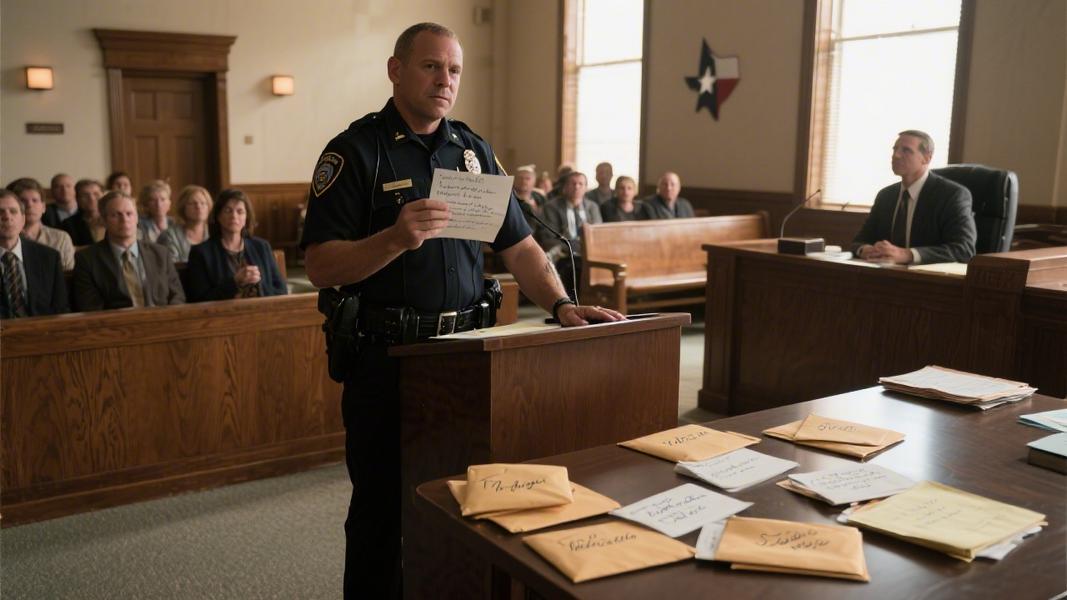
Monday’s testimony took a striking turn when handwritten letters Horner composed in jail — prior to a suicide attempt — were introduced as evidence and read aloud in open court. The letters, recovered after Horner was hospitalized, were addressed to a range of recipients: Athena Strand’s family, detectives, Legacy Church in Springtown, two individuals in Fort Worth, and someone in Burleson. That’s a lot of people to write to when you’re facing the rest of your life behind bars — or worse.
Sgt. Brett Yaro took the stand to describe how investigators discovered the correspondence. He testified that he photographed Horner’s cell and collected the handwritten pages as evidence following Horner’s hospitalization. The letters, scrawled before anyone knew whether Horner would survive, were apparently meant to be final words.
An Apology, and an Explanation
What did he say to the family of the girl he killed? He opened simply — and perhaps inadequately. “I want to start by saying how sorry I am about Athena,” Horner wrote, according to the letter read in court. From there, the letter reportedly touched on his life with Asperger’s syndrome and pointed to what he described as the disorienting effect of unpredictable route changes made by his employer — he was working as a FedEx driver at the time of Athena’s disappearance and death.
It’s a complicated thing to parse. An apology that doubles as an explanation isn’t quite the same as an apology alone, and defense attorneys no doubt knew that when they introduced it. Still, the letter’s existence — written before any trial strategy could shape it — gives it a raw quality that purely courtroom testimony rarely carries. Whether jurors read it as genuine remorse or convenient self-justification is another matter entirely.
The addresses on those envelopes tell their own story. Detectives. A church. Family members scattered across North Texas. A man writing goodbyes to people across the map, trying — it seems — to account for himself before he disappeared. He didn’t disappear. And now those letters are evidence in a capital case.
What Comes Next
The sentencing phase continues. Horner faces either life in prison or the death penalty, and prosecutors have made no secret of which outcome they’re pursuing. With each passing day of testimony, the jury is being handed more material — more context, more damage, more grief — to weigh against whatever remains of Tanner Horner’s humanity.
Athena Strand was seven years old. She’d gone out to meet a delivery driver near her home. She never came back inside. That’s the fact that sits underneath every letter, every piece of testimony, every procedural motion in this case — and it’s the fact that no amount of explanation, however earnest, is going to move.
