
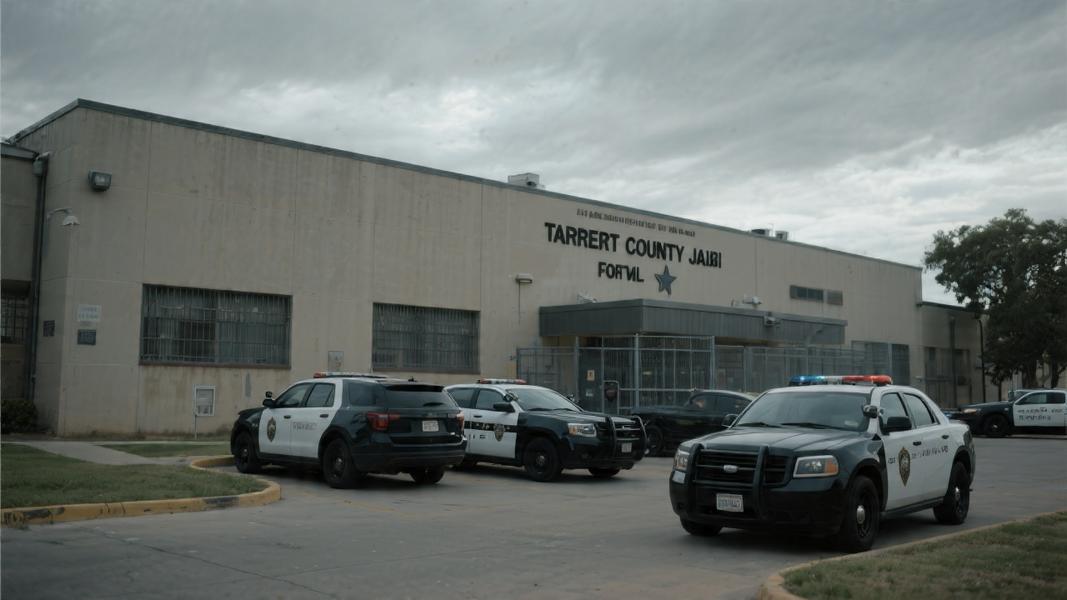
Another man is dead inside the Tarrant County Jail — and once again, the questions are coming faster than the answers.
John Barr, 36, was found unresponsive in his cell on April 19, 2026, just three days after he was booked on a parole violation. He was transported to John Peter Smith Hospital, where he was pronounced dead at approximately 6 p.m. His death marks the first in-custody fatality at the facility this year, and his cause of death remains pending autopsy by the Tarrant County Medical Examiner’s Office.
It’s a story Tarrant County residents have heard before. Too many times, some would say. Since Sheriff Bill Waybourn took office in 2017, the jail has recorded at least 70 to 73 in-custody deaths — a number that documented peaks and valleys, hitting a grim high of 17 deaths in 2020 before dropping to 6 in 2025. Progress, maybe. But that depends on who you ask.
What Happened Inside That Cell
Barr had only been in custody since April 16. His arrest was for a parole violation — a relatively routine booking, in the language of the criminal justice system. Then, within 72 hours, jail personnel found him unresponsive. The Tarrant County Sheriff’s Office said in a statement that noted, “Life saving measures were initiated by jail personnel and continued once jail medical personnel from John Peter Smith Hospital arrived.” It wasn’t enough.
Barr’s record offers some context, though not conclusions. A 2022 arrest tied him to possession of heroin — more than four grams but less than 200 — a charge that signals a prior entanglement with substance use. Whether that history played any role in what happened inside his cell on Sunday is something investigators will have to determine. For now, it’s just one more thread left dangling.
A Jail Under a Long Shadow
How bad has it gotten? Bad enough that the jail’s in-custody death record has drawn scrutiny from multiple oversight bodies — including the Texas Attorney General’s Office, the Texas Commission on Jail Standards, and local investigators. The death of Anthony Johnson Jr. became a flashpoint that led to indictments, a rare instance of legal accountability in a system that doesn’t always offer it.
The most recent death before Barr’s was Shuntae Broadus, 40, who was found unresponsive in her cell in December 2025. Her cause of death is still pending as well. Two unresponsive inmates. Two causes of death still unknown. That pattern — the waiting, the unanswered questions — has become almost a signature of how these cases unfold.
Still, the numbers do show some movement. The drop from 17 deaths in 2020 to 6 in 2025 isn’t nothing. Reforms, staffing changes, medical protocols — something shifted, at least statistically. But a downward trend doesn’t make individual deaths easier to explain, and it doesn’t quiet the families left behind asking why their loved one didn’t make it out alive.
What Comes Next
Barr’s death will now move through the familiar machinery of investigation. The Tarrant County Sheriff’s Office, the Medical Examiner, the Texas AG’s office, and the Jail Standards Commission are all part of a multi-agency review process that kicks in with each in-custody death. It’s a thorough-sounding list. Whether it produces answers — real, public, actionable answers — is a different matter entirely.
The autopsy results, when they come, may clarify everything. Or they may add yet another case to a long ledger of deaths marked cause pending, filed away while the jail keeps filling up and the next name waits to be written.
