
Texas is sitting on more than a billion dollars in water infrastructure money — and the clock is already ticking for communities that want a piece of it.
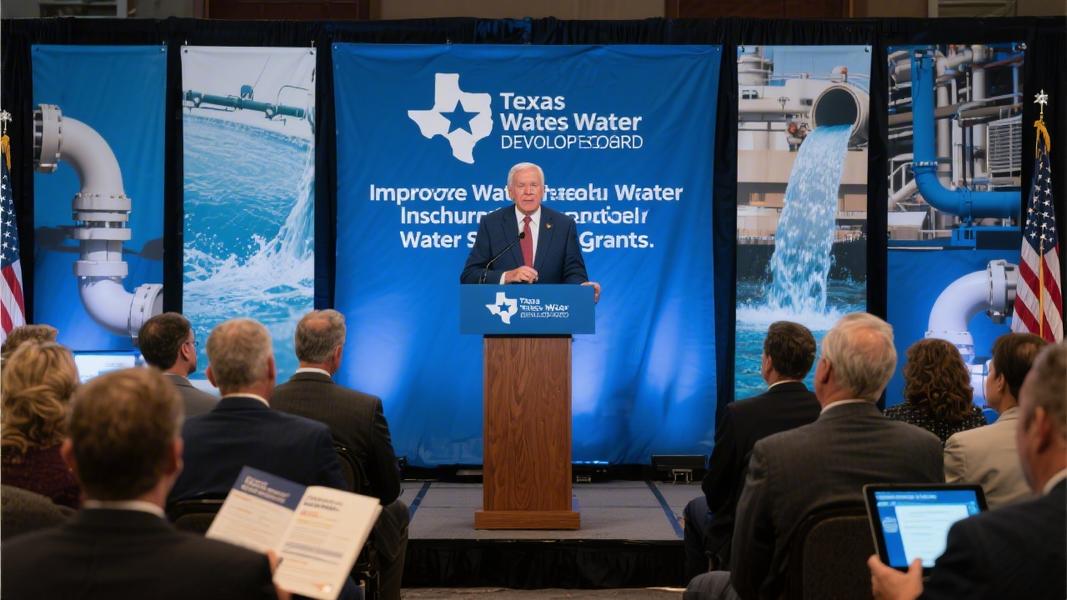
The Texas Water Development Board (TWDB) has opened the application window for its Water Supply and Infrastructure Grant (WSIG) program, making $1.038 billion available to eligible water entities across the state. Applications are being accepted from April 1, 2026, through July 30, 2026, with funded projects required to reach completion by August 31, 2031. For drought-prone communities and aging water systems that have been limping along for years, this is the kind of funding opportunity that doesn’t come around often.
A Governor-Backed Push for Water Security
Governor Greg Abbott has made no secret of where water ranks on his list of priorities. He designated water infrastructure as an emergency legislative item and called for what he framed as a Texas-sized commitment — $1 billion annually for ten years — to shore up water supplies and repair crumbling infrastructure statewide. The scale of that ambition is hard to overstate. “Water is a precious resource that must be safeguarded,” Abbott said. “This year, Texas made monumental investments to further provide Texans with reliable water sources. I encourage eligible political subdivisions and water entities across the state to apply for funding through the Texas Water Development Board Water Supply and Infrastructure Grants to help secure Texas’ water future for generations to come.”
That’s not just political boilerplate. Texas has watched reservoirs shrink, pipes burst, and rural towns scramble to maintain basic water service. The urgency is real, and the funding — authorized under House Bill 500 — reflects a legislature that, at least for now, is treating water as the existential issue many engineers and hydrologists have been warning about for decades.
What Makes This Grant Different
Here’s the part that should get municipal water managers and city planners off their chairs: this is 100% grant funding. No repayment. No loan obligations. Just capital — which is extraordinarily rare at this scale in any state infrastructure program. Projects that serve smaller populations get additional scoring points, particularly if they’re already construction-ready when submitted. That’s a meaningful nudge toward communities that often lack the resources to compete against larger urban systems.
There’s a notable carve-out, though. Water Supply Corporations can’t apply on their own — but they’re not entirely shut out. They can participate through interlocal organizations, which adds a layer of coordination that smaller entities will need to plan carefully. Also worth noting: $100 million of the total has been specifically designated for canal projects that involve matching funds from the North American Development Bank (NADBank), a detail that signals a particular interest in binational water infrastructure along the Texas-Mexico border region.
Agricultural Water Conservation Isn’t Left Out
Farmers and irrigation districts, take note. The TWDB is separately planning to award up to $1.5 million in Fiscal Year 2026 Agricultural Water Conservation Grants drawn from the Agricultural Water Conservation Fund. The application deadline for that program lands considerably earlier — 2:00 p.m. Central Standard Time on Wednesday, March 18, 2026. Miss that window and you’re waiting another cycle. The full request for applications is available directly through the TWDB, and eligible entities would be wise to review the documentation sooner rather than later.
Texas Is Playing a Long Game
It’s worth stepping back for a moment. Water isn’t the only infrastructure sector where Texas is making aggressive investments right now. Governor Abbott also launched a $350 million Texas Advanced Nuclear Development Fund on April 1, targeting advanced reactor development, nuclear manufacturing, and fuel supply chain infrastructure — a reimbursement grant program that signals the state is thinking seriously about long-term energy independence alongside water security. The two issues aren’t unrelated; water-intensive energy production and drought conditions are increasingly linked in Texas planning conversations.
Still, for the communities most immediately affected by deteriorating water systems — the small towns, the rural counties, the border regions — it’s the WSIG window that matters most right now. The July 30, 2026 deadline sounds distant, but grant applications at this scale require engineering assessments, intergovernmental agreements, and procurement documentation that take months to assemble. Local officials who think they can pull it together in the final weeks are almost always the ones who end up scrambling. The full application portal and program details are maintained by the TWDB.
A billion dollars is a lot of money. But in a state of 30 million people facing a hotter, drier future, it may just be the opening bid.
