
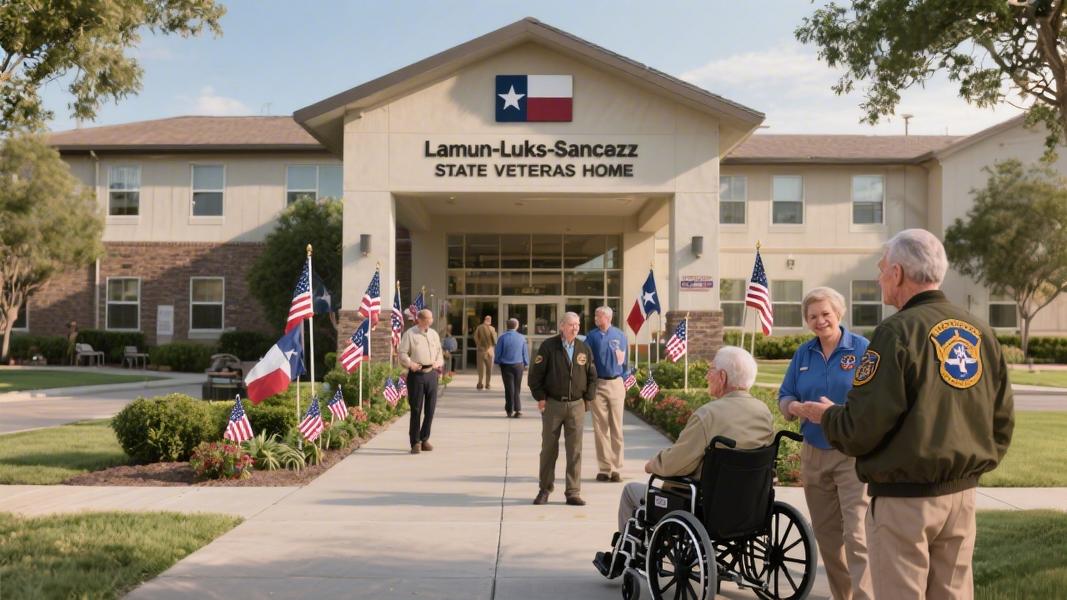
For veterans in West Texas, a long-standing promise of care just got renewed — and the state wants to make sure eligible men and women actually know about it.
Texas Land Commissioner and Veterans Land Board Chairwoman Dawn Buckingham has announced that applications are now open for the Lamun-Lusk-Sanchez Texas State Veterans Home in Big Spring, a 160-bed facility that has served the state’s veterans since 2001. Among those beds, 60 are specifically designated for memory care — a critical resource as the veteran population ages and conditions like dementia become increasingly common concerns for families and caregivers alike. Veterans with a service-connected disability rating of 70% or higher may qualify to live there free of charge.
Three Names. Three Stories.
The home’s name isn’t just a bureaucratic formality. It carries real weight — the kind that comes from loss. The facility is named in honor of David Vance Lamun, Joe Lusk, and Reynaldo Sanchez, three Big Spring veterans who each gave their lives in service to the country. Their stories, taken together, span more than two decades of American conflict and read less like history than like a quiet reminder of what the word “sacrifice” actually costs.
Lamun was just 19 when he enlisted, eventually serving with the 90th Infantry Division during World War II. He landed at Utah Beach on June 8, 1944 — two days after D-Day, when the sand was still soaked in the blood of the first wave. He didn’t make it home. Lamun died on July 6, 1944, and was posthumously awarded the Purple Heart.
Joe Lusk‘s story is, if anything, even more harrowing. A Howard County native who enlisted in the U.S. Marine Corps in 1939 at age 19, Lusk survived the sinking of the USS Houston during the Battle of the Java Sea, only to be captured by Japanese forces. He was forced into labor on the infamous “Death Railway” — a construction project driven by brutality and starvation — where he suffered from malaria, dysentery, and beriberi. He was awarded the Purple Heart posthumously. The fact that he survived as long as he did under those conditions is, frankly, remarkable.
Then there’s Reynaldo Sanchez, who enlisted in 1967 and served in Vietnam. He was mortally wounded on April 22, 1968, during a mission — and was awarded the Bronze Star for his service. He’s buried at Mt. Olive Cemetery in Big Spring, not far from the home that now bears his name. There’s something quietly powerful about that proximity.
Who Runs It — and Who’s Watching
The home doesn’t operate in a vacuum. Texas State Veterans Homes are owned and regulated jointly by the Texas Health and Human Services Commission and the U.S. Department of Veterans Affairs, with Veterans Land Board on-site representatives ensuring that care standards are actually being met — not just promised on paper. That dual oversight structure matters, particularly given the long and troubled national history of veterans’ care facilities falling short of their obligations.
Big Spring isn’t alone, either. Texas operates 10 State Veterans Homes across the state, including the Ussery-Roan home in Amarillo, the Clyde W. Cosper home in Bonham, the Frank M. Tejeda home in Floresville, and the Tuskegee Airmen home in Fort Worth — a name that carries its own significant history. Together, they form one of the more extensive state-run veterans care networks in the country.
The Commissioner Behind the Announcement
Buckingham, who made history in 2022 as Texas’ first female Land Commissioner, has positioned veterans services as a cornerstone of her tenure. Her office’s portfolio spans disaster relief, public education funding, Texas energy, and border security — but announcements like this one signal that care for those who’ve already served remains a consistent priority.
Veterans or family members interested in applying for the Lamun-Lusk-Sanchez home can find information through the Texas General Land Office. The facility has been open for more than two decades — but for the right veteran, it might finally be the right time to walk through the door.
