
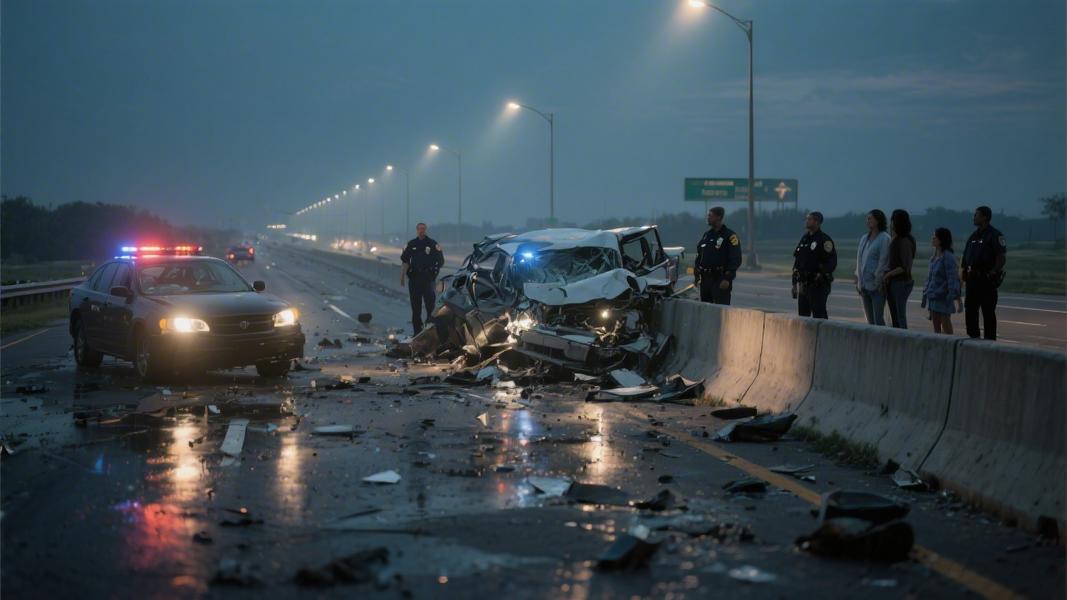
Two crashes. Two cities. Two 12-year-old boys who didn’t make it home. In a span that has shaken Texas communities from Irving to San Antonio, the deaths of children on public roadways have reignited urgent questions about street racing, highway safety, and who — or what — is ultimately to blame.
The first incident unfolded late on a Saturday night. Jeremy Cruz-Sorto, just 12 years old, was struck and killed by two vehicles on the westbound express lane of State Highway 183 at Belt Line Road in Irving, Texas, around 11 p.m. on April 11, 2026, after jumping a guardrail onto the highway. Local station Fox4 reported the grim details of an accident that, by any measure, no one should have to cover.
Roughly 400 miles south, a separate and equally devastating situation had been unfolding in San Antonio — one that would drag on through multiple deaths and, eventually, criminal charges. It started, according to police, around 6:30 p.m. on a weeknight on Culebra Road near North Elmendorf, when two white sedans were allegedly racing. The crash that followed sent three people to the hospital, including a 12-year-old boy later identified as Jonathan Rivera. Officers described receiving a flood of calls almost immediately after impact.
A Street Racing Crash With a Cascading Death Toll
Jonathan Rivera didn’t survive. Neither did Raul Gallegos Junior, 20, who was also involved in the crash. The sequence of losses — a child passenger and a young adult driver, both gone — painted a picture of just how indiscriminate these incidents can be. A local newscast noted that “a second person involved in an alleged street racing crash on the west side has died,” adding that police believed the 20-year-old driver had caused the collision.
But it’s not that simple, is it? Jonathan Rivera was 12. He was a passenger. Whatever chain of decisions put him in that car, on that road, at that speed — he had no say in how it ended. That’s the part that tends to get lost in the procedural language of police reports and press conferences.
Police say it began as a contest between a white car and a truck. Witnesses and investigators pieced together the sequence — two vehicles accelerating on Culebra Road, the kind of stretch that looks unremarkable until it isn’t. San Antonio officers explained that “they think that the drivers were racing around 6:30 last night,” and that one of the vehicles crossed into oncoming traffic before the crash occurred.
Charges Filed, But Questions Linger
Weeks after the San Antonio crash, prosecutors moved. Jose Nagera, 38, was charged with two counts of racing on a highway causing serious bodily injury — one count for each life lost. Investigators confirmed the charges, describing Nagera as a central figure in what police believe was an organized or at least deliberate race on a public road.
Still, a charge isn’t a conviction. And a conviction, when it comes, won’t undo anything. The families of Jonathan Rivera and Raul Gallegos Junior are left holding grief that no courtroom outcome fully addresses. Two charges. Two names on an indictment. Two funerals that already happened.
What’s striking — and troubling — about both the Irving and San Antonio cases is how ordinary the settings were. Not a remote stretch of desert highway. Not some underground racing circuit tucked away from civilian eyes. These were local roads and expressways, the kind people use to get home from work, to pick up their kids, to grab groceries at 11 p.m. on a Saturday.
A Pattern Texas Can’t Seem to Shake
Texas has long grappled with street racing fatalities. Enforcement efforts come in waves, public outrage peaks after each high-profile death, and then — gradually, predictably — the headlines move on. Until the next crash. Until the next child.
In Irving, the circumstances of Jeremy Cruz-Sorto’s death remain a stark reminder of how fast things can go wrong on a highway at night. A guardrail jumped. Two vehicles. An 11 p.m. Saturday. A seventh-grader, by most calculations, who should have had decades ahead of him.
In San Antonio, a 38-year-old man now faces charges. Whether that accountability translates into meaningful deterrence — for the next driver itching to race on Culebra Road, or anywhere else — remains the real, unanswered question.
Two boys. Two cities. One week in Texas that should have been unremarkable. The roads don’t remember any of it. The families always will.
