
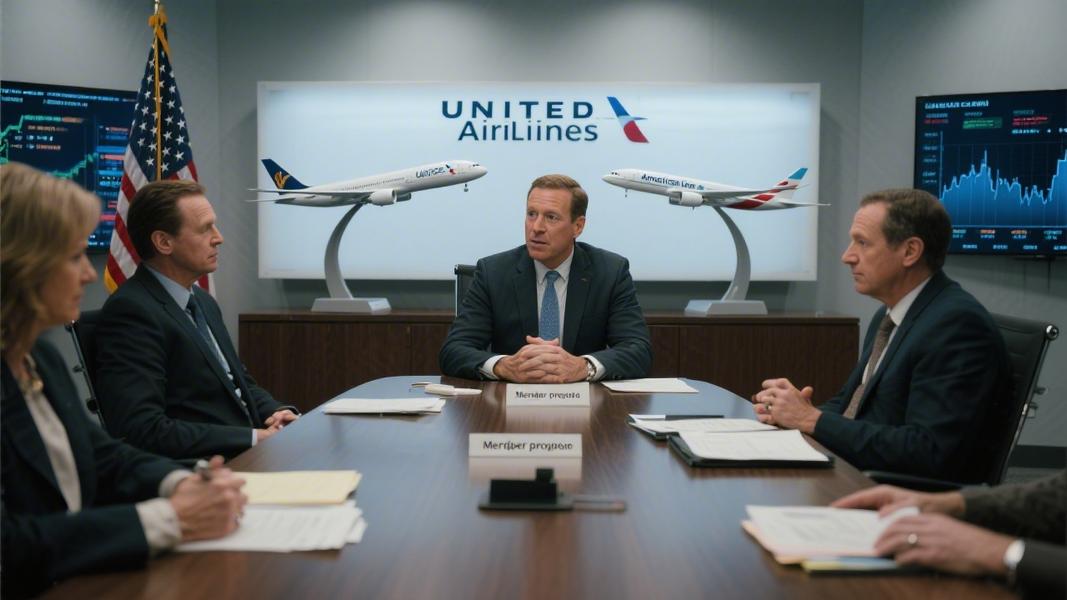
The biggest shakeup in American aviation in years may be quietly taking shape — and the White House appears to be watching with interest.
United Airlines CEO Scott Kirby has held discussions with Trump administration officials about the possibility of United merging with rival American Airlines, a conversation that signals the industry’s largest players are once again testing the appetite for mega-consolidation. At the same time, US Transportation Secretary Sean Duffy has made clear he thinks the airline sector has room to shrink — at least at the top.
A Market Already Dominated by Four
Here’s the backdrop: just four carriers — American, Delta, United, and Southwest — already control roughly 80% of the domestic passenger market, according to recent industry data. That’s not a fragmented market by any stretch. So when executives start floating merger talk, regulators — and consumers — tend to pay close attention.
Duffy didn’t exactly pump the brakes. He said he believes there is room for consolidation and that President Donald Trump “loves to see big deals happen,” a line that, depending on your vantage point, is either reassuring or a little alarming. Still, the secretary was careful to add that any merger between larger carriers would require asset divestitures to prevent excessive market share and the kind of price hikes that tend to follow when competition disappears. That’s a meaningful caveat — and one that could complicate any deal significantly, noted industry observers.
JetBlue’s Ghost Looms Large
That’s the catch. Airline mergers don’t just need executive ambition — they need regulatory clearance, and recent history is a reminder of how quickly those deals can fall apart. JetBlue called off its $3.8 billion bid to acquire Spirit Airlines in 2024 after a federal judge blocked it on anti-competition grounds. The collapse left Spirit in financial freefall and JetBlue licking its wounds.
A United-American merger would be an entirely different beast — far larger, far more politically charged, and almost certainly far more scrutinized. Between them, the two carriers serve virtually every major US hub. Peeling off enough routes and gates to satisfy antitrust concerns while still making the deal financially worthwhile? That’s a needle threading exercise that would test any administration’s patience.
What’s Kirby Actually After?
Interestingly, reports have also surfaced suggesting United’s ambitions may extend beyond American. Kirby has been linked to discussions involving JetBlue as well — a smaller, more manageable target that might draw less regulatory fury. JetBlue, still recovering from the Spirit debacle, would bring valuable East Coast slots and a loyal leisure customer base. Whether that’s a real play or a negotiating feint is anyone’s guess.
What’s clear is that the industry’s biggest names are reading the political moment carefully. A Trump White House that openly celebrates “big deals” is a different environment than the Biden-era DOJ, which took an aggressive posture against corporate consolidation across sectors — airlines very much included.
Whether that opening is real or just a rhetorical green light remains to be seen. But for now, the runways of American aviation M&A are, at the very least, no longer closed.
