
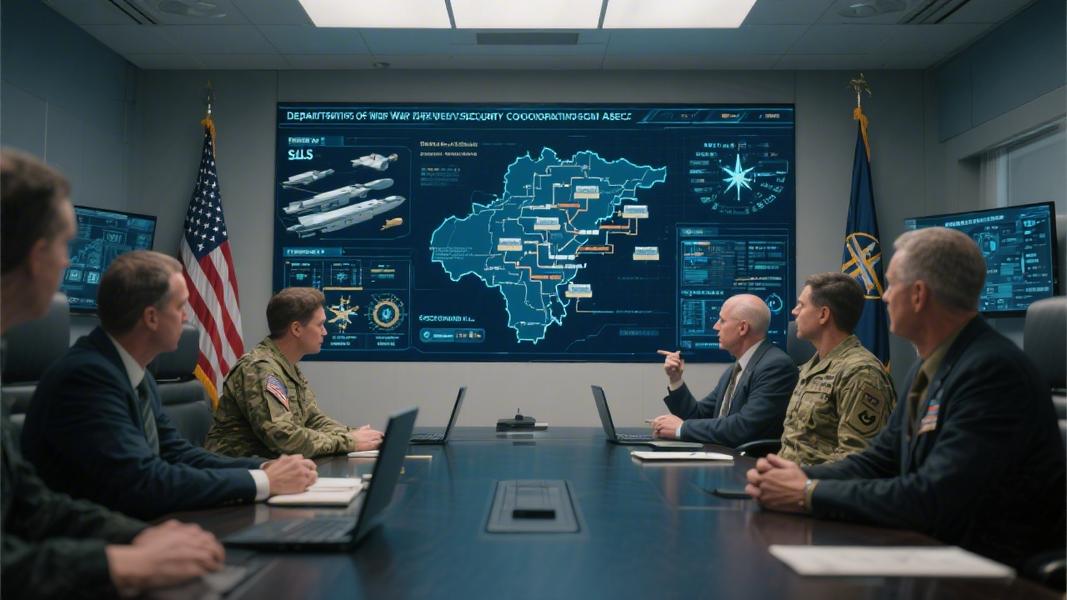
In a sweeping reorganization that signals a new era for American defense sales, the Pentagon is shifting key agencies responsible for foreign military sales from policy oversight to acquisition management — a move that could dramatically streamline how the U.S. arms its allies.
The Defense Security Cooperation Agency (DSCA) and Defense Technology Security Administration (DTSA), previously housed under the Under Secretary for Policy, will now operate under the Under Secretary for Acquisition and Sustainment (USW(A&S)). This restructuring consolidates nearly $1 trillion in active foreign sales under a single enterprise, creating what officials hope will be a more responsive system for both government-to-government and commercial defense exports.
Warfighting Urgency Drives Systemic Change
The shake-up doesn’t stop at organizational charts. In a symbolic move reflecting broader priorities, the traditional Defense Acquisition System has been rebranded as the “Warfighting Acquisition System” (WAS) — embedding what officials describe as “wartime urgency” into acquisition governance.
“By moving DSCA and DTSA from Policy to Acquisition & Sustainment, the Administration has redefined who ‘owns’ the defense-sales mission,” according to analysis published by the Samuel Group, a defense consultancy.
What’s the real-world impact? The restructuring aims to eliminate redundant oversight layers and accelerate portfolio-driven processes. Under the new arrangement, the Policy office will maintain strategic direction to ensure alignment with national security objectives, while Acquisition & Sustainment handles the nuts and bolts of execution and delivery.
Private Capital Enters the Picture
Perhaps most significantly, the reorganization elevates Direct Commercial Sales (DCS) alongside traditional Foreign Military Sales (FMS), effectively creating a dual-track system for defense exports.
“By elevating Direct Commercial Sales, Washington is inviting private capital into what was once a purely governmental process,” defense analysts noted. “This effectively creates a dual-track production system that serves both U.S. and foreign markets, keeping American assembly lines active while enhancing allied deterrence.”
The change also brings technology security oversight under the same roof as acquisition, which defense officials believe will integrate exportability considerations into system design from the beginning — potentially reducing the friction that has historically slowed approvals for sensitive technologies.
New Decision-Making Structure
A new Requirements and Resourcing Alignment Board (RRAB) will serve as the Department’s single decision forum for matching resources to operational needs. Co-chaired by the Vice Chairman of the Joint Chiefs of Staff and Deputy Secretary of War, this body will select operational problems and recommend funding allocations from the Joint Acceleration Reserve, according to a recent announcement from Wiley, a law firm specializing in government contracts.
The structural changes consolidate oversight “under a single enterprise responsible for end-to-end planning, contracting, and production—a move intended to improve efficiency, transparency, and delivery speed across nearly $1 trillion in active foreign sales,” as described by Miller Canfield, another firm tracking the changes.
Still, the transition won’t happen overnight. The Under Secretaries for Acquisition & Sustainment and Policy have been directed to draft an implementation plan within 60 days, subject to Deputy Secretary approval and compliance with existing law. This plan must address the future placement of DSCA and DTSA activities not directly related to foreign military or direct commercial sales.
For defense contractors and international partners alike, the message is clear: the Pentagon is restructuring its approach to defense sales as part of a broader industrial strategy — one that treats foreign military sales not just as a diplomatic tool, but as a critical component of America’s defense industrial base.
